
The Jacuzzi Magnum, Magnum Plus and Magnum Force are one wet end in three trim levels, sold for the better part of two decades under the Jacuzzi and later Carvin names. They are not made any more, which is exactly why they are worth knowing: the installed base is enormous, the parts are still available, and the design is simple enough that a competent technician can rebuild one on the pad in an hour. The three places rebuilds go wrong are the same every time — a seal housing that does not match the motor's rating, an impeller and diffuser that do not match each other, and a basket bought for the wrong side of a 2003 production change.
This guide is the teardown in the order the pump actually comes apart, with the decisions called out where they happen. It covers the Magnum and Magnum Plus (2-inch plumbing) and the Magnum Force (larger strainer). The Magnum Force 3, with 3-inch plumbing and its own body, shares the wet-end parts but not the body or basket.
Reading the symptoms
Three complaints account for nearly every Magnum job.
Water under the pump. A drip or a wet ring where the motor meets the seal housing is the mechanical seal. Do not let it run: water past the seal goes into the front motor bearing, and a seal job becomes a motor job within a season. Water at the front of the strainer housing, rather than under the motor, is a different problem — the lid o-ring, the union, or a crack in the housing itself.
Noise. A gravel or marble sound from the wet end is cavitation — the impeller cannot move the water the diffuser and body expect — and points to a clogged or worn impeller or a suction-side restriction. A squeal or grind that changes with motor speed, and continues with the pump dry, is motor bearings.
Low flow with no air in the basket. Debris in the impeller first; if the impeller is clear, the impeller and diffuser are showing wear. On a Magnum the diffuser is a moulded cone that seals against the impeller's eye, and once that clearance opens up water recirculates inside the pump instead of leaving it.
Before condemning anything, do the two-minute checks that mimic all three: baskets clean, filter pressure against its clean baseline, valves open, water level above the skimmer throat, lid o-ring clean and seated. Bubbles in the basket with the pump running are a suction-side air leak — lid seal, union o-rings or piping — not a wet-end failure. Our general shaft-seal diagnosis guide covers the seal-versus-air-leak distinction in detail.
Which pump you have
The trim level matters for the basket and the body, not for the wet end.
- Magnum and Magnum Plus share the
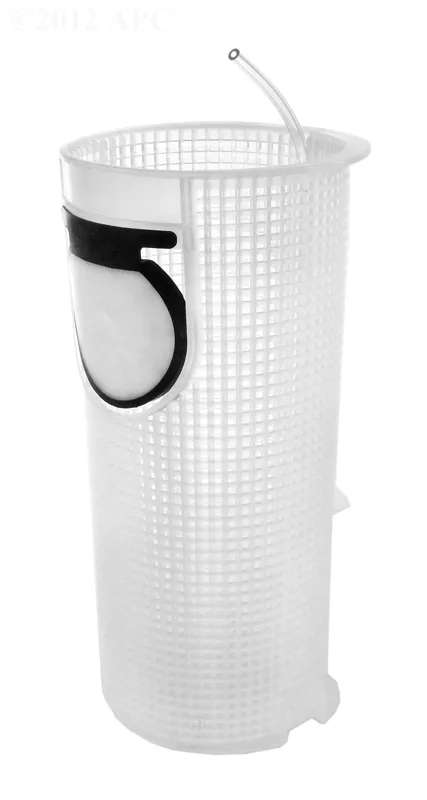
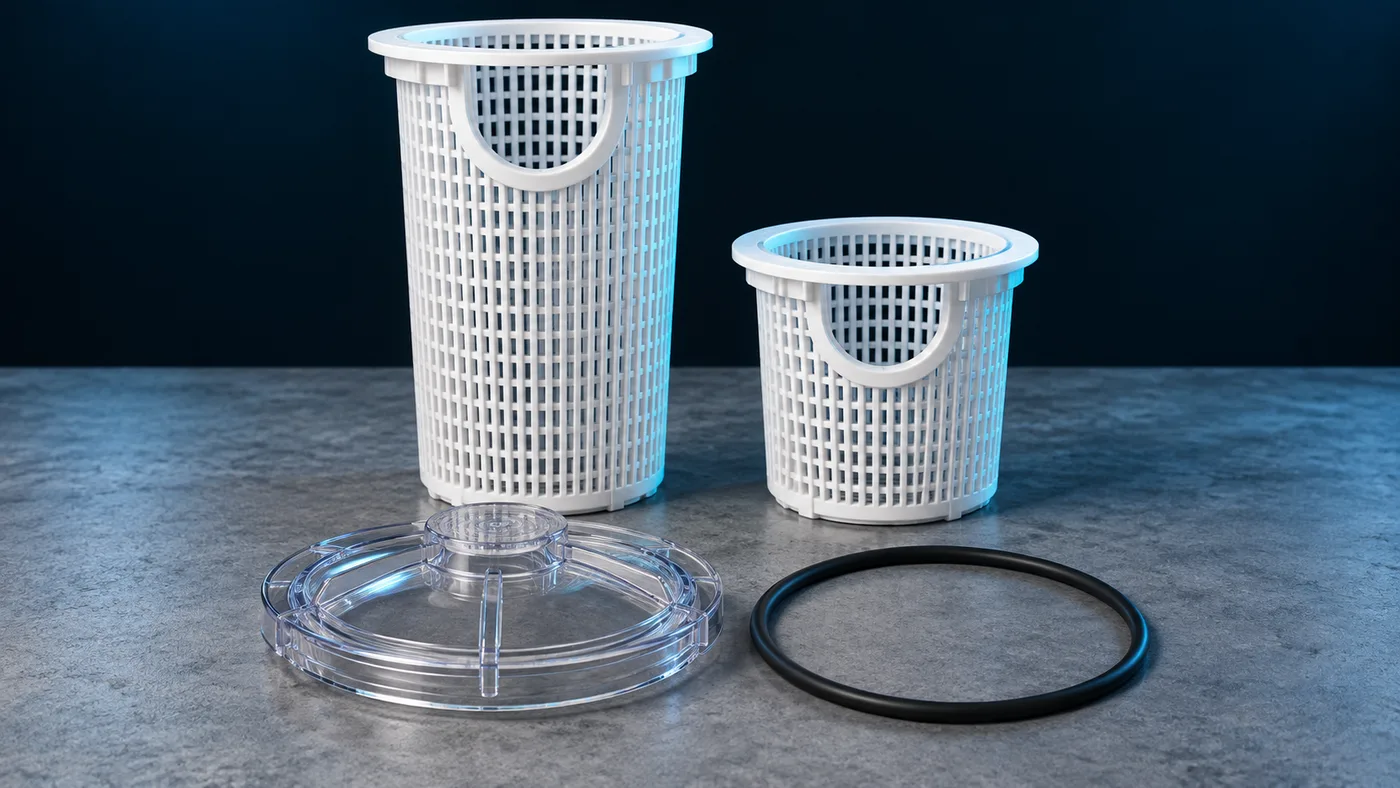
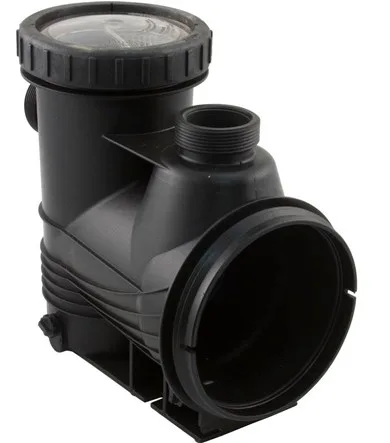
3085602pump body and the 8¾-inch basket16109704R. The Plus is the later, higher-rated version of the same pump. - Magnum Force has a taller strainer. Pumps built before February 2003 take the 9-inch basket
16108606R000; pumps built from February 2003 take the 12-inch basket16113409R. The date is on the pump body label; if the label is gone, measure the old basket. - The strainer lid
39257902R(6¾-inch OD) and its lid o-ringO-336are common to all three. Lid o-rings on pumps built before mid-1989 are a different size; measure before ordering.
Every seal housing, impeller and diffuser below fits all three trims — they are chosen by motor rating, not by badge.
The seal housing and impeller decision: match the motor, not the pump label
Magnum wet-end parts are sized by horsepower and by whether the motor is full-rated (FR) or up-rated (UR). A full-rated motor and the next-size-up up-rated motor deliver the same output and take the same parts. Read the horsepower and the rating letter off the motor plate, then pick from the tables. Where the pump has had a motor swap, go by the motor that is on it now.
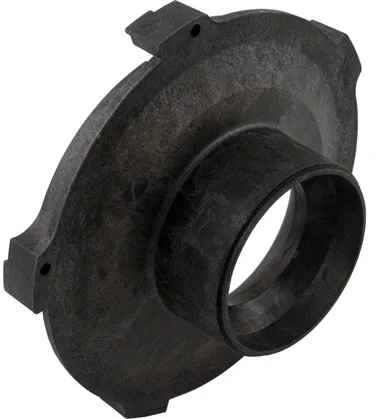
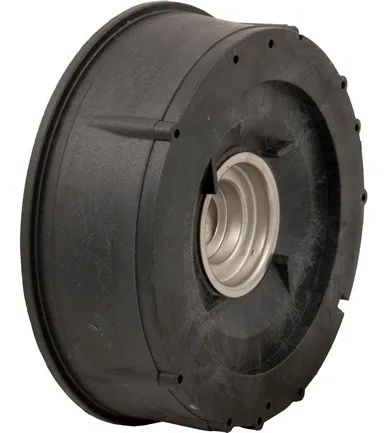
Seal housings (seal plates). The seal housing carries the ceramic seat of the shaft seal and locates the diffuser; the impeller diameter dictates which housing fits.
| Housing | Full-rated | Up-rated |
|---|---|---|
5064-18 |
½ HP | ¾ HP |
5064-18C |
¾ – 1 HP | 1½ HP |
5064-18D |
1½ – 3 HP (Plus / Force) | — |
5064-18B |
2 HP high-flow | — |
5064-18A |
1½ – 3 HP high-flow | — |
Impellers.
| Impeller | Full-rated | Up-rated |
|---|---|---|
5064-15 |
¾ HP | 1 HP |
05-3854-06 |
1 HP | 1½ HP |
05038203R |
1 HP (motors after 1 Dec 2004) | 1½ HP |
05381900R |
1½ HP (5⅛-inch) | 2 HP |
05-3818-01 |
2 HP | — |
5064-15D |
3 HP | 3 HP |
Diffusers. The diffuser must match the impeller it wraps, not the pump.
| Diffuser | Rating |
|---|---|
5067-10A |
½ HP FR / ¾ HP UR |
06016703R |
¾ – 1 HP FR / 1½ HP UR |
06016307R |
1½ – 2 HP FR / 2 HP UR |
06016505R |
1½ – 3 HP |
5064-13B |
2 HP FR |
06016517R |
3 HP high-head |
| 5067-10C / 06016406R | 3 HP FR |
The 06015705R diffuser in the ½ – 1½ HP range is the Splash Pak and R-series pattern that also appears on early Magnums; if the old diffuser matches its profile, use it.
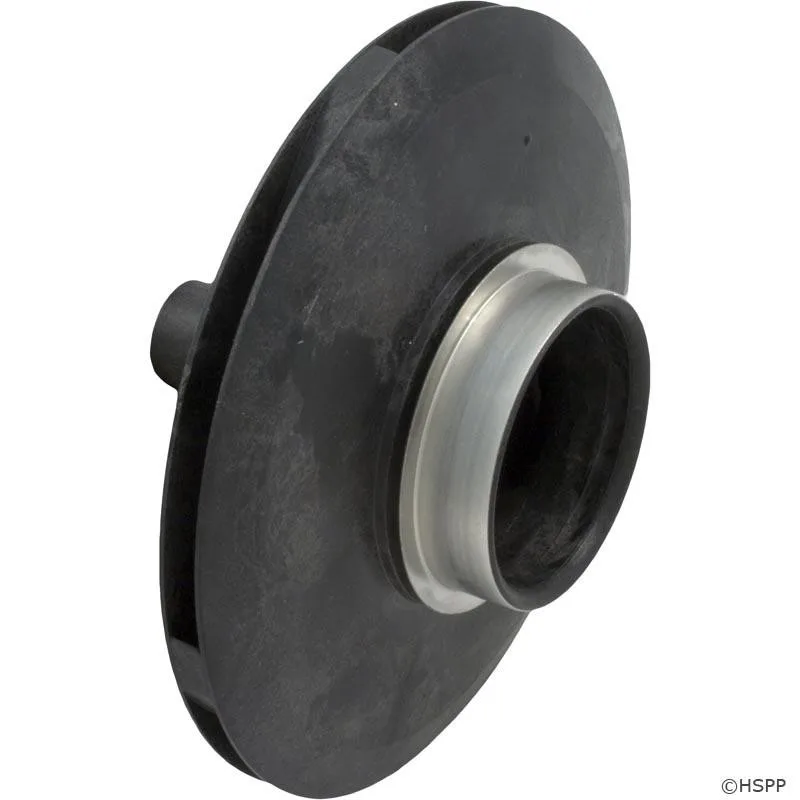
If the tables and the parts on the bench disagree, the parts on the bench win. Measure the old impeller's outside diameter and vane thickness and compare against the replacement before the seal goes on.
The seal
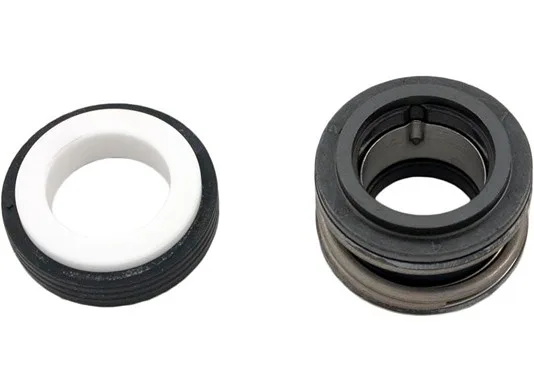
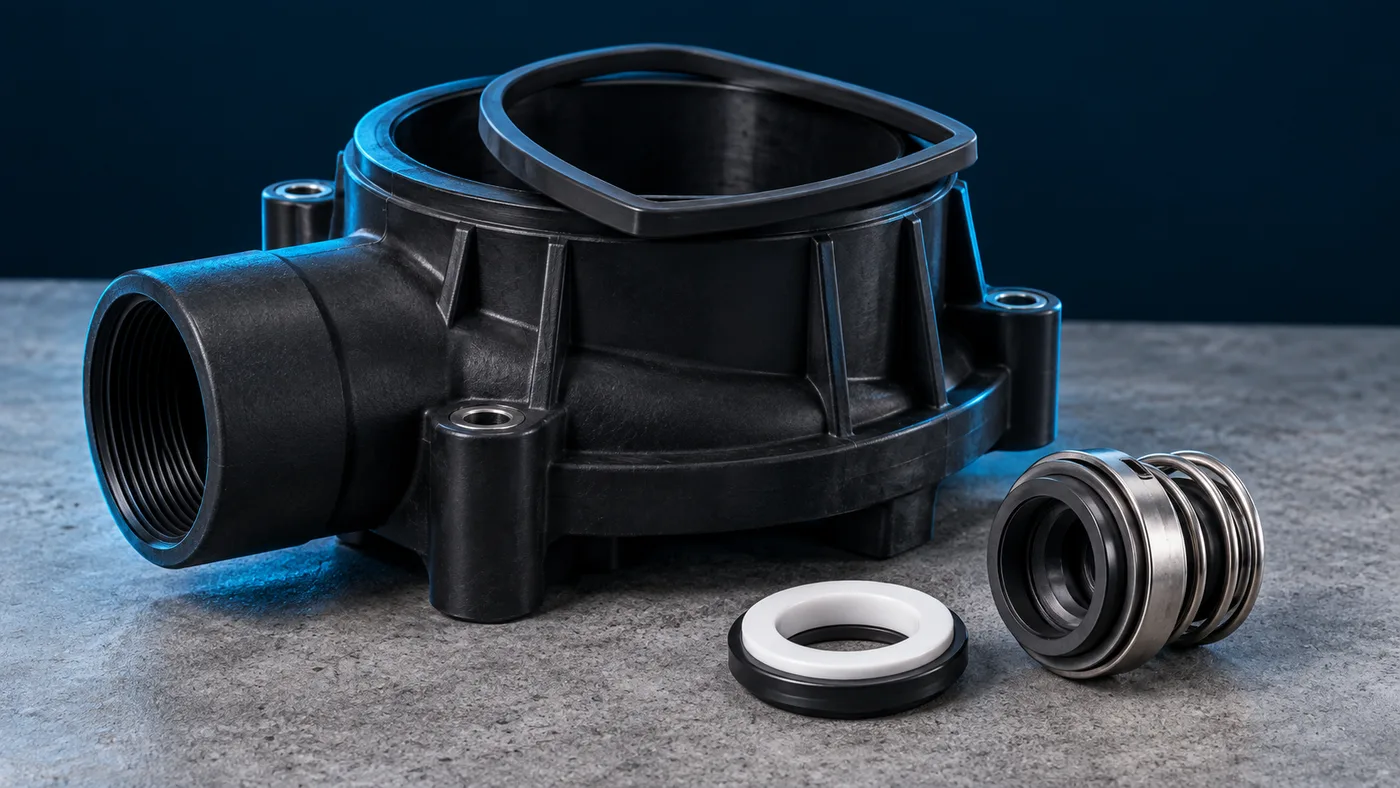
Magnum pumps take the ¾-inch PS-201 family mechanical seal — the most common pool-pump seal in North America. Our PS201 is the standard assembly; for salt-chlorinated or ozone pools use PS-3868, the same size in salt-service materials, which cross-references the U.S. Seal and Pleatco numbers for the heavy-duty seal. Confirm the ¾-inch shaft on the motor you have before ordering; the seal is the one part that must be right the first time.
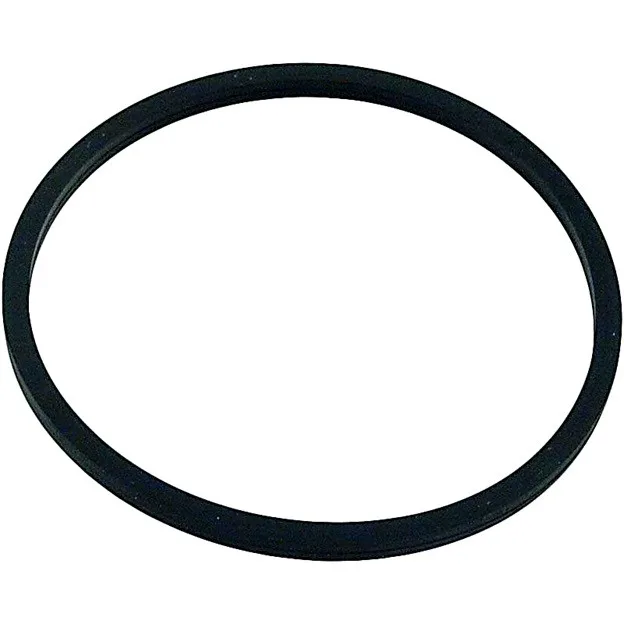
Two other sealing parts belong on the bench for every rebuild. The 47-0232-54R square-ring gasket seals the seal housing to the pump body — it is a square section, not a round o-ring, and reusing a compressed one is the most common cause of a "rebuilt" pump that leaks at the body joint. The 10-1462-07 eye seal ring sits in the diffuser and closes the clearance to the impeller eye; it wears with the impeller and should be renewed with it.
Prep and safety
Shut off power at the breaker, not at the timer or the automation panel, and confirm the pump cannot start. Relieve pressure at the filter's air relief. If the pad sits below water level, close the suction and return isolation valves. Drain the pump at the body plugs or by loosening the 9173-10 union halves. Have the seal, the square-ring gasket, the correct impeller and diffuser, a lid o-ring and a tube of silicone lubricant on the bench before the first fastener comes out — a Magnum rarely goes back together with the o-rings it came apart with.
Opening the pump
The Magnum differs from most pumps in how the motor assembly is held to the body: a threaded locking ring rather than a ring of bolts.
- Remove the motor's rear cap to expose the shaft end, so you can hold the shaft against the impeller later.
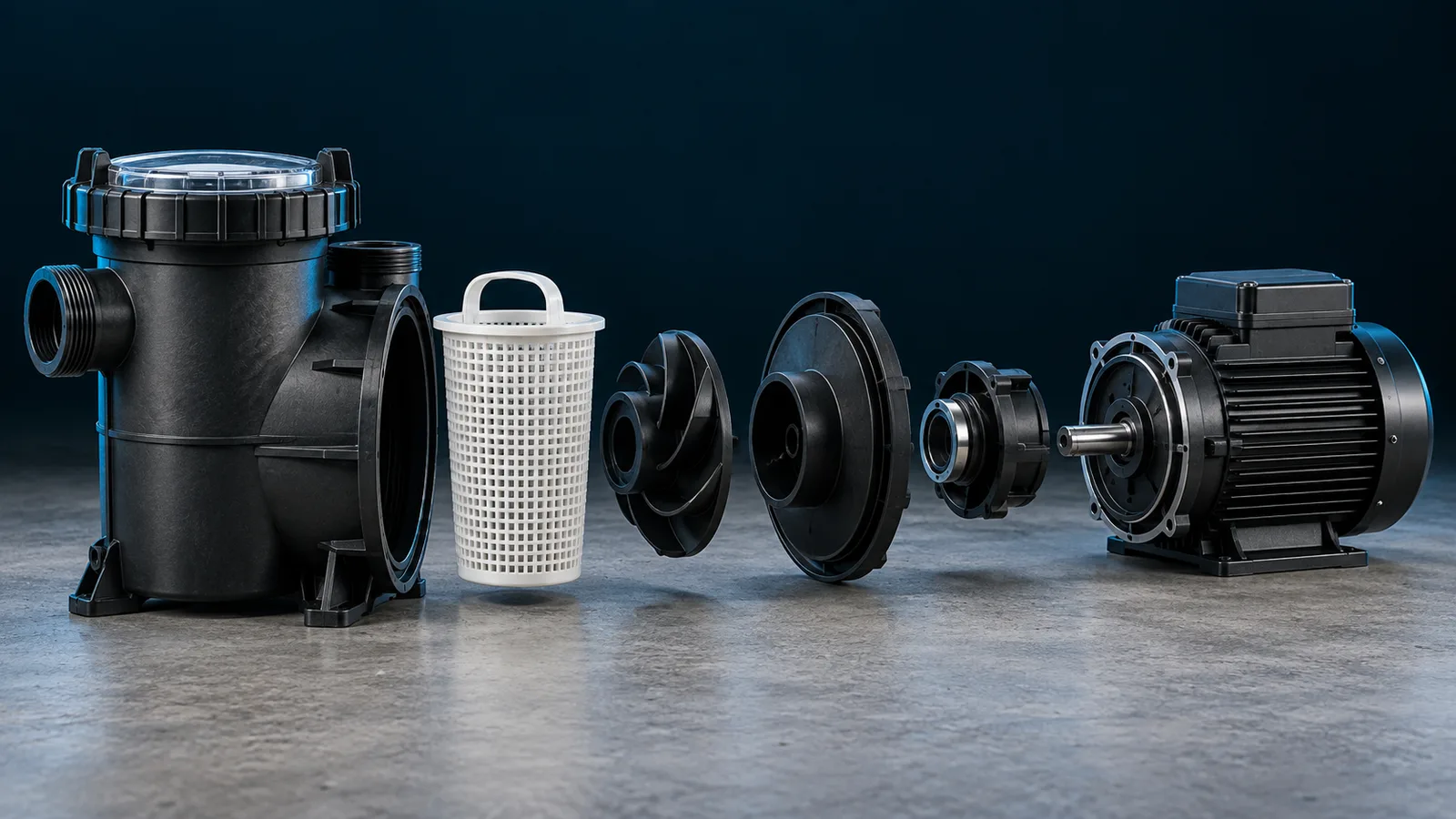
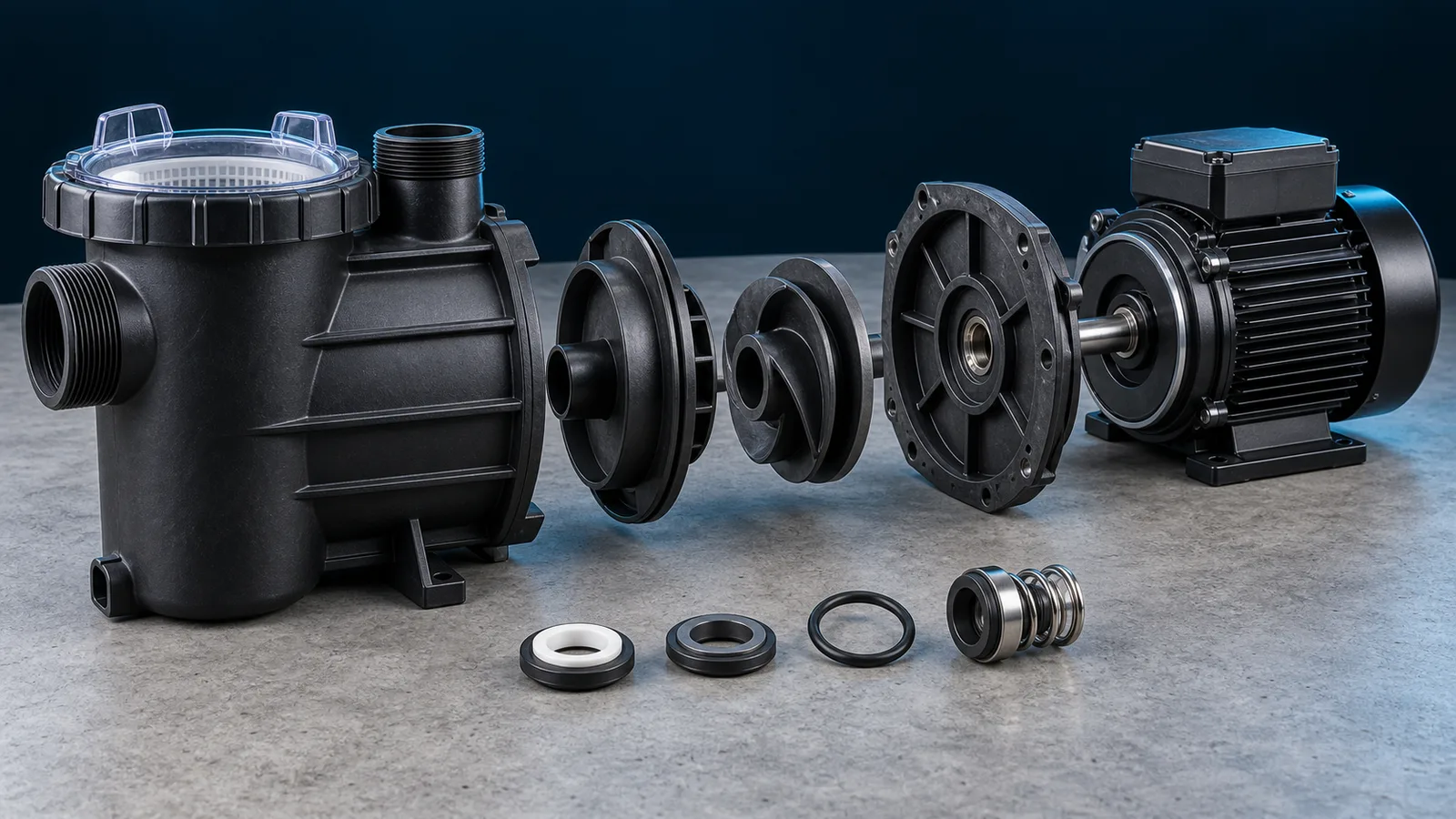
- Rotate the seal-housing locking ring counter-clockwise and back the motor assembly — motor, seal housing, diffuser and impeller — straight out of the body. The
5064-22ratchet nut is the tool made for a ring that has seized. - Remove the three screws holding the diffuser to the seal housing (¼-inch hex or Phillips) and lift the diffuser off. Inspect the diffuser cone and the eye seal ring.
- Hold the shaft at the rear and unthread the impeller counter-clockwise, gripping it by its large outside diameter — never by the nose. A strap wrench is kinder to the plastic than channel locks.
- With the impeller off, the rotating half of the seal comes off the impeller tail; twist it off in a rotary motion. Tap the ceramic seat out of the seal housing from behind with a screwdriver.
- Separate the seal housing from the motor: four 9/16-inch bolts hold the mounting ring to the motor face. This is also the moment to decide whether the housing itself is coming back — a housing whose seat bore is scored, or whose mounting ears are cracked, is a replacement.
Reassembly in order
- Clean the seal housing bore and the impeller tail. Wipe both faces of the new seal with a cotton swab and rubbing alcohol and do not touch them again.
- Press the ceramic seat into the housing square, lubricated with soap and water only — no grease, oil or penetrating spray; petroleum swells the elastomer and the seal fails in weeks.
- Bolt the housing to the motor with the four 9/16-inch bolts, evenly.
- Slide the rotating half onto the impeller tail, spring outward, and thread the impeller clockwise onto the shaft until seated while holding the shaft at the rear.
- Fit the eye seal ring to the diffuser, seat the diffuser over the impeller and fasten the three screws snug — the housing is plastic and cracks from enthusiasm.
- Fit a new square-ring gasket to the housing, lubricate it with silicone, and thread the assembly back into the body. Tighten the locking ring clockwise by hand and finish with the ratchet nut; the gasket does the sealing, not the torque.
- Refit the lid with its o-ring cleaned and lubricated.
If the motor base or support is what actually failed — a cracked 5064-29 base, a rusted 5064-28 support or 02136802R bracket, or stripped 14-1293-24-R motor bolts — replace them now while the motor is off the pad.
First run and verification
Open the isolation valves, fill the strainer, fit the lid, restore power and prime with the filter air relief open until water sprays, then close it. Compare filter pressure and visible return flow against the pump's normal baseline. A correct rebuild restores the old numbers; if flow is still short, look for a suction-side air leak before condemning anything else.
Check under the seal housing after the first full run and again on the next visit. A seal installed clean and square stays dry; a drip within days means the seat went in cocked or a face was touched, and the pump comes apart again before the motor pays for it.
Kit or piecemeal: how to decide
There is no single factory rebuild kit for this family, so the decision is which of three configurations to carry.
Seal only. Pump is quiet, flow is normal, it just drips: PS201 (or PS-3868 on salt) plus 47-0232-54R. Cheapest fix, and the one most rebuilds should be.
Seal plus impeller and diffuser. Flow is down or the pump is noisy: add the impeller and its matching diffuser from the tables, plus the eye seal ring. Never replace one without checking the other; a new impeller in a worn diffuser recovers half the flow.
Seal housing as well. The seat bore is scored, the housing is cracked at the ears, or the locking-ring threads are chewed. This is the configuration that turns a pump into a motor-plus-body only — everything between them is new.
Whichever you choose, the lid o-ring and the basket are the two cheap items that decide whether the customer calls back. A basket with a cracked bottom lets debris straight into the new impeller.
Cross-reference table
| OEM number | POOLPOINT part | Notes |
|---|---|---|
U.S. Seal / Pleatco PS-201 |
PS201 |
¾-inch shaft seal, standard service |
U.S. Seal 37400-0028S / Pleatco PS-201 |
PS-3868 |
¾-inch shaft seal, salt and ozone service |
Jacuzzi 5064-11 / Aladdin O-462 |
47-0232-54R |
Square ring gasket, housing to body |
Jacuzzi 11308 |
05381900R |
Impeller, 1½ HP FR / 2 HP UR |
Jacuzzi 11352 |
06016703R |
Diffuser, ¾ – 1 HP FR / 1½ HP UR |
Jacuzzi 5067-10B |
06016307R |
Diffuser, 1½ – 2 HP FR / 2 HP UR |
Jacuzzi 06015705R000 / 600037 |
06015705R |
Diffuser, ½ – 1½ HP, Splash Pak / R-series pattern |
Jacuzzi 16113409R000 / 5064-06 |
16113409R |
Basket, Magnum Force from February 2003 |
Jacuzzi 9978 |
16109704R |
Basket, Magnum and Magnum Plus |
Jacuzzi 5064-052 |
42234506R |
Strainer housing kit, Magnum Force |
Jacuzzi 12112603R |
5064-29 |
Motor base |
Jacuzzi 31150109R2 / 31-1501-09-R2 |
9173-10 |
2-inch union half kit |
Horizon 8388 |
39257902R |
Strainer lid, 6¾-inch OD |
The full list of parts that fit is on the Magnum, Magnum Force and Magnum Plus model pages.
Sourcing
POOLPOINT manufactures these wet-end parts factory direct for US distributors, service companies and online sellers. MOQ starts at 50 pieces per SKU, mixed cartons are accepted to reach it, and private label is available. For a truck that services Magnum pumps, the ¾-inch seal, the square-ring gasket, the lid o-ring and the two basket sizes are the stocking core; impellers and diffusers follow the horsepower mix in your territory. Request a quote for wholesale pricing.