

Look at the negative reviews on any high-volume aftermarket pool part and the complaints cluster tightly. It leaked. It split. It did not last. The reassuring part, if you are buying rather than complaining, is that those outcomes trace back to a small number of causes — and most of them are detectable before an order rather than after it.
Failure mode 1: the wrong material, correctly shaped
The most common, and the hardest to see. The part is dimensionally right. It installs perfectly. It fails in four months.
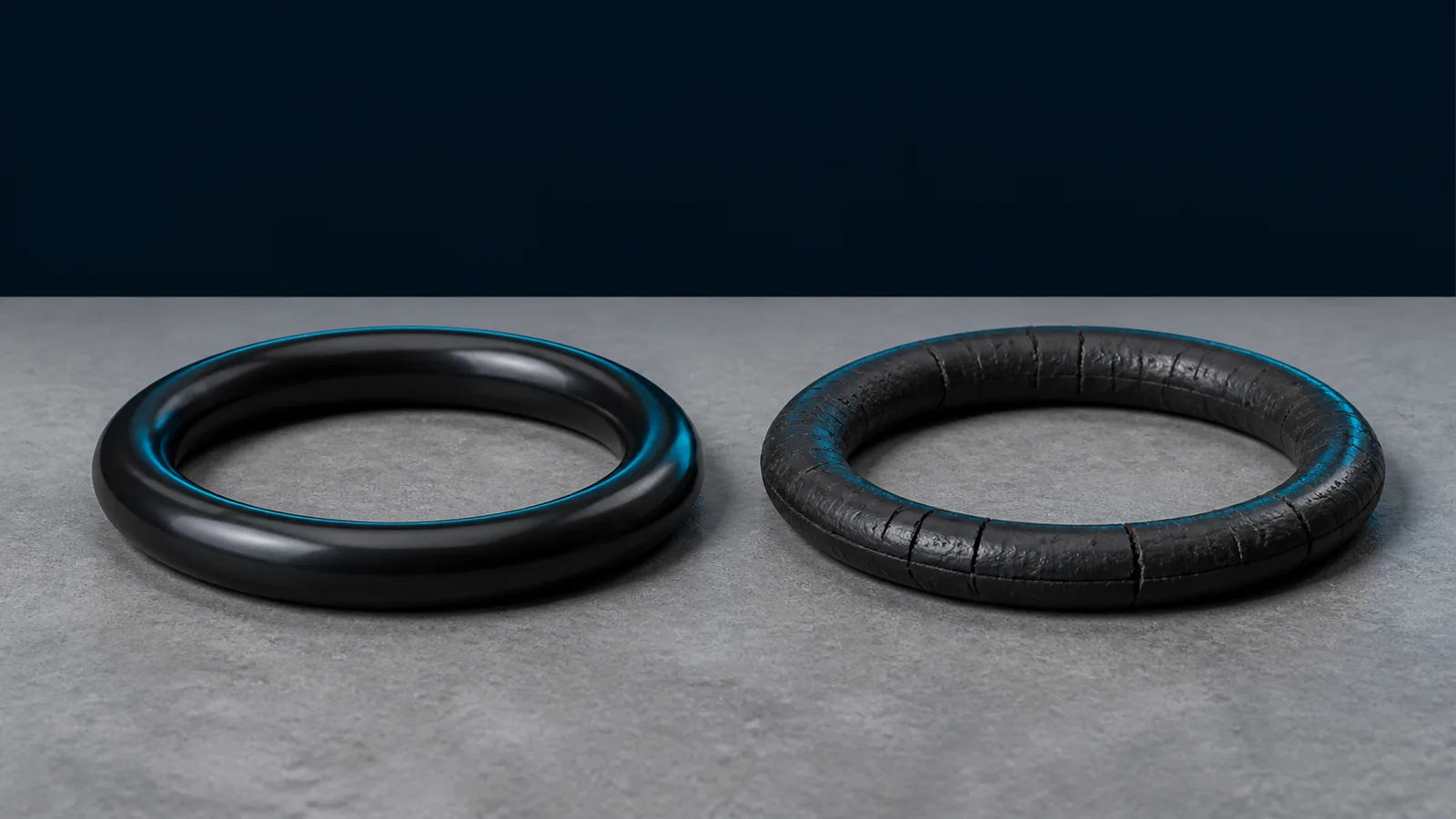
Pool water is a hostile environment for rubber: free chlorine, UV where exposed, and temperature cycling that goes much further at a heater than at a pump. Elastomers that are entirely adequate in a plumbing fitting harden, take a compression set and lose sealing force under those conditions.
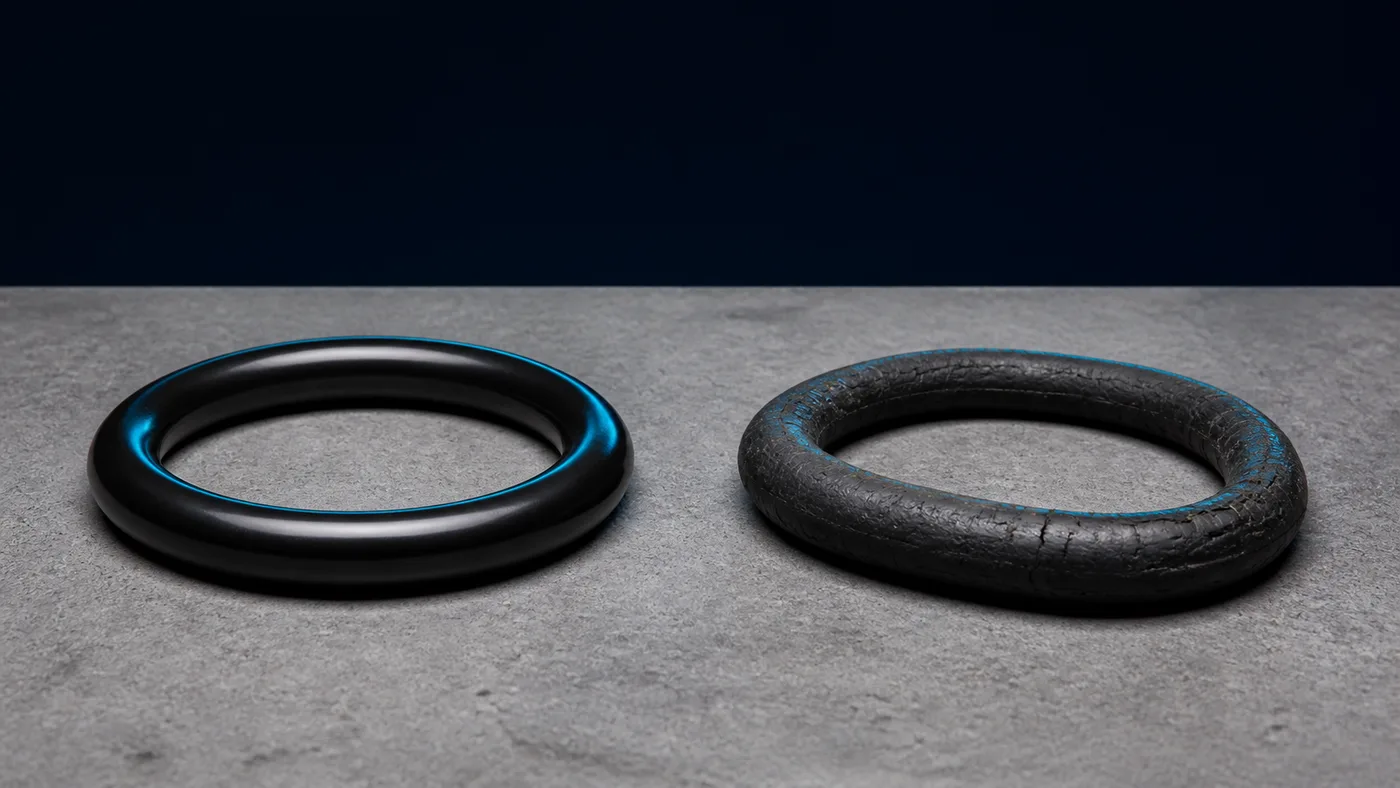
How it shows up: a seal that was fine at install and weeps by mid-season; rubber that feels stiff and looks slightly glazed when removed; cracking that starts at the compression line.
How to screen: ask what the material is, get it named on the quotation and the purchase order, and ask for the temperature rating on anything going near a heater. A supplier who answers "rubber" has not specified it, which means nobody is holding it.
Failure mode 2: dimensionally close, functionally wrong
The part measures within a millimetre everywhere and still does not seal, because the dimension that mattered was not one of the ones being measured.
A seal works through controlled compression. If a groove is 0.3 mm shallow, the o-ring is over-compressed and takes a permanent set. If it is 0.3 mm deep, there is insufficient squeeze and it weeps under pressure. Both parts look correct next to the original.
How it shows up: intermittent leaks; installers reporting that it "needs an extra turn"; leaks that appear after the first thermal cycle rather than immediately.
How to screen: ask which dimensions the supplier treats as critical for that part. The answer should be one to three specific interfaces, not "all of them". A supplier who cannot name them is measuring nothing in particular.
Failure mode 3: process drift between runs
The first order is excellent. The third is not, and nothing was announced.
Moulds wear. Material lots vary. Process parameters get adjusted by whoever is on shift. Without first-article inspection against a recorded baseline, drift accumulates invisibly until a part stops working.
How it shows up: a part that was reliable for two seasons starts generating returns; parts from one carton behave differently from another; the supplier is genuinely surprised.
How to screen: ask to see the inspection record from the most recent production run of a part you buy. Not a certificate — the actual sheet with numbers. Whether one exists tells you most of what you need to know.
Failure mode 4: right part, wrong cross-reference
The part is well made and would work perfectly — on something else. It arrived because a cross-reference number was wrong.
This is the failure that looks like a quality problem and is not. The customer ordered against a number, received a well-made part that does not fit their machine, and concludes the parts are bad.
How it shows up: returns concentrated on specific part numbers rather than spread across a range; complaints saying "this is not what I ordered" rather than "this broke".
How to screen: ask how numbers get onto the supplier's cross-reference list and what evidence is required. Lists mined from marketplace titles without verification contain predictable errors — assembly numbers treated as component numbers, case SKUs treated as piece SKUs, sibling models pointing at each other.
Failure mode 5: damaged before it was ever installed
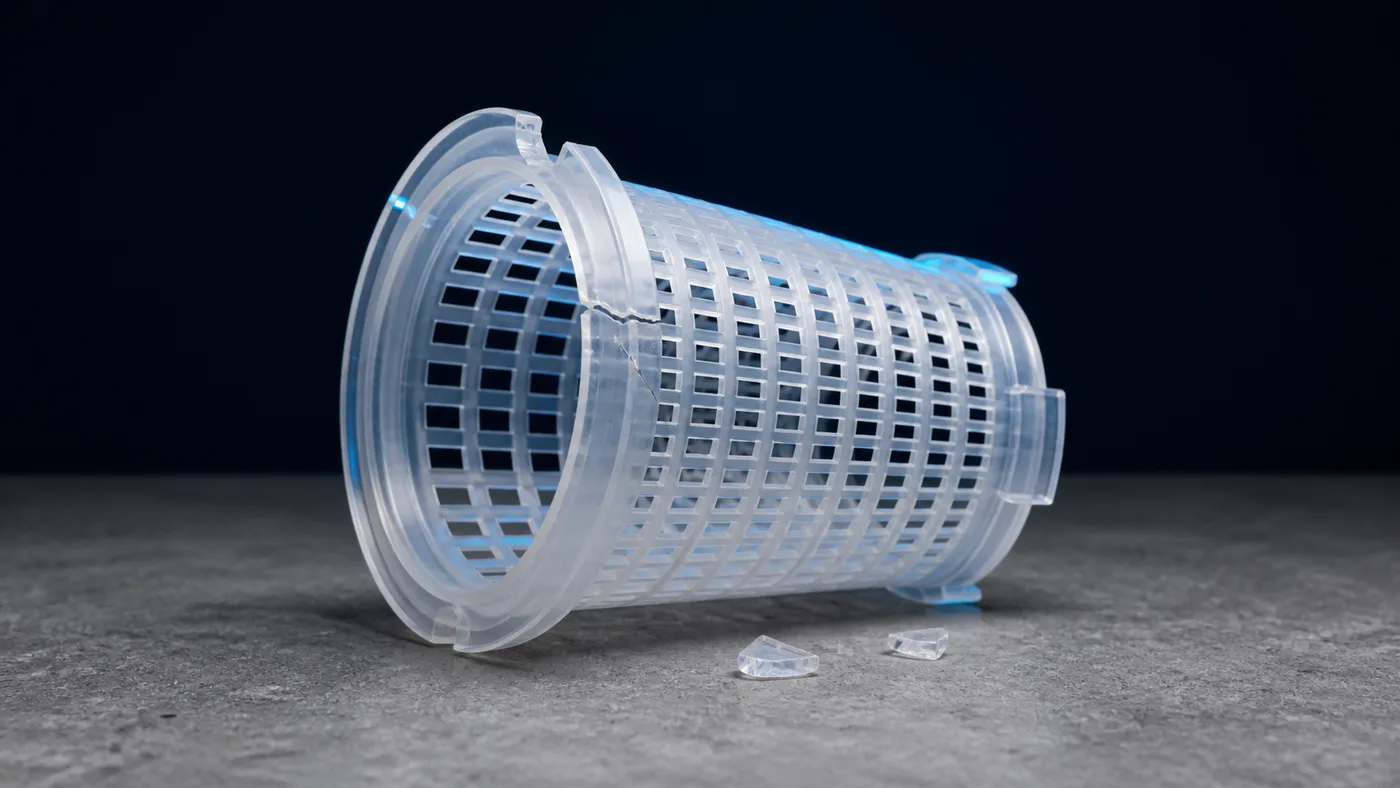
Underrated. A moulded part that took a hard impact in transit can carry a hairline crack that is invisible until it is pressurised.
How it shows up: failures on install or within days; splits that follow a line rather than a stress point; a cluster of failures from one shipment.
How to screen: ask for the packing specification — pieces per carton, internal protection, carton strength. Then look at what arrives. Parts loose in a carton with no dividers will produce this, and it is entirely preventable.
What this means for a screening routine
| Failure mode | Detectable before ordering? | The question that catches it |
|---|---|---|
| Wrong material | Yes | What material, and will you put it on the PO? |
| Dimensionally close | Yes | Which dimensions are critical for this part? |
| Process drift | Partly | Show me the last run's inspection record |
| Wrong cross-reference | Yes | How does a number get onto your list? |
| Transit damage | Yes | What is the packing specification? |
Four of the five are answered in one conversation. The fifth — drift — is the one that requires time, which is why the second and third orders tell you more about a supplier than the first.
The pattern worth noticing
Every one of these traces back to something not being written down. The material was discussed but not specified. The critical dimensions were understood by one engineer and never recorded. The cross-reference was in a database with no source. The packing was assumed.
A supplier relationship fails in writing before it fails in the water. The single most effective screening question is not technical at all: ask for the specification of the part you are buying, and see whether one exists.
Sourcing
POOLPOINT states material per part, identifies the critical dimensions we check against the original, and re-audits cross-reference data rather than treating it as a one-time import. If a part is one we would not recommend switching to aftermarket, we will say so. Factory direct, MOQ 50 pcs, samples first.