

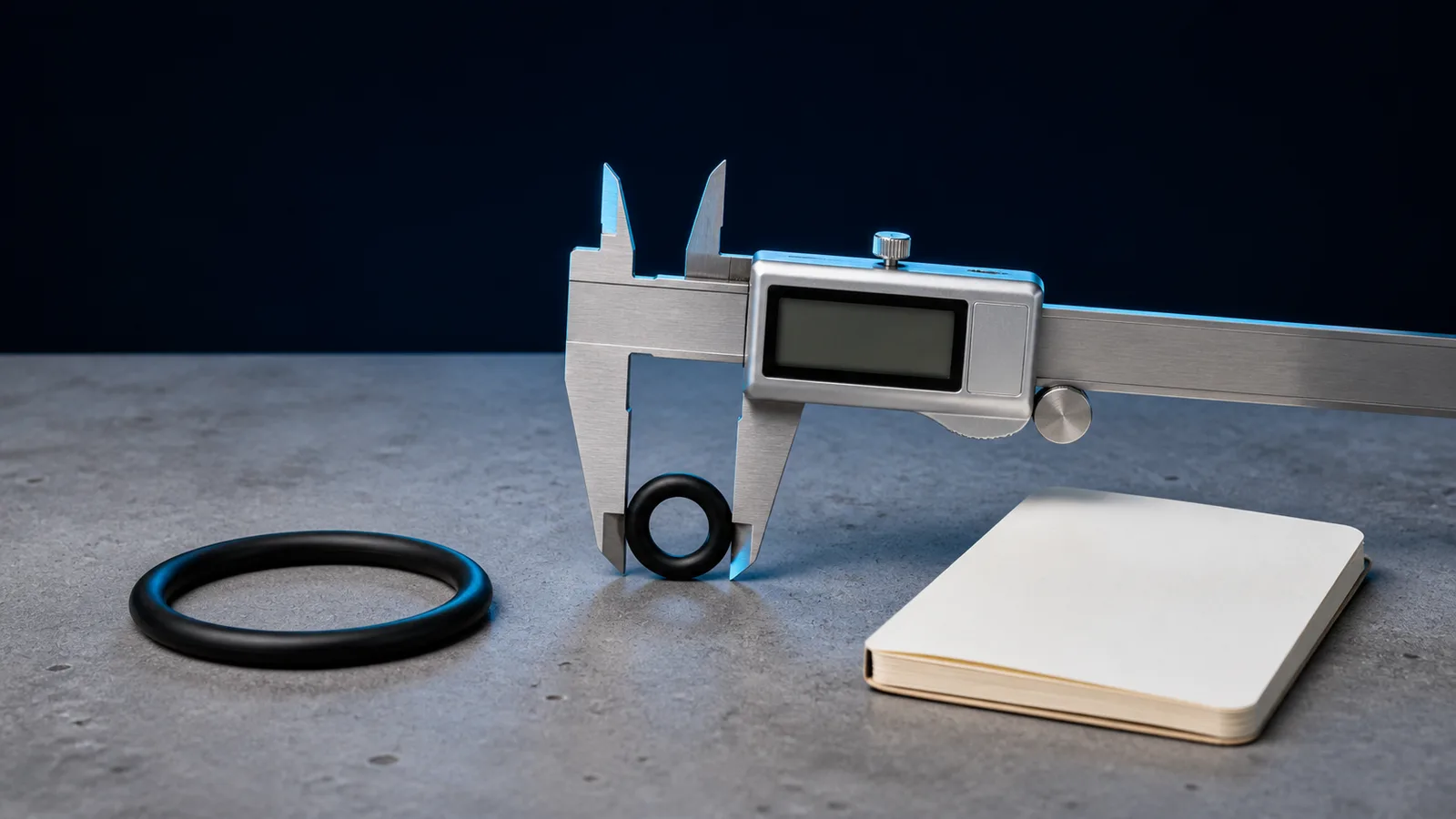
Most buyers ask for a sample, hold it next to the original, decide it looks right, and place the order. That check catches gross errors and nothing else. The failures that generate returns — a sealing face that is 0.4 mm shallow, a rubber that hardens in chlorinated water, a thread that engages but does not seat — all survive the eyeball test.
Step 1: get the right original to compare against
This sounds obvious and is where half of all fitment disputes start. Equipment lines get revised. A pump sold under the same model name across eight years may have had two housing changes, and the part that fits the 2016 build does not fit the 2021 one.
Before you compare anything, establish which revision your original came off, and tell your supplier. If you cannot establish it, say so — a supplier who knows the comparison is uncertain will handle the result differently than one who thinks it is definitive.
Step 2: measure the interfaces, not the part
A part has one or two surfaces that determine whether it works. Everything else is packaging.
For a moulded seal: the groove diameter it seats into, the cross-section of the rubber, and the compression when the flange closes. For an impeller: the bore, the keyway or thread, and the outer diameter against the diffuser. For a header gasket: the bolt pattern, the port openings and the compressed thickness.
Measure those with calipers, on both the original and the sample, and write the numbers down. The written record is the point — six months later when a batch feels different, you have a baseline instead of an argument.
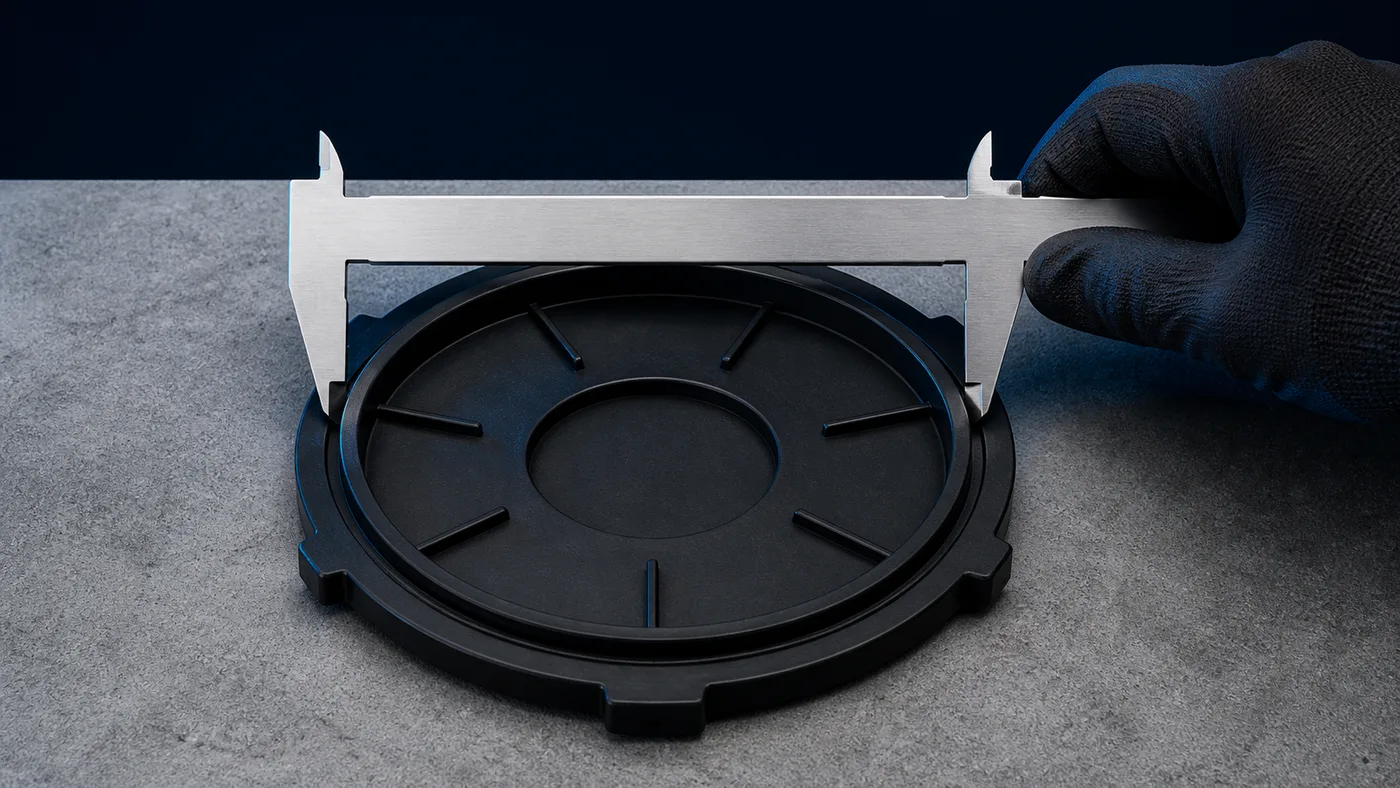
Step 3: dry fit before wet fit
Assemble without water and without sealant. What you are looking for:
- Does it seat fully, or does it stop 1 mm proud?
- Does the fastener pattern line up without forcing?
- Is there interference that only appears at full engagement?
A part that needs persuasion during dry fit will be reported by an installer as "does not fit", regardless of what your measurements say.
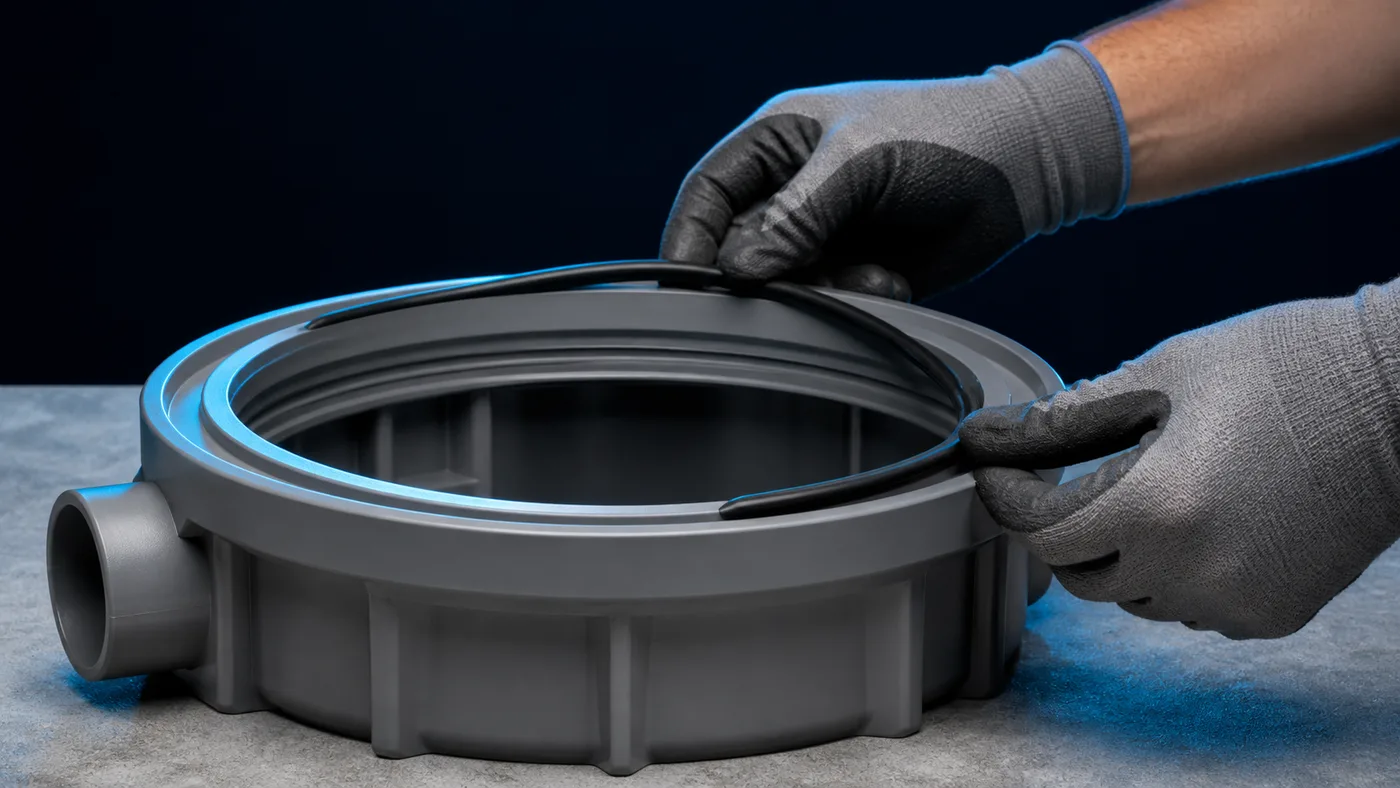
Step 4: install it and pressure-test
The step people skip because it takes a day. Install into a real system, bring it to operating pressure, and leave it. Half of sealing failures do not appear until the system has cycled a few times and the rubber has taken a set.
If you cannot test in a live system, at minimum torque the assembly to specification, release it, and inspect the sealing face for even compression marks. Uneven witness marks mean the geometry is wrong even if nothing leaked yet.
Step 5: check the material, not the colour
Colour tells you nothing. Two black o-rings can be EPDM and nitrile, and in chlorinated water at heater temperatures the difference shows up within a season — one stays elastic, the other hardens, flattens and cracks.
Ask what the material is, get it in writing, and put it on the purchase order. A material named in the PO is a specification; a material mentioned in an email is a hope.
For anything that runs hot — header gaskets, heat exchanger seals — ask the temperature rating explicitly. A rubber that is fine in a pump union will fail in a header.
Step 6: look at what the part is made of, not just what it is made from
Hold the part to the light and look at the surfaces the mould created. What you are looking for:
- Flash along the parting line — trimmed cleanly, or left rough?
- Sink marks on thick sections, which indicate the part was pulled before it was set
- Weld lines where flow fronts met, particularly across a sealing surface
- Consistency across several pieces if you got more than one
None of these are automatically disqualifying. All of them tell you how much attention the process is getting.
Step 7: sample two, not one
A single sample tells you what the factory can produce when it knows it is being watched. Ask for two or three pieces, ideally from different production runs if any exist, and compare them to each other.
Variation between samples is more informative than the absolute dimensions. A part that is 0.2 mm off but consistent is a part you can plan around. A part that is nominally correct but varies 0.3 mm piece to piece will produce intermittent returns that are impossible to diagnose.
Step 8: write the result down in a form you can reuse
Record, per part: the numbers you measured, the original's revision, what the material is, the date, and the verdict. Structure it so the next person can repeat the test.
This becomes valuable faster than expected. When a customer reports a fitment problem two seasons later, the first question is whether the part changed or the customer's equipment did — and only a record from before the dispute can answer it.
What a sample cannot tell you
Be clear about the limits, because over-reading a sample is its own failure mode.
It cannot tell you about batch consistency. One good part is evidence about capability, not about process control. That question is answered by the second and third production orders, not by a sample.
It cannot tell you about longevity. Chlorine, UV and heat cycling do their work over months. If a part is going into a demanding position, plan a field trial with a friendly service customer before you commit to volume.
It cannot validate a cross-reference. A part fitting your original proves it fits that original. Whether it also replaces the six other numbers on a supplier's cross-reference list is a separate question with separate evidence.
What to ask for
The request that gets the most useful response is specific: single pieces of the parts you actually sell, plus a statement of what material each is and what dimensions were checked against the original. A supplier who supplies parts without that information is asking you to do their verification for them.
Sourcing
POOLPOINT supplies single-piece samples for fitment verification — samples are handled separately from the 50-piece production minimum precisely because committing to a run on an unverified part is bad for both sides. We will tell you the material and the dimensions we check. Send the numbers you want to validate and we will quote samples and production together.