

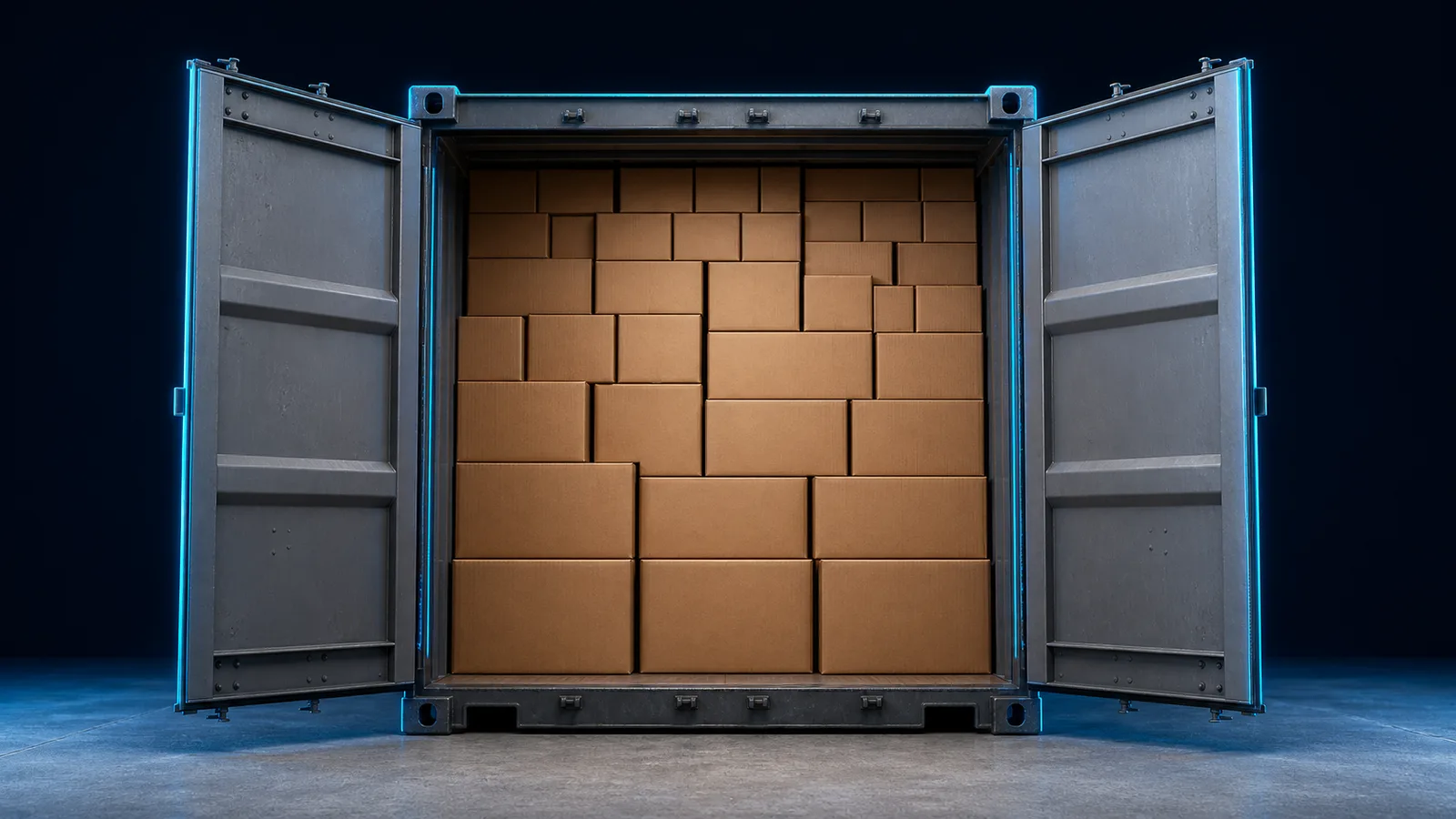
Pool parts are an awkward freight category: light, bulky, and usually shipped as many small quantities rather than one large one. The result is that a container of pool parts is mostly empty space unless someone plans it, and that empty space is charged for.
Carton efficiency is the whole game
Freight is charged on volumetric weight for this category. So the question is not how much your parts weigh — it is how much space they occupy, which is decided at the carton level before anything reaches a container.
Two failure modes:
Part-full cartons. One SKU per carton with a low piece count means you ship a lot of air. Thirty SKUs at fifty pieces each, boxed separately, is thirty cartons mostly empty.
Cartons sized for one part. A supplier using their standard carton for everything will pack a small item in a box built for a larger one.
The fix is the same in both cases: mixed cartons. Combining several SKUs into full cartons converts empty space into paid-for goods. This is why "can cartons be mixed" is a more consequential question than the unit price on a multi-SKU order.
What to specify
Pieces per inner pack
Inner packs per carton
Carton external dimensions
Gross and net weight per carton
Total cartons and total cubic volume for the order
The last line is what your forwarder needs to quote. Ask for it as part of the quotation, not after the goods are made — carton specification is easy to influence before production and impossible after.
Palletised or floor loaded
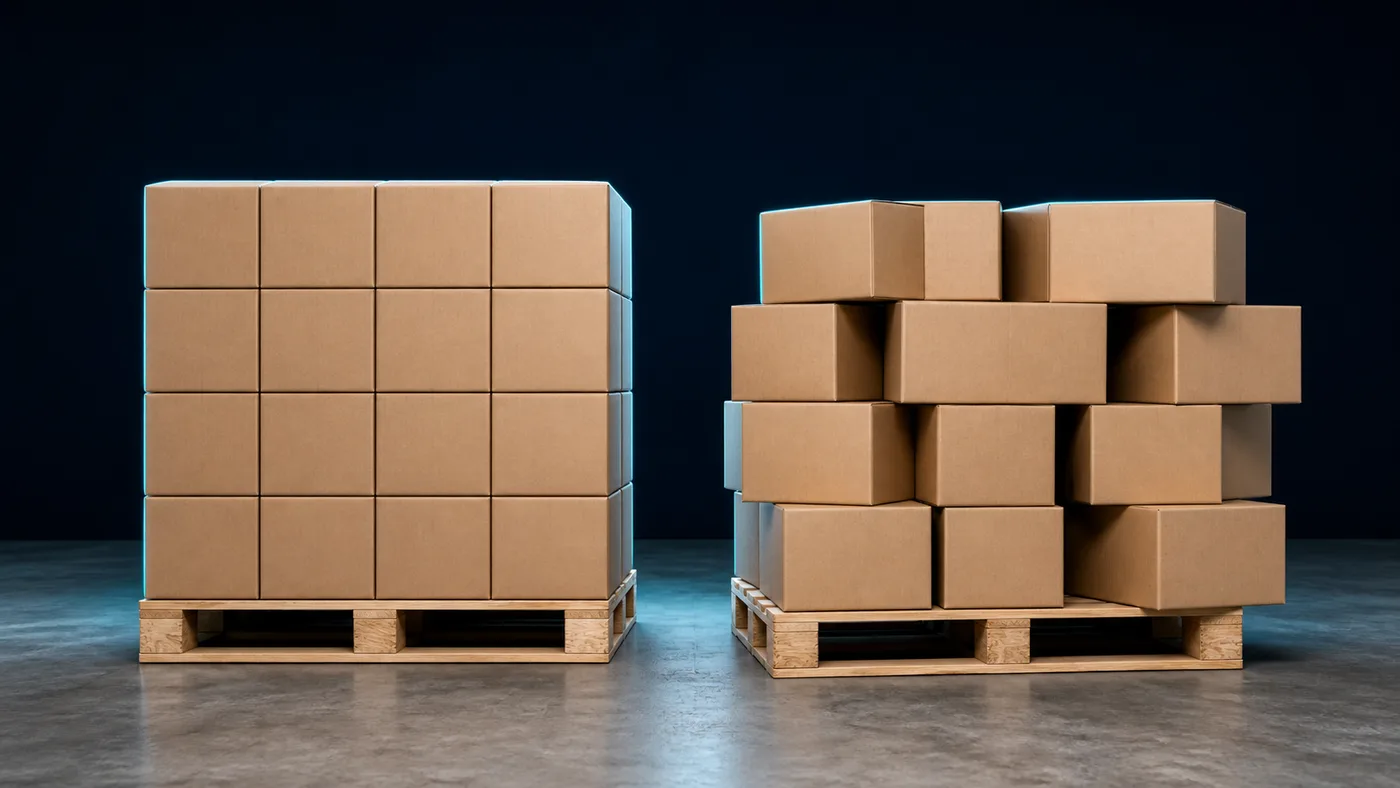
Floor loaded — cartons stacked by hand directly into the container. Uses the space most efficiently, which for a light, bulky category is a real saving. Costs more labour at both ends and takes longer to unload.
Palletised — cartons on pallets, moved by forklift. Faster to load and unload, less handling damage, easier to receive. You lose space to the pallets themselves and to the stacking height they impose.
For pool parts the trade usually favours floor loading on a full container where the volume saving is large, and palletising for LCL where the shipment is handled multiple times during consolidation and deconsolidation and handling damage is the bigger risk.
If your warehouse cannot devannning a floor-loaded container efficiently, that decides it regardless of the freight arithmetic.
Preventing the damage you actually see
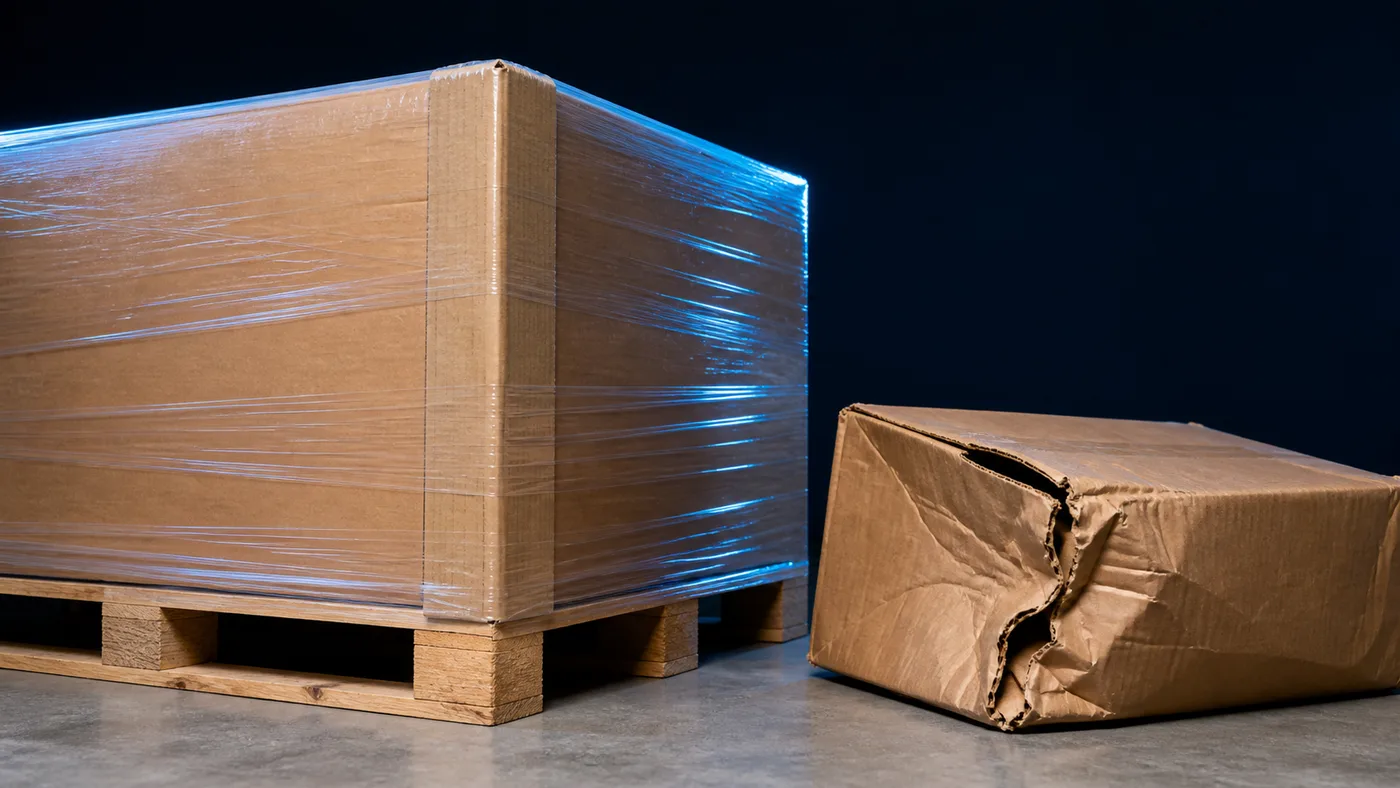
Moulded parts do not usually break in transit from impact. They break from compression — heavy cartons stacked on light ones — and from movement inside a carton.
Stack heavy at the bottom. Sounds obvious, gets ignored when someone is loading to a schedule. Specify it in writing.
Fill the void. A carton with 30% empty space lets contents move for six weeks. Movement is what produces the hairline cracks that are invisible until a part is pressurised.
Divide within the carton. Mixed cartons especially need internal separation, or a heavy metal part sits on top of a moulded one for the whole voyage.
Do not over-pack either. A polybagged o-ring in a folding carton in a divider is three layers protecting something that could not be damaged. Every layer costs material, labour and volume.
The right level is found by asking the supplier what damage rate they see on that part, and then inspecting what arrives against what they said.
The packing list that saves you a day
A mixed-carton shipment without a proper packing list is a receiving problem every time.
What you need, per carton: a carton number, the SKUs inside, the quantity of each, and gross weight. Printed on the outside as well as supplied as a document.
Without it, receiving a mixed shipment means opening every carton to find out what is in it before anything can be put away. With it, cartons go to the right zone directly.
Ask for it in the order confirmation, not at shipment. A supplier who has to produce it retrospectively usually produces it inaccurately.
Labelling that survives the voyage
Container interiors get humid. Paper labels lift, ink runs.
- Print labels large enough to read from across a warehouse
- Put the carton number on at least two faces
- Include your PO number on every carton
- Use a label that survives moisture
If you have your own barcode scheme, get it on the carton label. Receiving that can be scanned rather than typed is faster and produces fewer errors in the one place errors are most expensive.
Before you sign off on a shipment
- Carton count matches the packing list
- Total cubic volume matches what the freight was quoted on
- Photos of loading, if you asked for them — cheap, and the only evidence available if a claim arises
- Weights consistent with the specification, which is also a rough check on quantity
That last one is worth doing. A carton meaningfully lighter than specification is either short-shipped or contains something other than what the label says, and finding out at receipt is much better than finding out at the picking face.
Sourcing
POOLPOINT accepts mixed cartons to reach the order minimum and supplies carton dimensions, weights and a per-carton packing list with every shipment. On a multi-SKU order the packing arrangement is usually worth more than anything negotiable on unit price — tell us the SKUs and quantities and we will come back with the carton plan and the cubic volume before you book freight.