

An aftermarket parts business cannot function without naming other companies' brands, because that is how buyers find parts. It also cannot function while implying those companies made the parts. The whole trade sits between those two constraints, and the practical question is where exactly the line falls in a product title.
This is not legal advice. It is how the risk is generally managed, and it is a summary you should take to a lawyer in your own market rather than a substitute for doing so.
The principle: descriptive use versus trademark use
Trademark law in most markets permits using someone's mark to describe what your product does — including that it fits or replaces their product — provided you do not suggest origin, sponsorship or endorsement.
So the question is never "can I say Hayward". It is: would a reasonable buyer, reading this, think Hayward made it or approved it?
Applied to a listing title:
❌ "Hayward Super Pump Impeller" ⚠️ "Impeller for Hayward Super Pump" ✅ "Replacement impeller for Hayward Super Pump — aftermarket, not manufactured by Hayward"
The first uses the brand as though it is the product's brand. The second is defensible but ambiguous on a crowded page. The third states fitment and disclaims origin in the same sentence, and it is the version that survives a complaint.
The four places a complaint usually starts
1. Logos. Using an equipment manufacturer's logo or wordmark styling is the clearest violation and the easiest for their counsel to act on. Never on packaging, never in a listing image, never as a category icon.
2. Titles that lead with the brand. A title beginning with someone else's brand name reads as their product regardless of what follows.
3. The word "genuine". Or "original", or "OEM part" used to describe an aftermarket component. This moves from ambiguity into a false statement about origin.
4. Trade dress. Packaging that copies another brand's colour scheme, layout and typography can infringe even without using the name.
What a safe listing looks like
Title: part type first, then compatibility, then the disclaimer of origin.
Bullets: state the replacement relationship explicitly — "Replaces OEM number X" — rather than implying equivalence by juxtaposition.
Description: include the full disclaimer sentence. An independent manufacturer, not affiliated with, sponsored by or endorsed by [brand], brand names and OEM numbers used to identify fitment only.
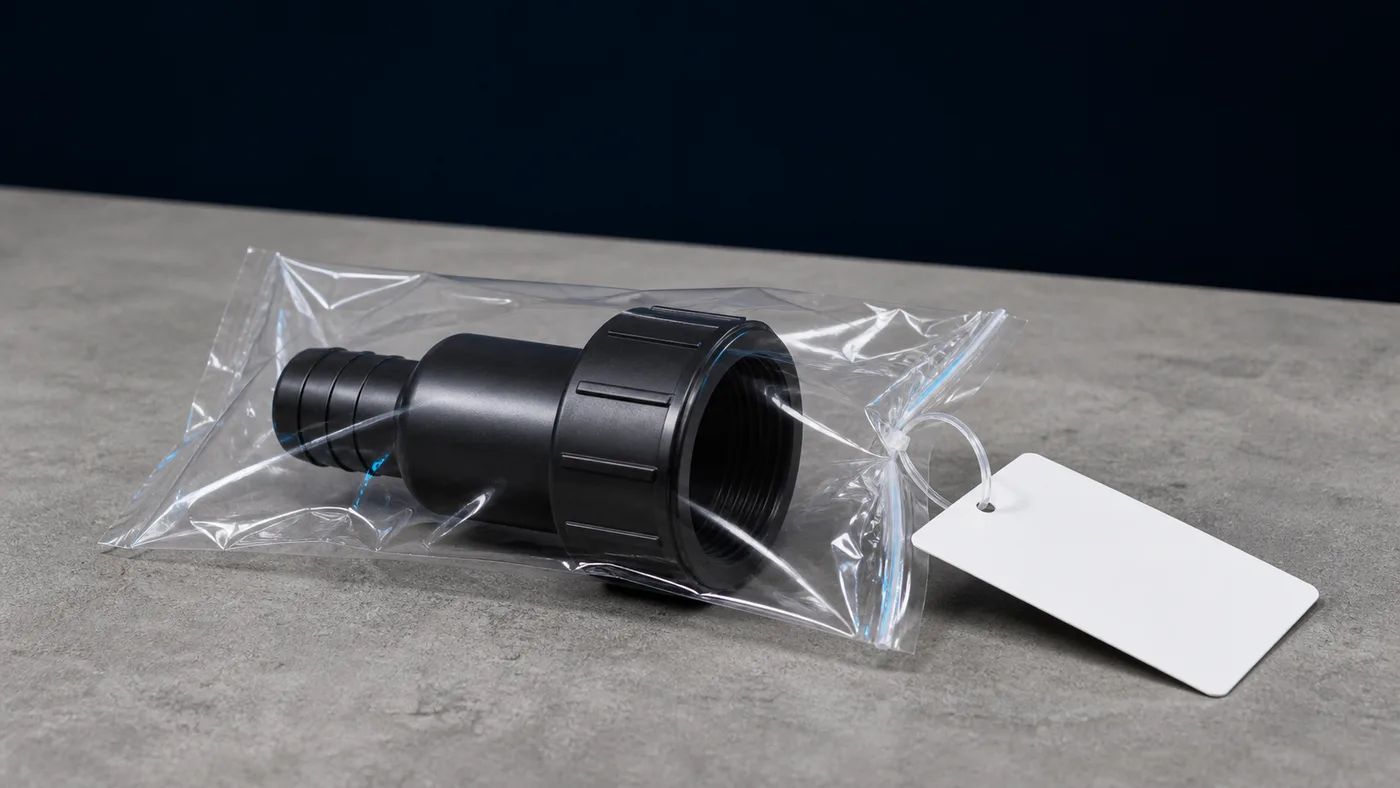
Images: your part, your packaging. Not the equipment brand's product photography, not their packaging, not a photo containing their logo.
Structured data, if you run your own site: the brand field must be your brand. This one catches people out — it feels natural to put the equipment brand there because that is what buyers search, but that field is a machine-readable statement of who makes the product. Compatibility belongs in a compatibility field, not in the brand field.
The tiering approach some operators use
A pattern worth knowing about, observed in a large aftermarket parts catalogue outside the pool sector: they add a "for" prefix to some brands in their category structure and not others. Brands with a reputation for aggressive enforcement get "for-"; more relaxed brands appear bare.
In other words, they grade their language by how litigious each brand is, rather than applying one policy across the catalogue.
Whether to copy that is a judgement call. What it tells you is that experienced operators treat brand naming as a risk-graded decision and take the trouble to know which brands enforce. Knowing which equipment manufacturers in your market are active on this is worth an afternoon's research.
Where the disclaimer has to appear
Not only in the footer, and not only once.
- On any page organised around an equipment brand name
- On every product listing that names a brand
- On packaging
- In marketplace listings, in the description body
The failure mode is a disclaimer that exists on the site but not where the brand name is being used. A brand landing page with the disclaimer in the footer and the brand name in the H1 has put the two in the wrong order.
OEM numbers specifically
Part numbers are generally treated differently from brand names — they are usually functional identifiers rather than protected marks, which is why cross-reference tables are standard practice across the whole aftermarket industry.
The safe framing is still explicit: "replaces OEM number X", not "OEM number X" as a standalone label. Use the number to describe a relationship, not as a title for your product.
Two practical additions:
- Label the numbers clearly as OEM references, so nobody mistakes your part number for theirs
- Do not adopt a numbering scheme that mimics an equipment brand's format — that creates confusion which is exactly what the law is concerned with
If you receive a complaint
Take it seriously and answer quickly, even if you think you are right. Most complaints from equipment manufacturers are template letters aimed at obvious infringement, and a specific reply describing what you actually do resolves a large share of them without escalation.
Have three things ready before you need them: your standard disclaimer wording, a record of how your listings are constructed, and the name of a lawyer in the relevant market. Assembling those under time pressure is worse in every way than having them on file.
Sourcing
POOLPOINT is an independent manufacturer of aftermarket replacement parts. We are not affiliated with, sponsored by or endorsed by Hayward, Pentair, Jandy, Sta-Rite, Zodiac, Raypak or any other equipment manufacturer, and brand names and OEM numbers throughout this site identify fitment only. If you are building listings from our data, that disclaimer travels with it — use it.