

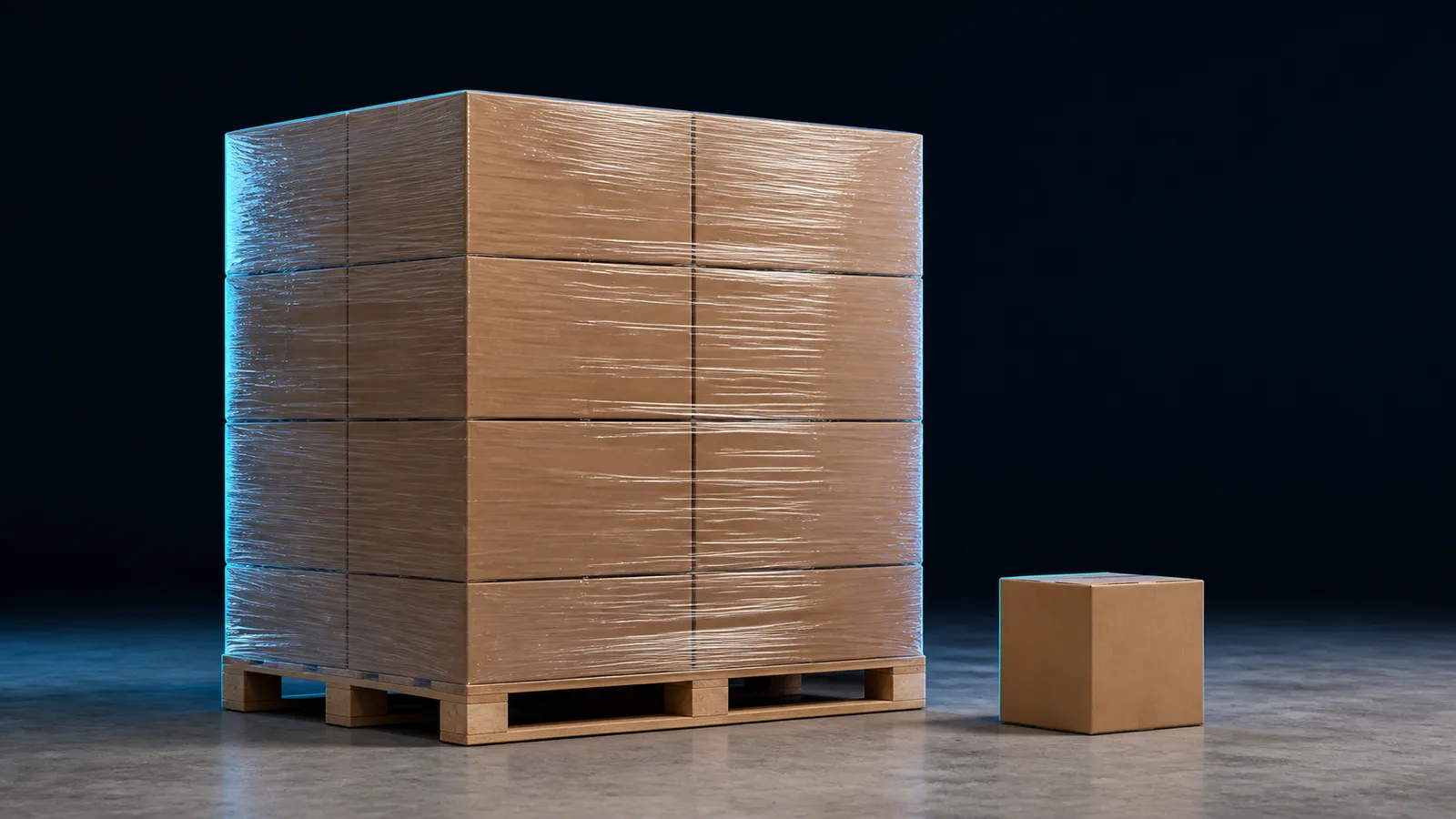
Most pool parts move by sea, correctly. Air gets used as an emergency response to a stock-out, at a cost that people rarely calculate afterwards. Occasionally it is the right call before the emergency, and the difference comes down to the value density of what you are shipping and how much a stock-out costs you.
Why volumetric weight decides everything
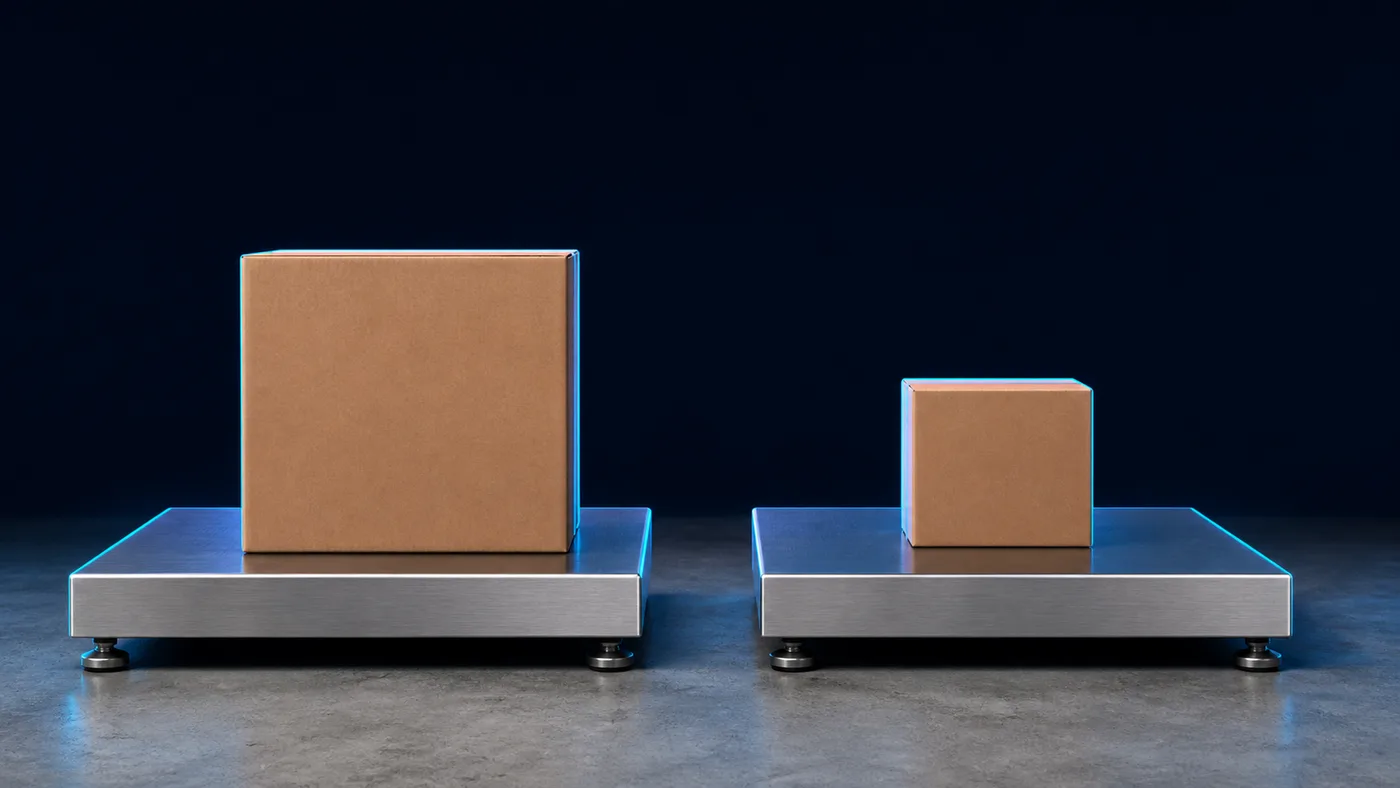
Both sea and air charge on the greater of actual weight and volumetric weight — a calculated figure from the package dimensions. For pool parts this matters enormously, because a carton of o-rings weighs almost nothing and occupies real space.
The consequence: for most pool parts you are paying for volume, not weight. Which means how the parts are packed moves your freight cost more than the parts themselves do.
Two orders, identical goods: thirty part-full cartons versus twelve full ones. Same pieces, materially different freight. This is why carton efficiency and mixed cartons matter more than they appear to.
The realistic comparison
| Sea (LCL) | Sea (FCL) | Air | |
|---|---|---|---|
| Transit | 3–6 weeks | 3–6 weeks | 3–7 days |
| Door-to-door | 8–14 weeks total | 8–14 weeks total | 1–2 weeks total |
| Cost per unit | Low | Lowest at volume | Multiples higher |
| Best for | Mixed, moderate volume | Full container | Emergency, high value density |
The "door-to-door" row is the one to plan against. Ocean transit is only part of it — production, export clearance, transit, import clearance and inland delivery together are what determine when stock is actually on your shelf.
When air genuinely pays
Four cases, and none of them are "we ran out".
High value density. Small, expensive parts where freight is a small fraction of value. Electronic components and precision assemblies. On these, air adds little proportionally and buys weeks.
A stock-out with a quantified cost. If being out of a part is costing you a customer relationship rather than one line item, air freight on a partial quantity to bridge until the container lands is straightforward arithmetic. Do the arithmetic rather than the panic.
Samples and first articles. Always air. Waiting six weeks to validate a part delays everything downstream.
Launch of a new range where timing matters. Occasionally worth paying to be in market for a season.
When air does not pay, however tempting
Low-value, high-volume parts. The freight can exceed the goods. If you are air-freighting seals, the planning failure has already happened and you are choosing how much to pay for it.
Whole replacement orders. Air-freighting a full order to recover from late planning usually costs more than the margin on the order.
"Just in case" urgency. Air freight because nobody checked the calendar is a recurring cost that never appears in a budget line.
The hybrid worth designing in advance
Split the order deliberately: air a small quantity of your fastest movers, sea the rest.
The air portion covers the gap between when you need stock and when the container arrives. The sea portion carries the volume at sensible cost. On a large seasonal order this can cost a fraction of what a full air shipment would, while eliminating the stock-out that would otherwise force one.
This works best when planned at order time — asking the factory to split production so the air portion completes first. Asked after production, it is just a more expensive version of the same shipment.
LCL versus FCL
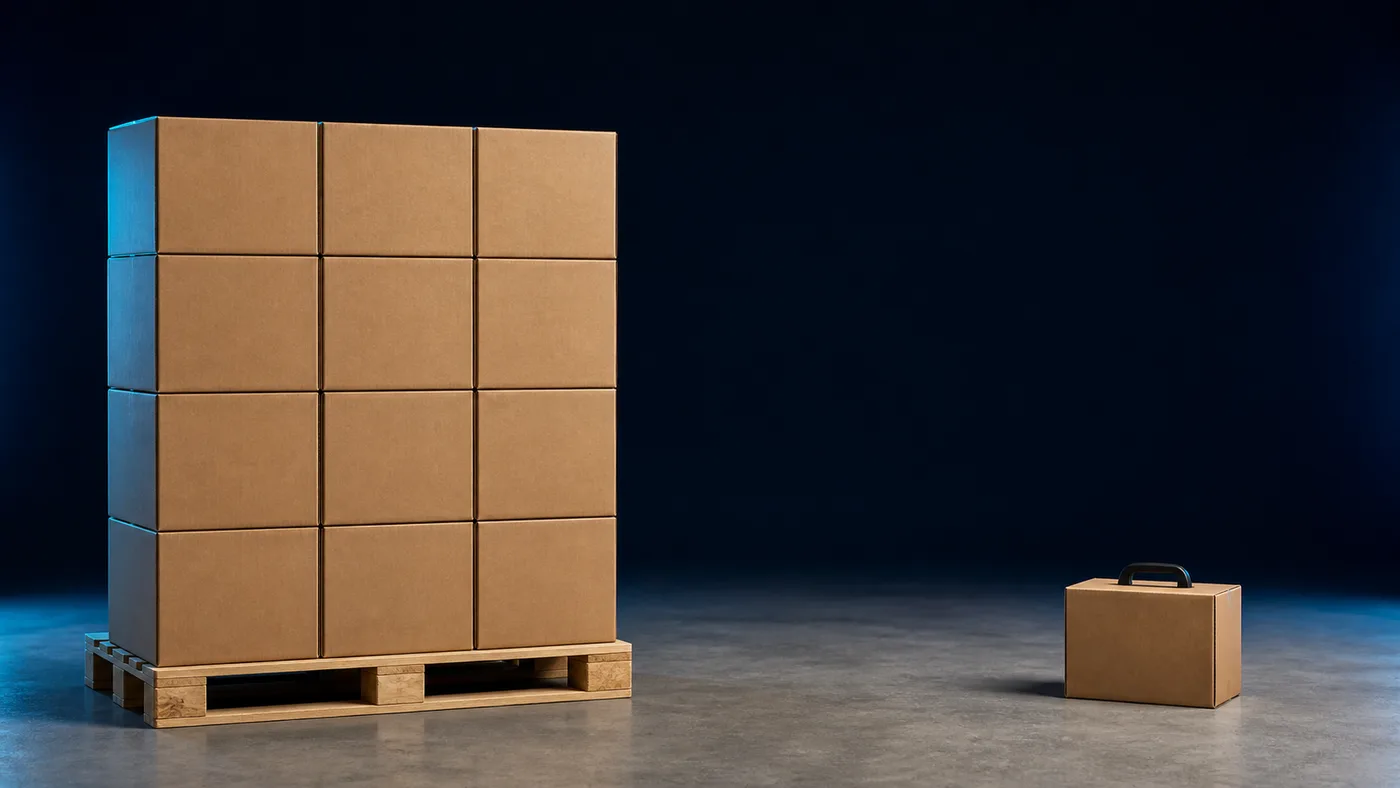
LCL (less than container load) — you share a container. Right for smaller orders, with the trade that consolidation and deconsolidation add time and handling, and per-unit cost is higher.
FCL (full container load) — the whole box. Cheaper per unit, faster through the ports, and less handling means less damage. The crossover is usually somewhere around half a container, but ask for both quotes when you are near it. A part-full FCL can beat a large LCL.
For a distributor buying seasonally, consolidating a year's core range into one FCL rather than four LCL shipments usually wins on freight, damage and administration together.
What to ask for so you can calculate this yourself
From the supplier: carton dimensions, gross and net weight, pieces per carton, and total cubic volume for the order. Ask for these on the quotation.
From a freight forwarder: LCL and FCL quotes for the same shipment, plus air, all door-to-door including destination charges. Comparing port-to-port rates hides exactly the costs that differ most.
Then you can run the comparison yourself instead of taking anyone's word for which is cheaper.
The planning point
Air freight is almost always the visible symptom of a decision made too late somewhere upstream. If you are air-freighting more than occasionally, the fix is in the ordering calendar rather than the logistics.
Work backwards from your on-shelf date: 8–14 weeks door-to-door, plus the lunar new year closure if the order crosses it. That arithmetic done in October removes most of the reasons anyone reaches for air in April.
Sourcing
POOLPOINT quotes FOB with carton dimensions and weights so you can price freight yourself and compare options honestly. Mixed cartons are accepted, which keeps volumetric weight down on multi-SKU orders — usually a larger saving than anything negotiable on the unit price. Tell us your target on-shelf date and we will work the production schedule back from it.