

"OEM and private label available" appears on nearly every aftermarket supplier's site, and it covers arrangements that differ by a factor of fifty in cost and commitment. Before negotiating, work out which of the four levels you are actually asking for.
The four levels, and what each costs
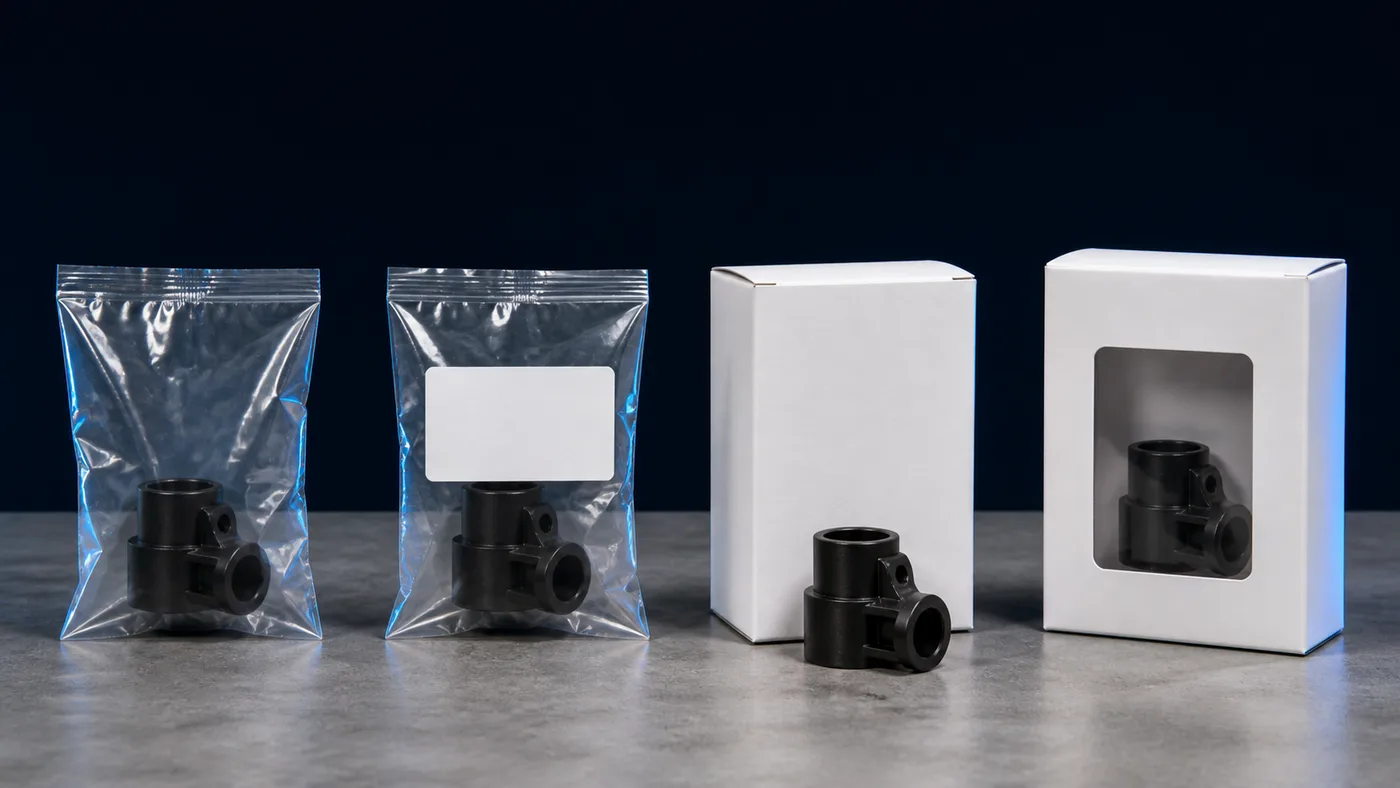
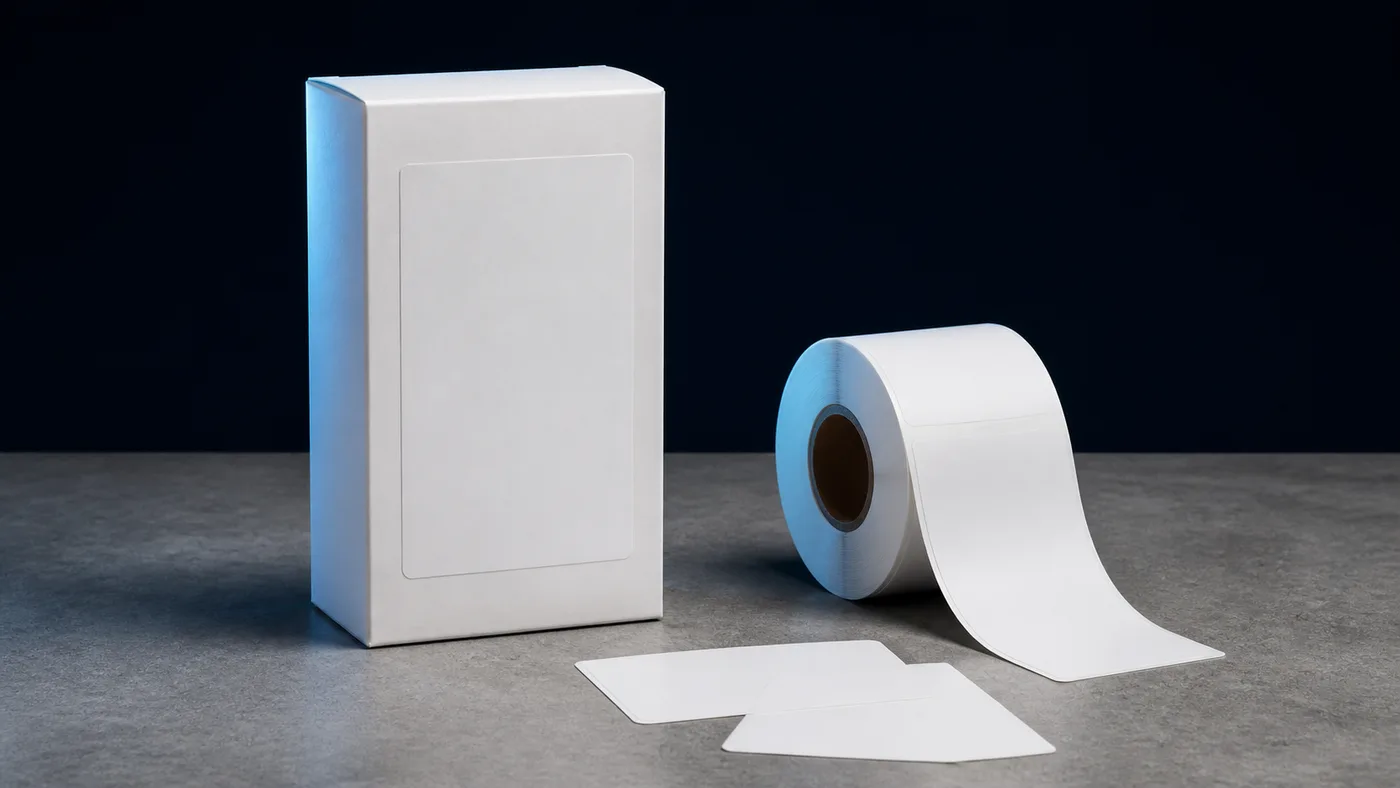
Level 1 — your label on standard packaging. The part is the supplier's standard product; your logo goes on the bag or box label. Cheapest, fastest, no tooling, usually available at normal MOQ. This is what most distributors mean.
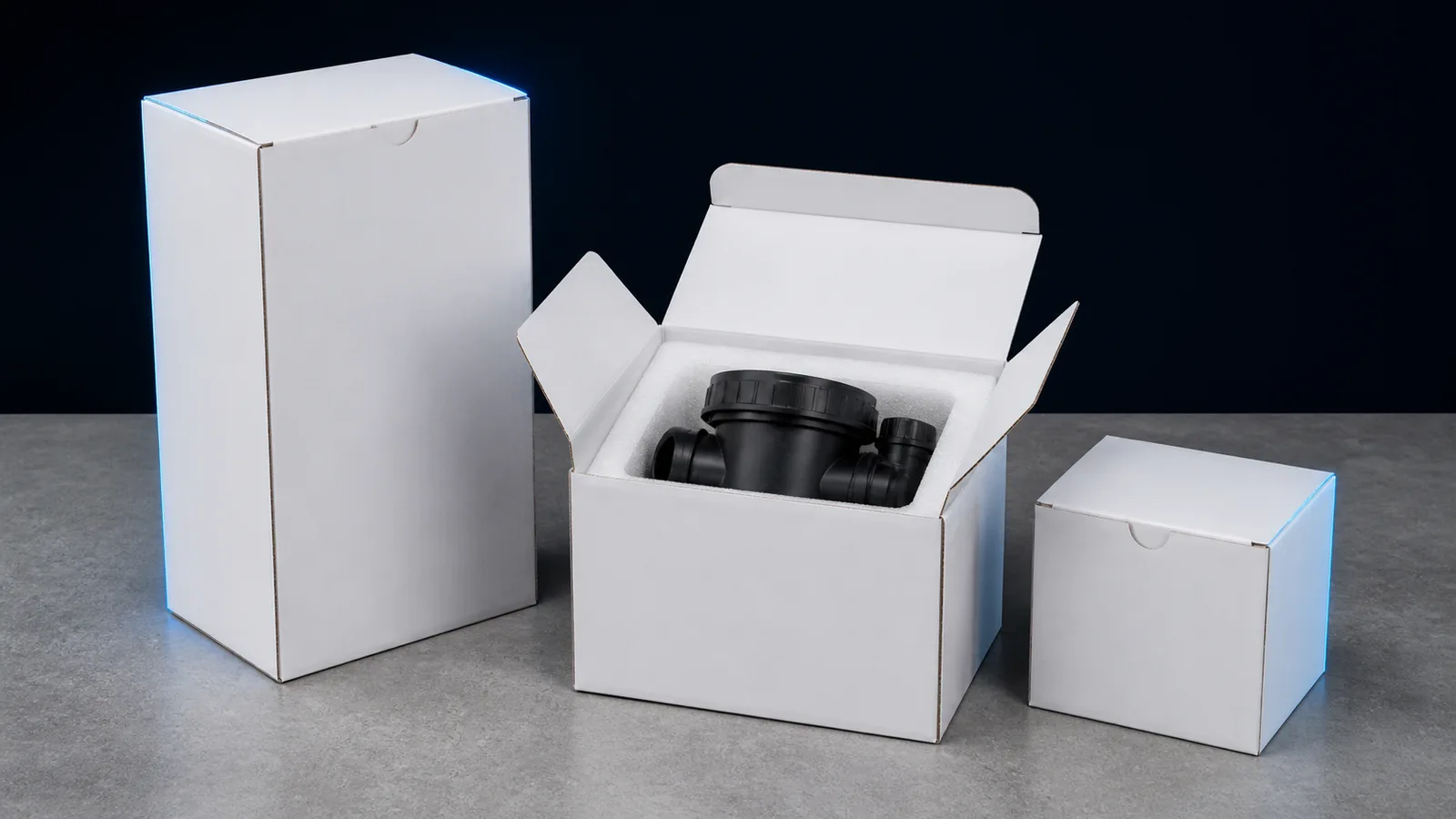
Level 2 — your packaging design. Your box, your artwork, your barcode, your instruction sheet. Requires artwork and a print run, so packaging carries its own minimum quantity — often higher than the part MOQ.
Level 3 — your branding on the part. Your logo or part number moulded into the component. Requires modifying the tool with an insert, so there is a tooling cost and it locks that cavity to your programme.
Level 4 — your part. A tool cut to your specification, exclusive to you. Full tooling cost, full commitment, and the only level that gives genuine exclusivity.
The gap between levels 1 and 4 is enormous, and the words used to describe them are identical. Establish which one is being quoted before comparing prices.
What level 1 actually gets you
More than people expect, and less than they hope.
What it gets you: the customer sees your brand, your part number, and your contact details. For a distributor selling to service companies, this is most of the value — it makes reordering go through you rather than around you.
What it does not get you: exclusivity. The same part, from the same tool, is going to other customers under other labels. If your competitor down the road buys from the same factory, you are selling identical goods with different stickers.
For most distributors that is a reasonable trade, because the thing being defended is the customer relationship rather than the product. But it should be a decision, not a discovery.
What you can and cannot put on the packaging
This is where private label gets legally interesting, and it is worth being precise because the exposure sits with whoever puts their name on the box — you.
You can put on it:
- Your brand name, logo and part number
- A description of what the part is
- The OEM numbers it replaces, phrased as replacement or compatibility
- Material, dimensions, quantity, country of origin
You should not put on it:
- Any equipment manufacturer's logo, wordmark or trade dress
- The word "genuine", or anything implying the equipment brand made it
- Packaging that imitates the equipment brand's design language
- Certification marks the part does not hold
The distinction that matters is descriptive use versus trademark use. Writing "Replaces Hayward SPX1600Z2" describes what the part fits — that is descriptive and generally defensible. Putting the Hayward logo on the box is trademark use and is not.
The phrasing that keeps you on the right side
Two constructions, and the difference is not cosmetic:
❌ "Hayward Super Pump Impeller" ✅ "Replacement impeller for Hayward Super Pump — aftermarket, not manufactured by Hayward"
The second identifies fitment and disclaims origin in the same breath. It is longer and less punchy, and it is the version that survives a complaint.
One pattern worth knowing, observed across a competitor's catalogue: they add a "for" prefix to some brand names in their category structure and not others — "for-" on the brands with a reputation for enforcing aggressively, bare brand names on the more relaxed ones. They are tiering their language by how litigious each brand is. Whether that is a strategy you want to copy is your call, but it tells you that experienced operators in this trade treat brand naming as a risk-graded decision rather than a uniform one.
Where your disclaimer has to appear
Not just in the footer. On a private-label programme it needs to be on:
- The packaging itself
- Any listing or catalogue page for the part
- Any page organised around an equipment brand name
The wording is unremarkable and should stay unremarkable: an independent manufacturer, not affiliated with or endorsed by the equipment brand, brand names and OEM numbers used to identify fitment only.
What to ask a supplier
For level 1: what label formats are available, what artwork do you need, is there a minimum, and can you print my barcode?
For level 2: what is the packaging MOQ, what file formats, who holds the dieline, and who pays for a re-run if artwork is wrong?
For level 3 and 4: tooling cost, ownership, and the release conditions — covered separately, but the short version is that funding a tool and owning a tool are two different things and both belong on the purchase order.
A supplier who runs private-label programmes routinely will send a spec sheet in response to these questions. One who improvises an answer has not done it before, and you will be their pilot.
The most common mistake
Committing to level 2 or 3 before validating the part at level 1.
Custom packaging and moulded logos both lock you in — you cannot repurpose 5,000 branded boxes if the part turns out to have a fitment problem. The sequence that avoids this is dull and reliable: sample, standard-label production order, sell through one cycle, then invest in packaging.
The brand goes on last, after the part has earned it.
Sourcing
POOLPOINT runs private-label programmes from simple label printing through full custom packaging, with box, label, bag and instruction sheet customisable. MOQ on the parts stays at 50 pcs per part; packaging minimums are separate and we will tell you what they are before you commit to artwork. Send us the range you are considering and we will quote both levels so you can see the difference.