

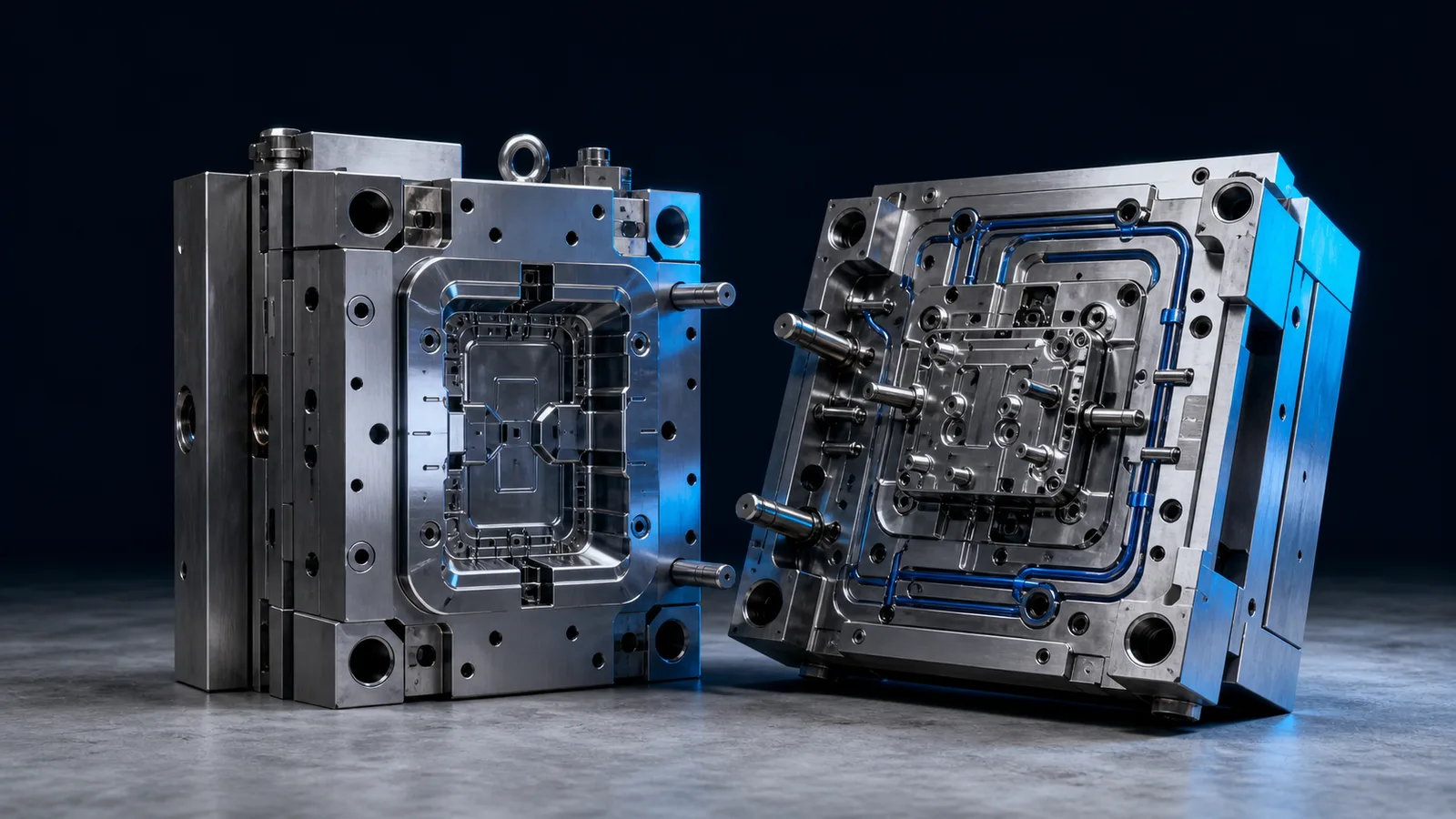
Tooling is where an aftermarket parts programme becomes a commitment. Up to that point you are buying goods; after it you have capital sitting in someone else's factory. The terms around that steel decide how much leverage you keep, and they are much easier to negotiate before the mould is cut than after.
What a mould actually costs, and why quotes vary so much
Two quotes for the same part can differ by a factor of three without either being dishonest. The variables:
Cavity count. A single-cavity tool is cheapest to build and most expensive to run. A four-cavity tool costs more up front and produces four parts per cycle. Which is right depends entirely on your annual volume — and a supplier who does not ask about your volume before quoting a tool is not engineering it, they are pricing a generic.
Steel grade. Pre-hardened steel is cheaper and good for tens of thousands of shots. Hardened tool steel costs more and runs into the millions. For a slow-moving aftermarket SKU, the expensive steel is often the wrong answer.
Complexity. Side actions, unscrewing cores, sliders — anything that moves adds cost and adds things that wear.
Surface finish and texture. A cosmetic finish on a part nobody sees is money spent on nothing.
Ask for the tool quote to be broken into those components. A supplier who can break it down has engineered it; one who quotes a single number has estimated it.
The three ownership models
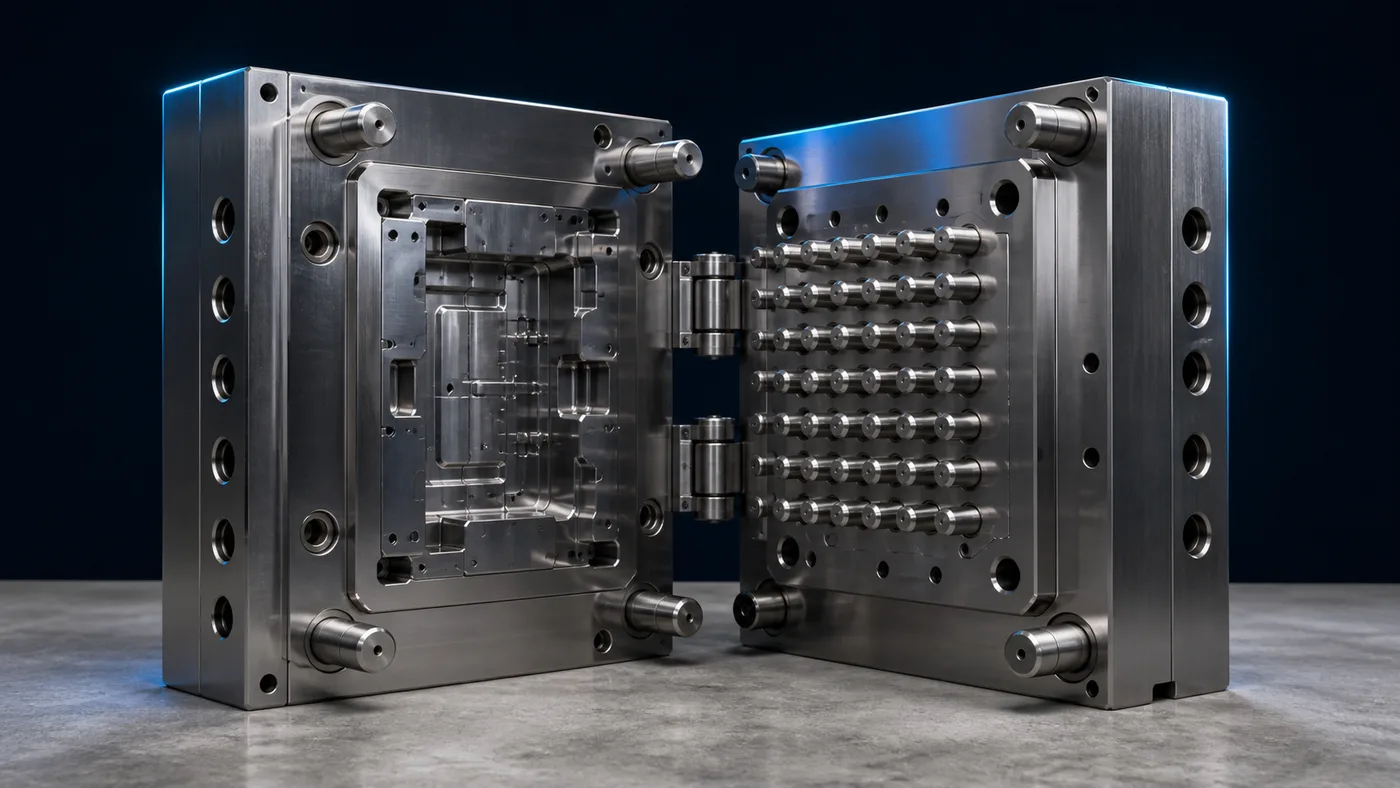
Supplier owns the tool. They fund it, you pay a higher piece price. Lowest cash out, least control — you cannot move the part, and the piece price contains an amortisation you will still be paying long after the tool is paid off.
You pay, supplier holds. The most common arrangement. You fund the tool, it lives in their factory, it is your asset. Whether you can actually move it depends on clauses discussed below.
You pay, you take possession. Rare, and usually a bad idea unless you have somewhere to run it. A mould sitting in a warehouse is a depreciating asset that needs maintenance.
The middle option is right for most distributors. But "you paid for it" and "you can take it" are two different things, and the gap between them is where the arguments happen.
The four clauses that decide whether ownership is real
1. Where is the tool physically, and is it identified as yours? A tool with your programme name stamped or tagged on it is a tool that can be found. An unmarked tool in a rack of two hundred is an argument waiting to happen.
2. What are the conditions for release? The reasonable position is that outstanding invoices are settled. An unreasonable one is a minimum-volume commitment that renews, effectively locking the tool in perpetuity.
3. Who pays for maintenance, and what happens when it wears out? Moulds are consumables on a long timescale. Establish who pays for refurbishment, and — importantly — who owns the replacement tool when the original is retired. It is common for a "your tool" arrangement to quietly become "their tool" at the first rebuild.
4. What is the tool's shot count and expected life? Ask for shot counts to be recorded and reported. This is normal practice and a supplier who will not do it is telling you they do not track it either.
Amortisation: the version people regret
A common structure is that the supplier funds the tool and recovers it through the piece price over an agreed volume, after which the price drops.
The trap is not the structure — it is the missing end date. If the agreement does not specify what happens after the amortisation volume is reached, the elevated price simply continues. Two things must be in writing: the volume at which amortisation completes, and the piece price afterwards.
When you should not tool at all
Tooling is the right answer less often than suppliers suggest.
If the part already exists in someone's catalogue, buying it is cheaper and faster than owning it. The reason to tool is exclusivity or a part nobody makes — not marginally better pricing.
If annual volume is below a few thousand pieces, the tool amortisation per piece may exceed the margin you were trying to capture. Do the arithmetic before the conversation gets exciting: tool cost divided by realistic three-year volume, added to the piece price.
If you are not certain of the fitment, tooling locks in whatever geometry you signed off. Validate with samples from an existing tool first.
What to settle before the steel is cut
- Tool cost broken down: cavity count, steel grade, complexity, finish
- Ownership stated explicitly, in the purchase order, not in an email
- Release conditions, in writing, with no volume commitment attached
- Maintenance responsibility and ownership of any replacement tool
- Shot count tracking and reporting
- If amortised: the completion volume and the price afterwards
- First-article approval process — what you sign off, and what it commits you to
The thing that matters more than any clause
Most tooling relationships end amicably or do not end at all. The clauses matter for the small number that go wrong, and in those cases the practical question is not what the contract says but whether you can execute on it from another country.
Which is why the most useful protection is boring: have the drawings. A dimensioned drawing of the part, approved by both sides, is portable in a way that steel is not. If the relationship fails, a drawing lets you get quotes elsewhere in a week. Without one, you are starting from a physical sample and six weeks of measurement.
Sourcing
POOLPOINT makes its own tooling in house, which means tool quotes are engineered rather than estimated and we can tell you cavity count, steel and expected life before you commit. For most distributors the better first step is our existing range — 2,600-plus parts already tooled, MOQ 50 pcs, no tooling cost at all. Tooling makes sense when you need something the range does not cover, and we will tell you when that is not the case.