

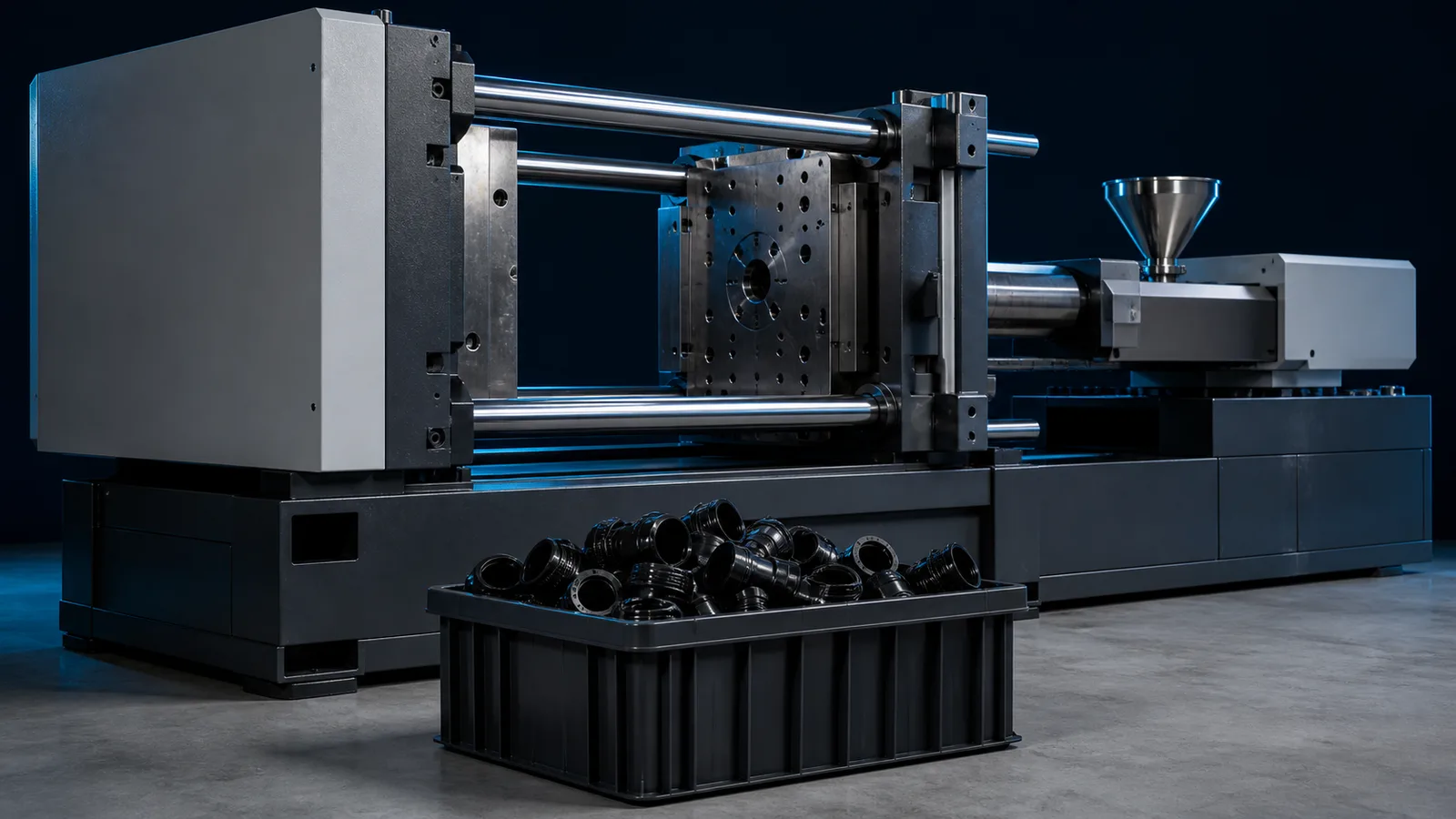
"Factory direct" appears on the homepage of almost every pool parts supplier you will find, including plenty who have never owned a mould. The distinction matters — not because trading companies are dishonest, but because the two models fail in different ways and you should know which failure you are exposed to.
What actually differs
A factory owns tooling, controls the production schedule, and can change a part. A trading company owns relationships, can source across a wider range than any single factory, and cannot change anything.
That produces a clean trade-off:
| Factory | Trading company | |
|---|---|---|
| Range | Narrower, deeper | Wider, shallower |
| Price | No margin layer | One margin layer |
| Change a dimension or material | Possible | Has to ask |
| Quality problem | Owns it | Relays it |
| Lead time control | Direct | Depends on their supplier's queue |
| Sourcing a part outside their range | Cannot help | Often can |
Neither column is the right answer for everyone. If you need 300 SKUs across pumps, filters, heaters and cleaners from one purchase order, no single factory covers that and a good trading company earns its margin. If you are building a private-label line on twenty parts, the margin layer buys you nothing and the inability to change anything costs you a lot.
Six questions that settle it
1. Which processes happen under your own roof, and which are outsourced?
A manufacturer answers specifically and without hesitation — injection moulding in house, tooling in house, plating outsourced to a named local shop. The specificity is the signal, including the honest admission of what they do not do. Vagueness is the tell.
2. Can you send a photo of the machine running my part today?
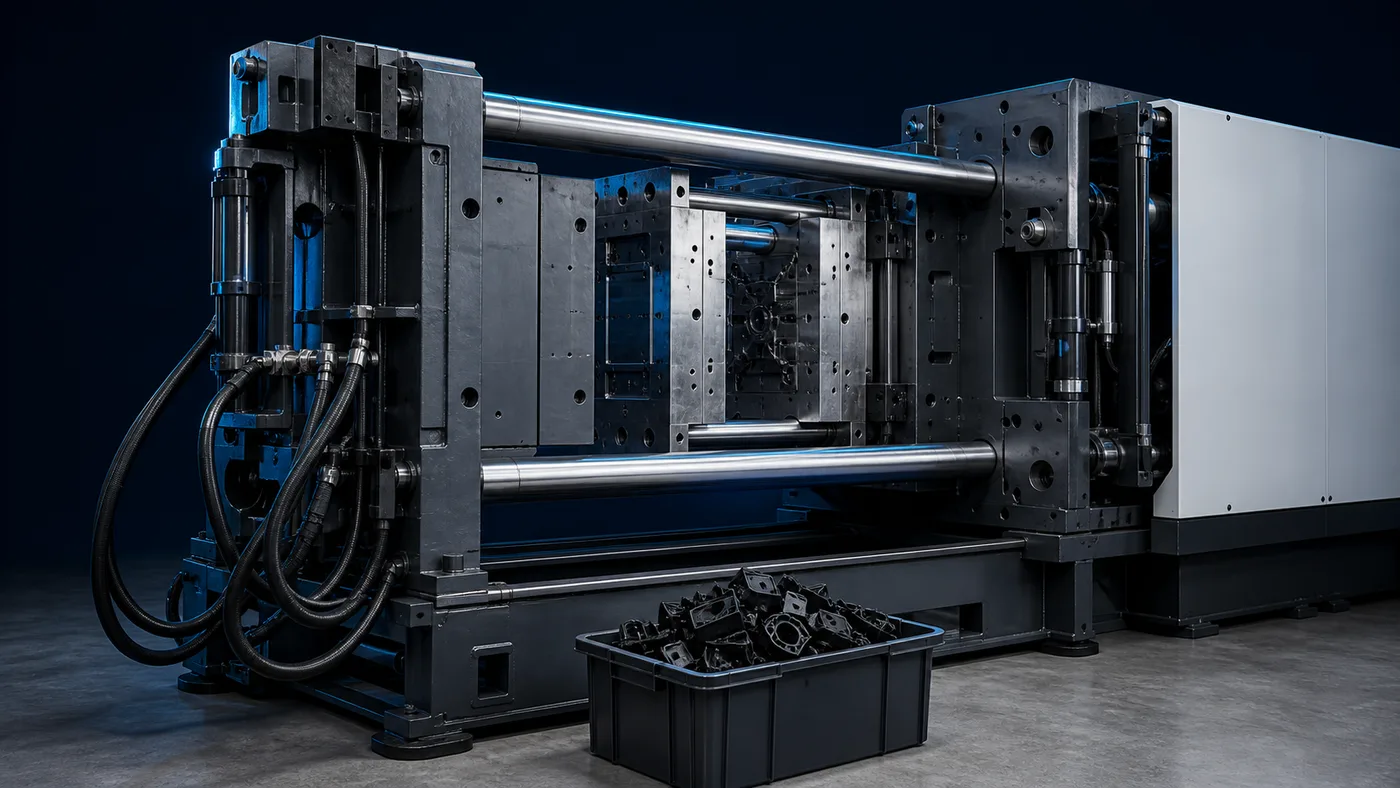
Not a brochure image, not a video from the website. A phone photo, today, of a specific press. This is the single hardest question for a trading company to answer and the easiest for a factory.
3. What is the cycle time and cavity count for this part?
A moulder knows these numbers the way a driver knows their fuel consumption. A reseller has to go and ask, and you will feel the delay.
4. Who owns the tool, and where is it stored?
If they own tooling, they can describe the steel, where it sits, and what happens to it when a programme ends. If the answer is abstract, they are quoting someone else's tool.
5. What is your address, and does it match your business licence?
A manufacturer's registered address is an industrial zone. A trading company's is an office building. This is checkable, and it is worth checking — ask for the business licence and compare the address to the one on their website and their marketplace profiles.
6. Can you make a change to this part?
The most revealing question. Ask about a small modification — a different material, a colour, an extra 0.5 mm on a flange. A factory will tell you what it costs and whether the tool allows it. A reseller will say yes and then go quiet, or say no without a reason.
The middle case: factory-affiliated trading companies
Many Chinese suppliers are legally a trading company that is owned by, or sits alongside, a factory. This is normal — it separates the export licence and the domestic manufacturing entity — and it is not the situation the questions above are designed to catch.
You can tell the difference easily: a factory-affiliated trader answers the technical questions immediately, because the people are in the same building. Ask who owns the manufacturing entity and how it relates to the company on the invoice. An honest answer to that question is a good sign in itself.

What "factory direct" should mean in practice
If the claim is real, you should see it in four places:
- Technical answers come back same-day, without "let me check with the factory"
- Price responds to volume in a structured way, because cost is understood rather than marked up
- You can request a change and get an engineering answer rather than a sales answer
- A quality problem produces a root cause, not an apology and a replacement
That last one is the real test, and you will not know until something goes wrong. When a part is out of tolerance, a manufacturer can tell you which dimension drifted and why — a worn cavity, a material lot, a process parameter. A reseller can only tell you what their supplier told them.
When a trading company is the better choice
Be honest about your own situation. If you are consolidating fifty SKUs from four categories into one shipment, a trading company that manages those four factories is doing real work you would otherwise do yourself. Paying a margin for consolidated purchasing, one invoice and one shipment is a legitimate trade.
The mistake is not using a trading company. The mistake is paying a trading company's margin while believing you are buying factory direct, and then being surprised when a specification change takes three weeks and comes back wrong.
Sourcing
POOLPOINT manufactures its own parts — injection moulding and tooling in house at our plant in Rui'an, Wenzhou, Zhejiang. We will answer any of the six questions above on request, including the photo. Factory direct, MOQ 50 pcs per part, mixed cartons accepted, single-piece samples for fitment verification.