

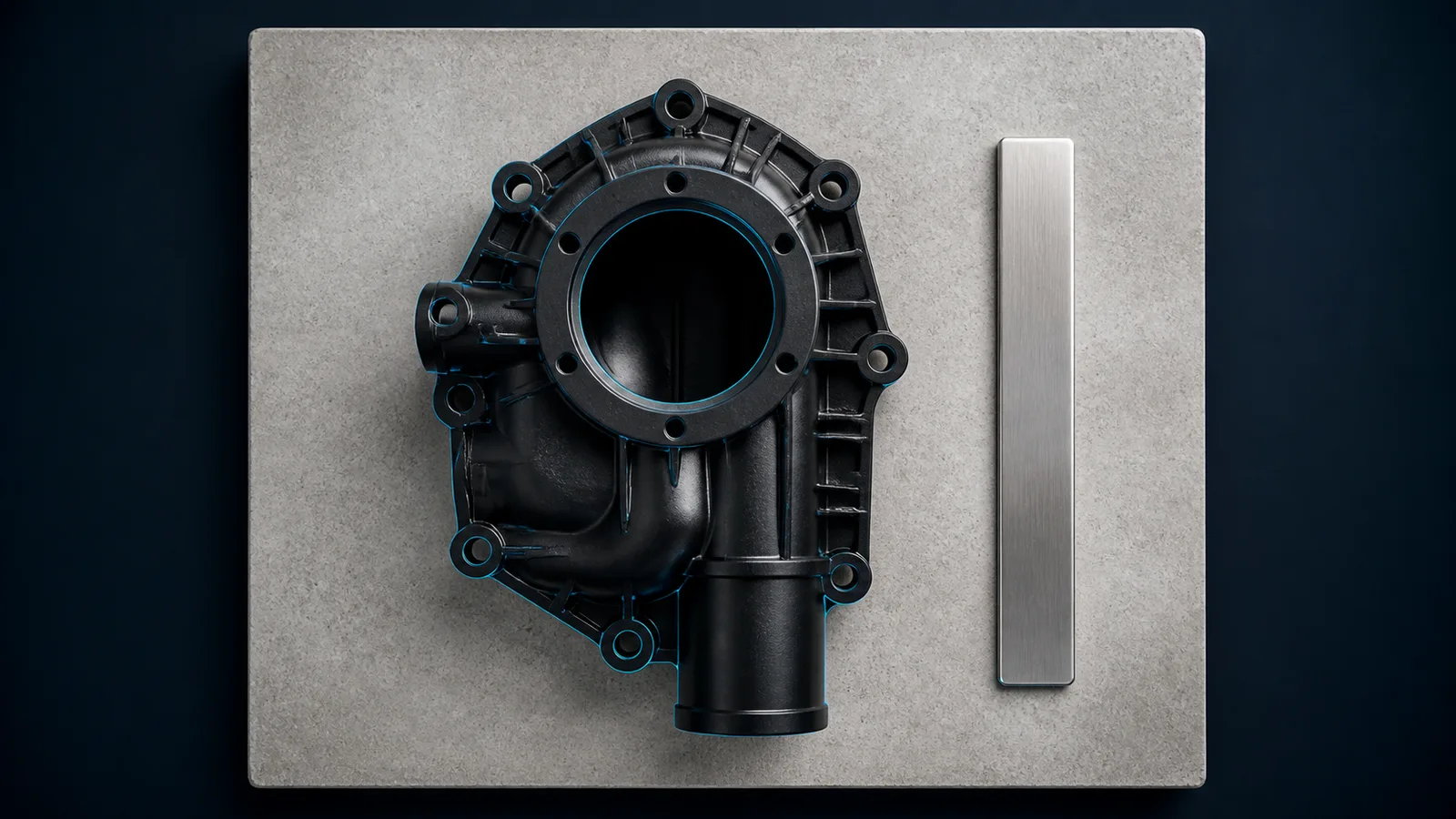
A distributor moving a range online usually discovers the same thing: the bottleneck is not the platform, it is that the product data does not exist. Photographs are wrong, dimensions were never recorded, and the compatibility information lives in an email thread. All of that is obtainable from the factory at the point of ordering, and almost impossible to reconstruct afterwards.
The eleven fields
Request these per SKU as part of the order, not as a favour afterwards.
1. Manufacturer part number (theirs). For your supplier-reference field, not for your listing title.
2. Product name, in plain English. What the part is. Not a marketing phrase — "Impeller with Screw, 2 HP" tells a buyer more than "High Performance Pump Component".
3. OEM cross-references, with evidence level. The numbers this replaces, and how confident the supplier is in each. A supplier who will not distinguish strong from weak entries is handing you their uncertainty as though it were fact.
4. Equipment fitment, kept separate from cross-references. Which machines it goes into. Separate field — a customer ordering against an equipment model expecting a component is a return.
5. Material. Named specifically. EPDM, glass-filled thermoplastic. "Rubber" and "plastic" are not materials.
6. Dimensions. The ones a buyer actually checks — bore, outer diameter, thickness, thread size. Not a bounding box.
7. Net weight per piece. Needed for shipping calculation on every platform.
8. Packed dimensions and weight. Different from the part, and this is what shipping is calculated on.
9. Carton specification. Pieces per carton, carton dimensions, gross weight. For your freight cost and for bulk listings.
10. Images. Covered below — the most commonly deficient item on the list.
11. Country of origin and HTS classification suggestion. Required for import and useful on the listing. Treat the classification as a starting point to confirm with your broker, not as an answer.
Images: what you need and what factories send
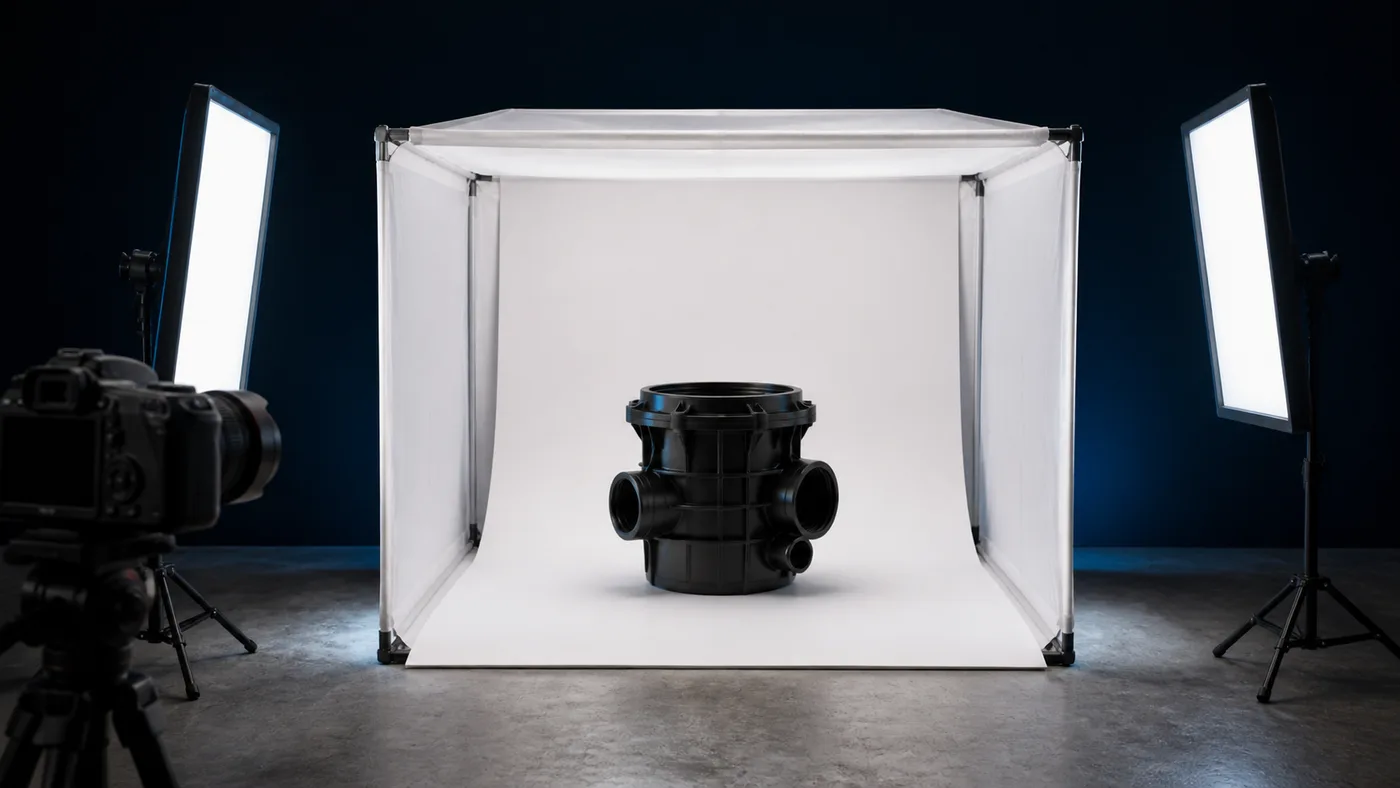
Most factories send one image on a white background, taken adequately, at low resolution. Marketplaces need more than that, and the gap is where listings stall.
What a complete set looks like:
- Main image, white background, part fills the frame, no props, no text
- Two or three angles, including any face that identifies the part
- A scale reference shot — the part next to a ruler
- A detail shot of the feature that determines fitment
- The packaging, if it is branded
Resolution matters more than people expect. Marketplaces have minimums for zoom, and an image that looks fine on a supplier's site is often too small. Ask for the originals, not the web versions.
One warning specific to this trade: check every image for brand markings before you list it. A supplier's photograph may show a part with a manufacturer's name cast into it, or worse, may be a photograph of the OEM part. Listing that as your product is a trademark problem and a false-advertising problem in one image.
The data that has to be right or the listing is a returns machine
Three fields carry disproportionate weight.
Cross-references. Wrong entries generate returns that look like quality complaints. Ask how numbers get onto the list and what confirms them. Lists mined from marketplace titles without verification contain assembly numbers treated as component numbers, case SKUs treated as piece SKUs, and sibling models pointing at each other.
Fitment. Every equipment model where the part actually works. Incomplete fitment data loses sales silently — the customer searches their model, finds nothing, and buys elsewhere. You never see it.
Dimensions. For anything where a buyer will check compatibility themselves, these must be measured rather than transcribed from a competitor's listing.

The compliance text you need, and should not write yourself
Ask the supplier for their standard disclaimer wording and use it consistently. It should say: independent manufacturer, not affiliated with or endorsed by the equipment brand, brand names and OEM numbers used to identify fitment only.
Then apply it everywhere the brand name appears — the listing description, the packaging, and any brand-organised page on your own site. The common failure is a disclaimer on the site footer while the brand name is in the listing title.
Title construction that stays defensible:
✅ "Replacement impeller for [brand] [model] — aftermarket, not manufactured by [brand]"
Not the brand name first, and never the word "genuine".
Ask for it as a spreadsheet
Request the eleven fields as a single spreadsheet, one row per SKU, at the point of ordering. Two reasons.
It is much easier for the supplier than answering eleven emails, so you are more likely to get it.
It imports. Data that arrives as prose in an email has to be retyped, and retyping introduces errors into exactly the fields — part numbers and dimensions — where errors are most expensive.
What to do with what you cannot get
Some fields will come back blank. Handle the gap explicitly rather than guessing.
- No dimensions? Measure the sample yourself and record it. You needed a baseline anyway.
- No fitment data? List conservatively. An incomplete fitment list loses sales; a wrong one creates returns, and the second is worse.
- Weak cross-references? Publish the confirmed ones and hold the rest. A shorter accurate list beats a long doubtful one.
Sourcing
POOLPOINT supplies cross-reference and fitment data as separate datasets, material and dimensions per part, and carton specifications with every quotation. Images are unbranded and shot for listing use. Tell us which SKUs you are listing and we will send the data as a spreadsheet you can import — including which cross-references we hold as confirmed and which we do not.