
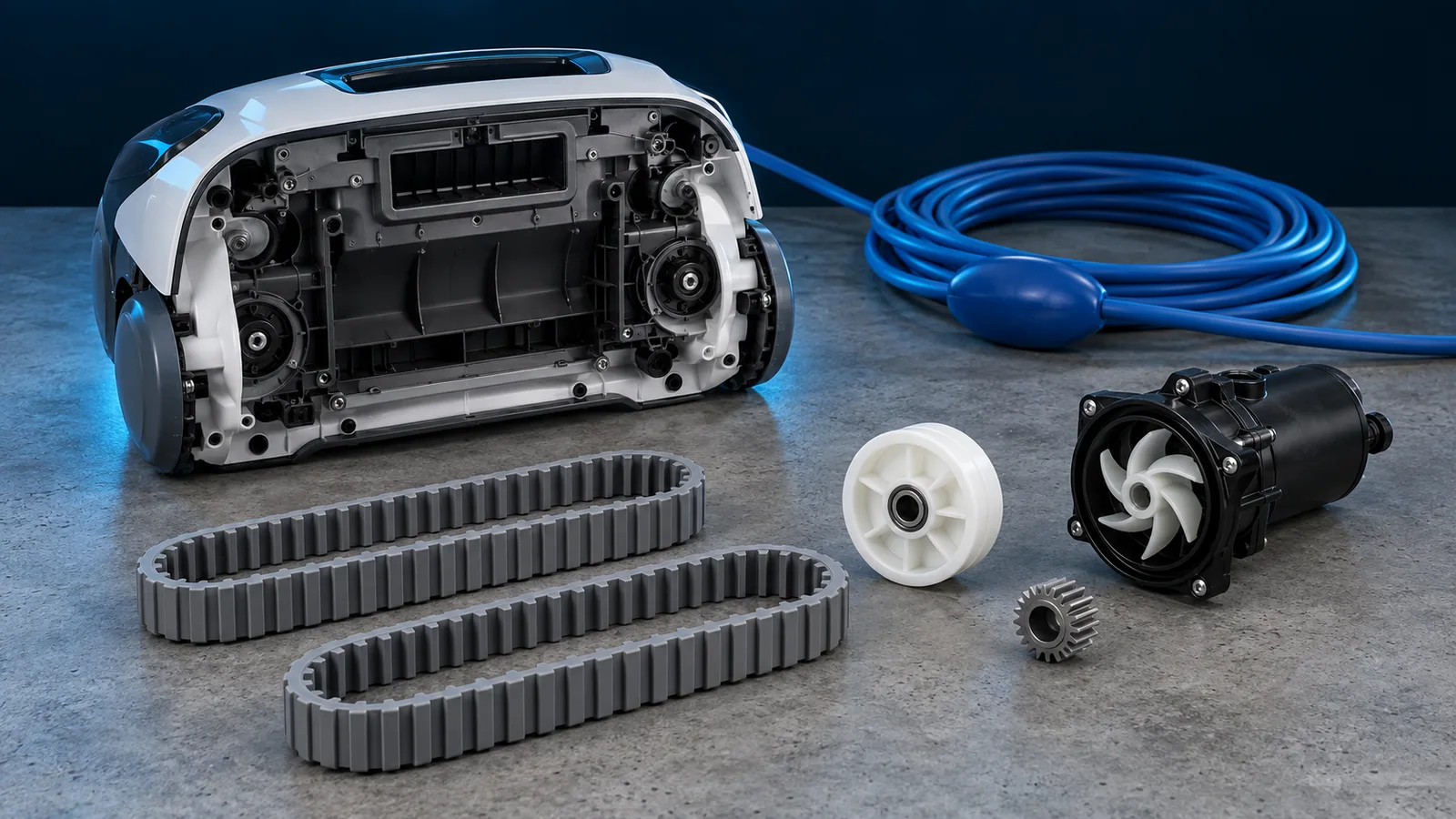
A robotic cleaner has no suction line, no booster pump and no diaphragm. Everything it does — drive, grip, climb, filter — is done by one sealed motor unit, a set of tracks and brushes, and a filter that the water has to pass through on the way to the impeller. That makes the Dolphin family easy to diagnose once you accept the order of things: a robot that will not climb is almost never a motor problem, and a robot that stops mid-cycle almost never has a bad filter. The symptoms map to different systems, and the systems fail in a predictable sequence.
This guide covers the M200 and M400 (the M500 shares the M400's drive parts), the Nautilus, Nautilus Plus and Nautilus CC Plus — the units a service company sees most on residential pools in this catalogue. The parts are drawn from the Dolphin M200, M400, Nautilus, Nautilus Plus and Nautilus CC Plus model pages.
Reading the symptom
| What the robot does | What has usually gone wrong | Start here |
|---|---|---|
| Runs on the floor but will not climb walls | Filter loaded or worn; non-return flap missing; tracks glazed; slick walls | Filter, then flap, then tracks |
| Climbs part way and slides back | Filter partly blocked; brush or track wear; water too cold | Filter, then tracks and brushes |
| Moves a few feet, or a few minutes, then stops | Debris in the impeller or tracks; overload protection tripping; cable fault | Impeller, then drive train, then cable |
| Drives in circles or only one direction | One track slipping or off; pulley bearing seized; one drive side of the motor unit failed | Tracks, bearings, then motor unit |
| Power supply lights but the robot does nothing | Cable, swivel or socket connection; motor unit | Cable and socket, then motor unit |
| Power supply does not light | Outlet or power supply itself | Outlet, then power supply |
The point of the table is that the two most expensive parts on the robot — the motor unit and the power supply — sit at the end of every row. Work from the left.
Prep
Take the robot out of the pool, unplug the power supply from the wall and disconnect the floating cable at the power supply end. Set the unit on a bench or a towel, tracks up. Pull the filter basket or cartridges before doing anything else: you want to see the impeller inlet and the underside with nothing in the way, and half of the diagnosis is what falls out.
If the pool is cold, note the water temperature. Maytronics' published operating range is roughly 43°F to 93°F. Below that the tracks and climbing rings stiffen and the robot loses grip; owners in shoulder-season markets report "stopped climbing" every spring for that reason alone.
Filters and the non-return flap: the climbing problem
Nine in ten wall-climbing complaints are the filter. A Dolphin climbs because the impeller pulls water in through the underside and pushes it out through the top; that flow is what holds the robot against a vertical surface. A loaded filter throttles the flow, and the robot slides back down at the waterline or never leaves the floor.
Clean the filter and run the robot again. If it still will not climb, run it without the filter for a few minutes — Maytronics-based service guides put the limit at about ten minutes, long enough to watch one wall attempt. If it climbs with the filter out, the filter media is worn or blinded with fine material a hose will not shift, and the filter element is the part to replace. Cartridge units also depend on the cartridge seating correctly: a cracked 9980733 cartridge filter holder or a broken 9980731 locking hook lets water bypass the media, which shows up as a robot that climbs poorly and leaves fine debris behind. On the M400 and M500 the cartridge door assembly 9991047-ASSY includes the latching parts; a door that does not close flush is a bypass.
The second climbing part is the non-return flap — the rubber flap at the water inlet behind the rear brush that closes under vacuum so the robot can hold pressure against the wall. It is small, black, easy to lose during a filter clean, and a robot without it will not climb no matter how clean the filter is. Turn the unit over and confirm the flap is present and seals flat. For the M400 family and the Supreme M4/M5 the replacement is 9980891.
Before condemning any part, brush the walls. Sunscreen film, body oils and a thin algae layer from high pH make a surface the tracks cannot grip; the robot will climb a freshly brushed wall and fail on the next one. That is a chemistry problem, and a new track set will not fix it.
Tracks, wheels, bearings and brushes: the grip problem
If the filter passes and the flap is present, the drive train is next. Turn the robot over and look at the tracks under good light.
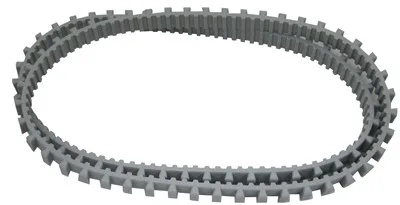
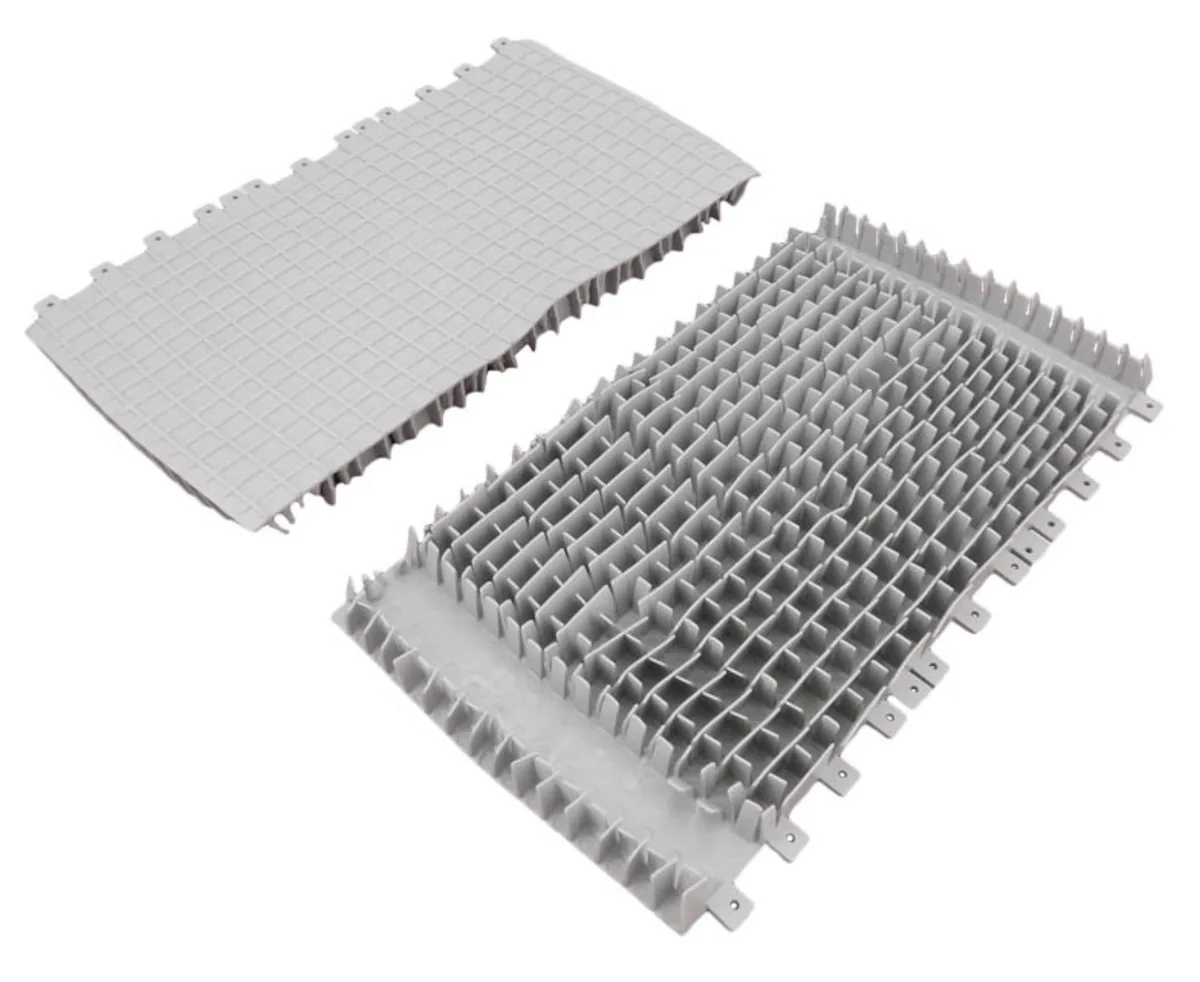
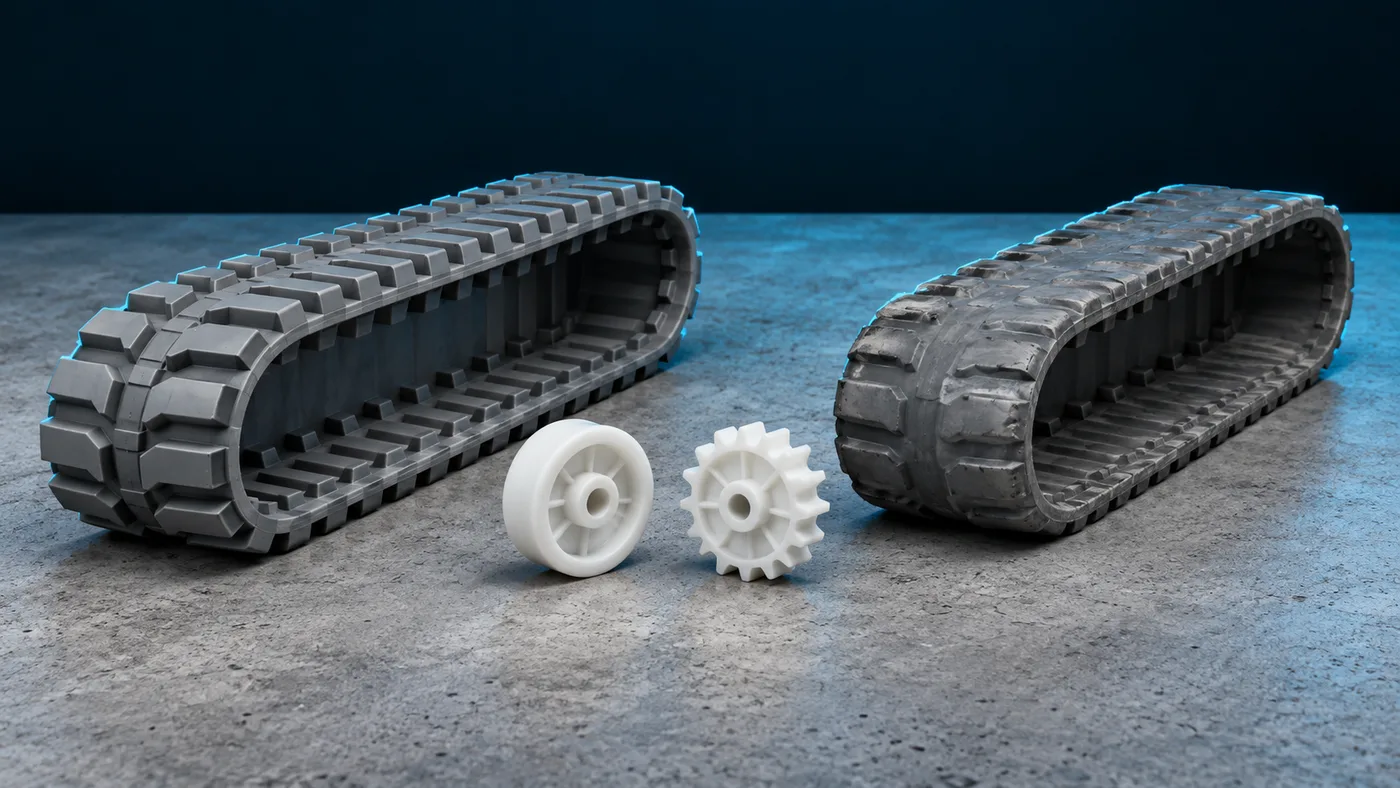
Tracks. A serviceable track has sharp, square drive teeth on the inside and a defined tread pattern on the outside. Worn tracks have rounded teeth that let the track skip on the drive pulley under load — the robot stalls against the wall and drops — or a tread worn smooth that slides on plaster. Tracks also stretch: if you can lift the track more than a finger's width off the pulley, tension is gone and the robot will drive in circles because one side slips before the other. The gray track set 9985006-R2 fits the M200, M400, M500, Nautilus, Nautilus Plus and Nautilus CC Plus, and cross-references the Maytronics 9985006 and 3295-133 numbers. Replace tracks as a set; a new track on one side and a stretched one on the other is a robot that pulls to one side.
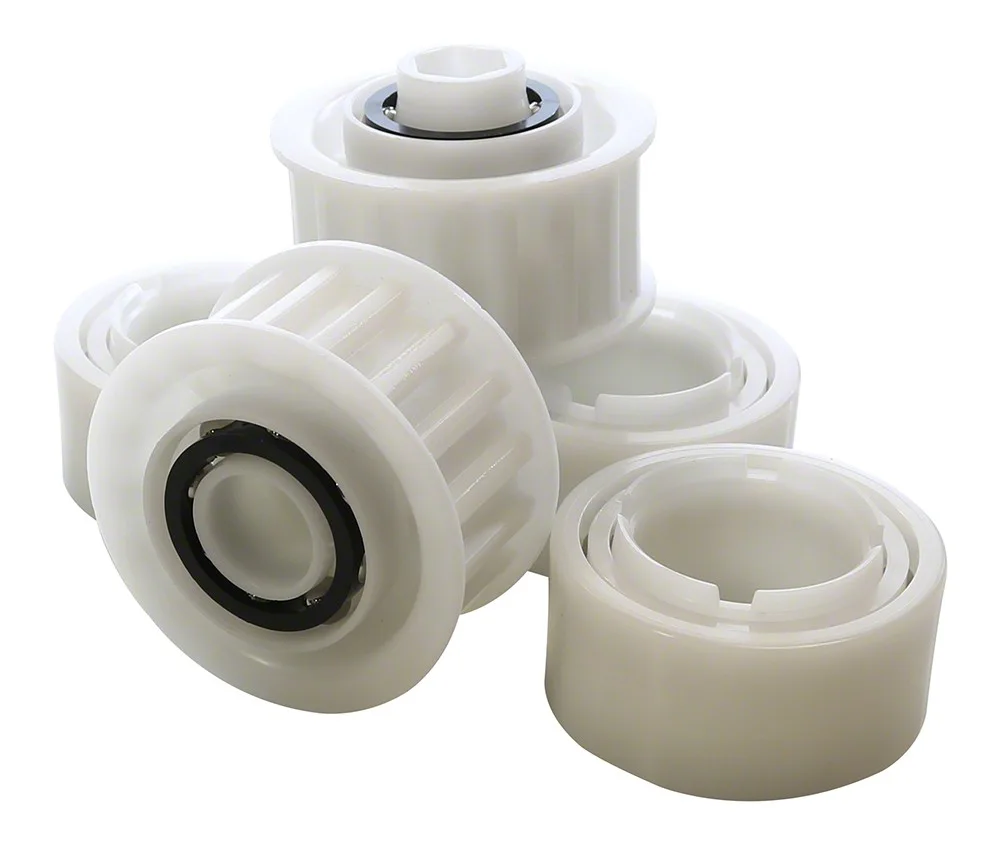
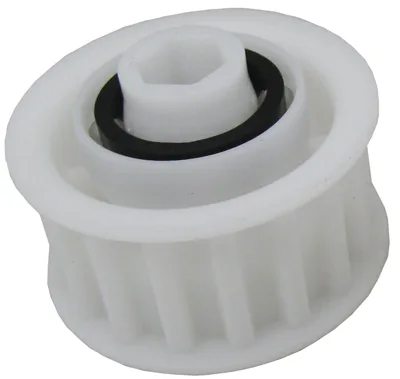
Guide wheels and pulley gear. The white guide wheel 3884997 runs the track around the corners of the chassis. When the wheel's teeth wear, the track jumps at the corner and the robot lurches. The 3884997-R6 kit pairs the guide wheel with the drive pulley gear for a full track-side refresh; fit it whenever the tracks are replaced on a unit that has done more than a couple of seasons, because a new track on a worn gear wears fast.
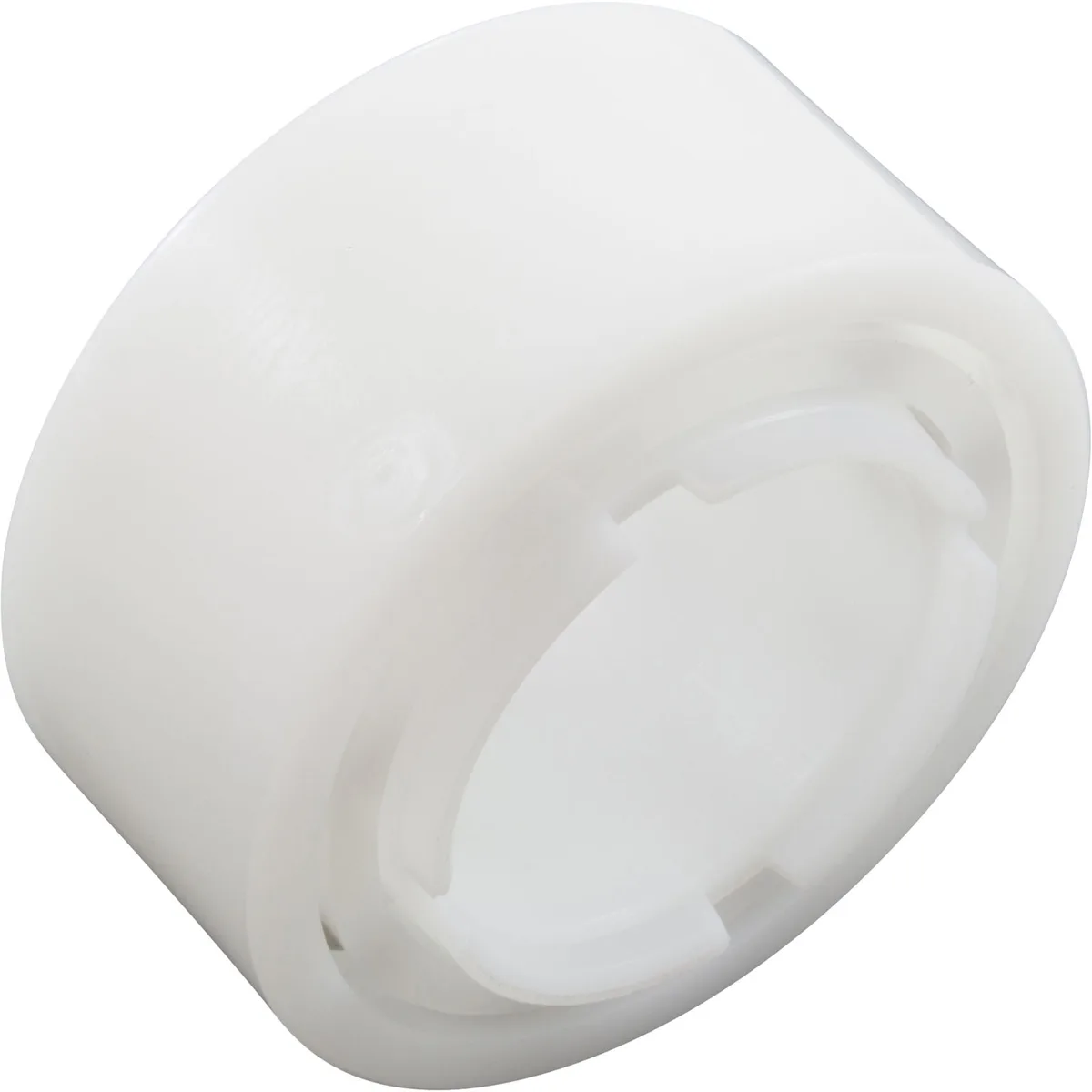
Bearings. The drive pulley bearing (3883645 / 3295-456) and the wheel bearing 3884073-ASSY are the parts that seize. A seized bearing on one side drags that track, the robot circles, and the motor unit runs hot trying to turn against it — which is how a bearing job becomes a motor job if it is left. Spin each wheel by hand with the track off: it should turn freely and quietly. Any grinding or a wheel that turns a quarter and stops is a bearing. The wheel tube assembly 99955951-ASSY and the small cork (9982275 / 3295-284) that plugs the inner tube are the remaining pieces of the wheel set; the cork is what keeps water out of the tube, and a missing cork is a bearing that rusts.
Brushes. The combination brush 6101641-R2 (Maytronics 6101641) is the gray roller the robot rides on. Brushes wear flat along the contact face and lose the soft edge that grips plaster. A robot that climbs but slides at the waterline, with tracks and filter both good, usually has brushes worn past the point of gripping. They also collect hair and string that wrap the axle and drag the drive; unwrap and spin before replacing.
The impeller and the motor unit: the stopping problem
A robot that runs and then stops — after a few feet, or after a few minutes with a red light on the power supply — is hitting its overload protection. The controller sees the motor drawing more current than it should and shuts it down. Three things do that: a jammed impeller, a jammed drive train, and a motor that is failing.
Look at the impeller first. It sits inside the motor unit under the filter, and a twig, a hair tie or a piece of a broken filter basket across the blades is the single most common cause of the stop-start complaint. Clear it, check that the blades are intact, and spin it by hand. A broken blade unbalances the impeller and the motor will trip on vibration load even after the debris is cleared.
If the impeller is clear, go back to the drive train and repeat the bearing test — a seized bearing trips the same overload. Only when the impeller spins free, the wheels spin free, the tracks are correctly tensioned and the cable checks out (below) is the motor unit itself the answer.
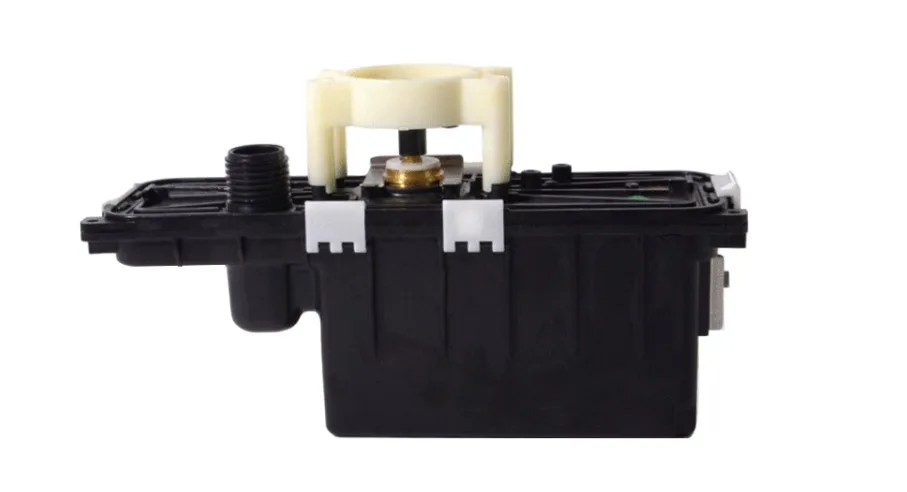
On these models the motor unit is a sealed assembly: drive motor, pump motor and impeller in one housing. It is not serviced internally in the field; it is swapped. Match it to the platform, not the badge on the lid:
| Cleaner | Motor unit |
|---|---|
| M200, Nautilus Plus, Nautilus CC Plus | 99953051-EX (black) or 9995376-EX |
| M400, M500 | 99953054-EX |
| Original Nautilus with the 3-hour diagnostic control box | 99953033-EX |
The M200 and the Nautilus CC Plus are the same machine under two names, which is why they share a motor unit, and why the tune-up kit listed as the Dolphin NP rebuild kit fits both. The original Nautilus is a different generation; its 99953033-EX motor unit is the one that carries the MAY-201-1023 reference. Fit the wrong unit and the connector or the mounting will not line up, so confirm the model and the control box type before ordering.
A motor unit is the most expensive single part on the robot. Before you fit one, put a meter on the power side.
Power: socket, plug, cable and the supply
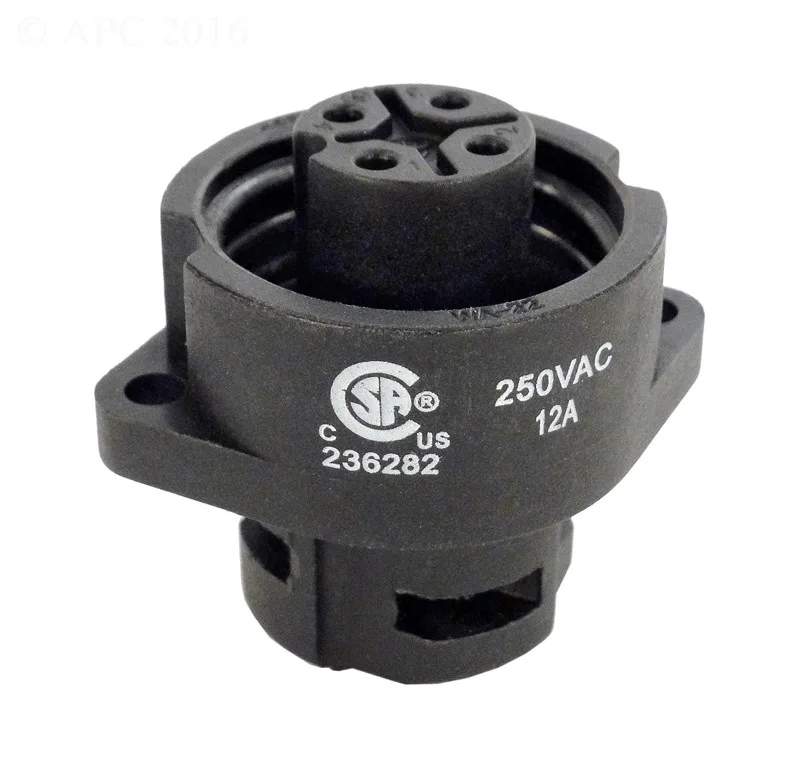
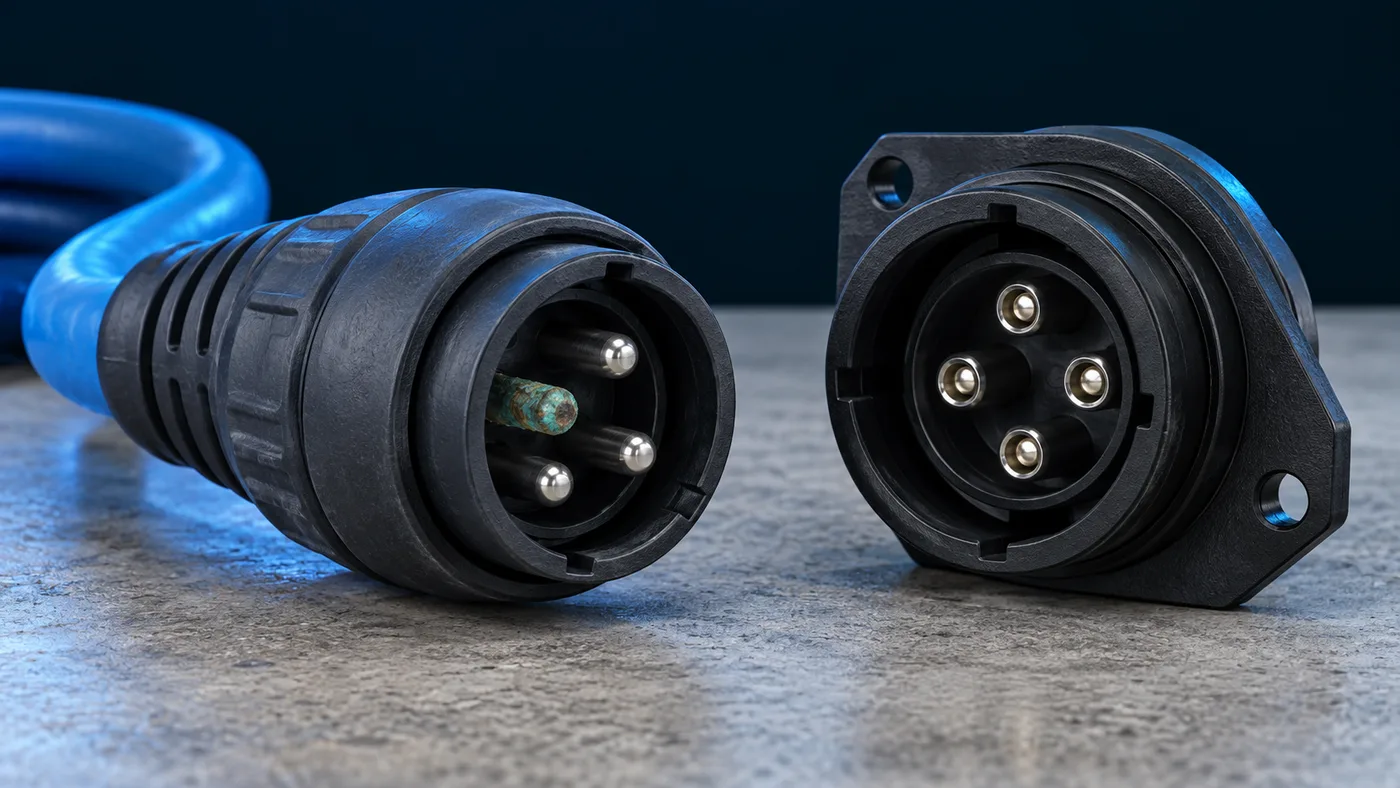
Robots drink water through the cable connection more often than through the housing. The power supply socket (5020011 / 3295-219) on the control box and the Amphenol plug 5000009 on the cable corrode where the pins sit in a damp socket; green deposits, a plug that needs to be wiggled, or a robot that starts when you hold the cable at an angle all point there. Clean and dry the connection, fit the 5020012 socket cover when the robot is not in use, and replace the socket if the pins are pitted.
Inspect the floating cable along its full length, especially the first metre from the swivel. A nick that lets water into the conductor produces an intermittent fault that reads exactly like a dying motor: runs, stops, runs again after a rest. The 60-foot two-wire cable with swivel 9995862-DIY is the replacement for the M200, Nautilus Plus and CC Plus; the three-wire 99958821-DIY is for the Wi-Fi CC Plus and is not interchangeable. The 99960081 cable float keeps the cable off the floor so it does not wrap the robot.
The power supply itself is last. If the outlet is live and the supply does not light, or lights and drops out with the robot disconnected, the supply is the fault. Match it to the model: the 99956083-ASV10 180-watt unit is listed for the M400 among others, and the older three-pin control boxes need the 9991279 connector retrofit before a current cable will fit. A power supply is low-voltage electronics, not a gas-train or safety component — it is a normal replacement part, but it is model-matched, so do not fit one because it "looks the same".
Which cleaner you have
Owners rarely know. The lid badge, the power supply label and the shape of the filter tell you:
- M200 / Nautilus CC Plus / Nautilus Plus — cartridge or basket filter accessed from the top, two-wire swivel cable, the
99953051-EXmotor unit. The side panel float6250951and the right side panel99807675(Maytronics99807655) are the Nautilus Plus body parts most often broken by a fall off the pool step. The outer casing99952142-ASSYis available if the shell itself has cracked. - M400 / M500 — cartridge door on the top with a latch (
9991047-ASSY), the non-return flap9980891, the99953054-EXmotor unit, and the same9985006-R2track set as the smaller units. - Original Nautilus — the older generation with a separate three-hour diagnostic control box and a filter bag rather than cartridges. The
9981430-R2filter bag clip set and the99919116bottom lid (Maytronics3295-071) are its own parts, and its motor unit is the99953033-EX.
What to carry
For a service truck that sees Dolphins weekly, the cost-effective stock is the wear items, not the motor units: a track set, a guide wheel and pulley gear kit, a pair of bearings, a combination brush, a non-return flap, a socket cover and a socket. Those parts fix the climbing complaint and the circling complaint on the spot. Motor units and power supplies are ordered against a confirmed model after the drive train and the cable have been eliminated — because on a robot, a jammed bearing and a dead motor look identical from the pool deck.
Cross-reference table
| OEM number | POOLPOINT part | Notes |
|---|---|---|
Maytronics 9985006 / 3295-133 |
9985006-R2 |
Track set, gray — M200, M400, M500, Nautilus family |
Maytronics 3884997-R6 |
3884997 |
Guide wheel, white |
Maytronics 3884997-R6 |
3884997-R6 |
Guide wheel and pulley gear kit |
| Maytronics 3883645 / 3295-456 | 3883645 / 3295-456 | Drive pulley bearing |
Maytronics 3884073-ASSY |
3884073-ASSY |
Wheel bearing |
| Maytronics 9982275 / 3295-284 | 9982275 / 3295-284 | Cork, inner wheel tube |
Maytronics 99955951-ASSY |
99955951-ASSY |
Wheel tube assembly |
Maytronics 6101641 |
6101641-R2 |
Combination brush, gray |
Maytronics 9980891 |
9980891 |
Non-return flap — M400, M500, Supreme M4/M5 |
Maytronics 9980733 / 9980731 |
9980733 / 9980731 |
Cartridge filter holder / locking hook |
Maytronics 9991047-ASSY |
9991047-ASSY |
Cartridge filter door — M400, M500 |
Maytronics 99953051-EX |
99953051-EX |
Motor unit — M200, Nautilus Plus, Nautilus CC Plus |
Maytronics 9995376-EX |
9995376-EX |
Motor unit — M200, Nautilus (alternate) |
Maytronics 99953054-EX |
99953054-EX |
Motor unit — M400, M500 |
Maytronics MAY-201-1023 |
99953033-EX |
Motor unit — original Nautilus, 3-hour control box |
| Maytronics 5020011 / 3295-219 | 5020011 / 3295-219 | Power supply socket |
Maytronics 5000009 / 5020012 |
5000009 / 5020012 |
Amphenol plug / socket cover |
Maytronics 9995862-DIY |
9995862-DIY |
60 ft two-wire swivel cable — M200, Nautilus Plus, CC Plus |
Maytronics 99958821-DIY |
99958821-DIY |
60 ft three-wire swivel cable — Nautilus CC Plus Wi-Fi |
Maytronics 99956083-ASSYV4 |
99956083-ASV10 |
Power supply, 180 W — M400 and listed models |
Maytronics 99807655 |
99807675 |
Right side panel — Nautilus Plus |
Maytronics 9981430 |
9981430-R2 |
Filter bag clip set — original Nautilus |
Maytronics 3295-071 |
99919116 |
Bottom lid assembly — original Nautilus |
Sourcing
POOLPOINT manufactures the drive, grip and body components above factory direct for US distributors, service companies and online sellers, and supplies the model-matched motor units and power supplies listed. MOQ starts at 50 pieces per SKU, mixed cartons are accepted to reach it, and private label is available. Request a quote for wholesale pricing.