
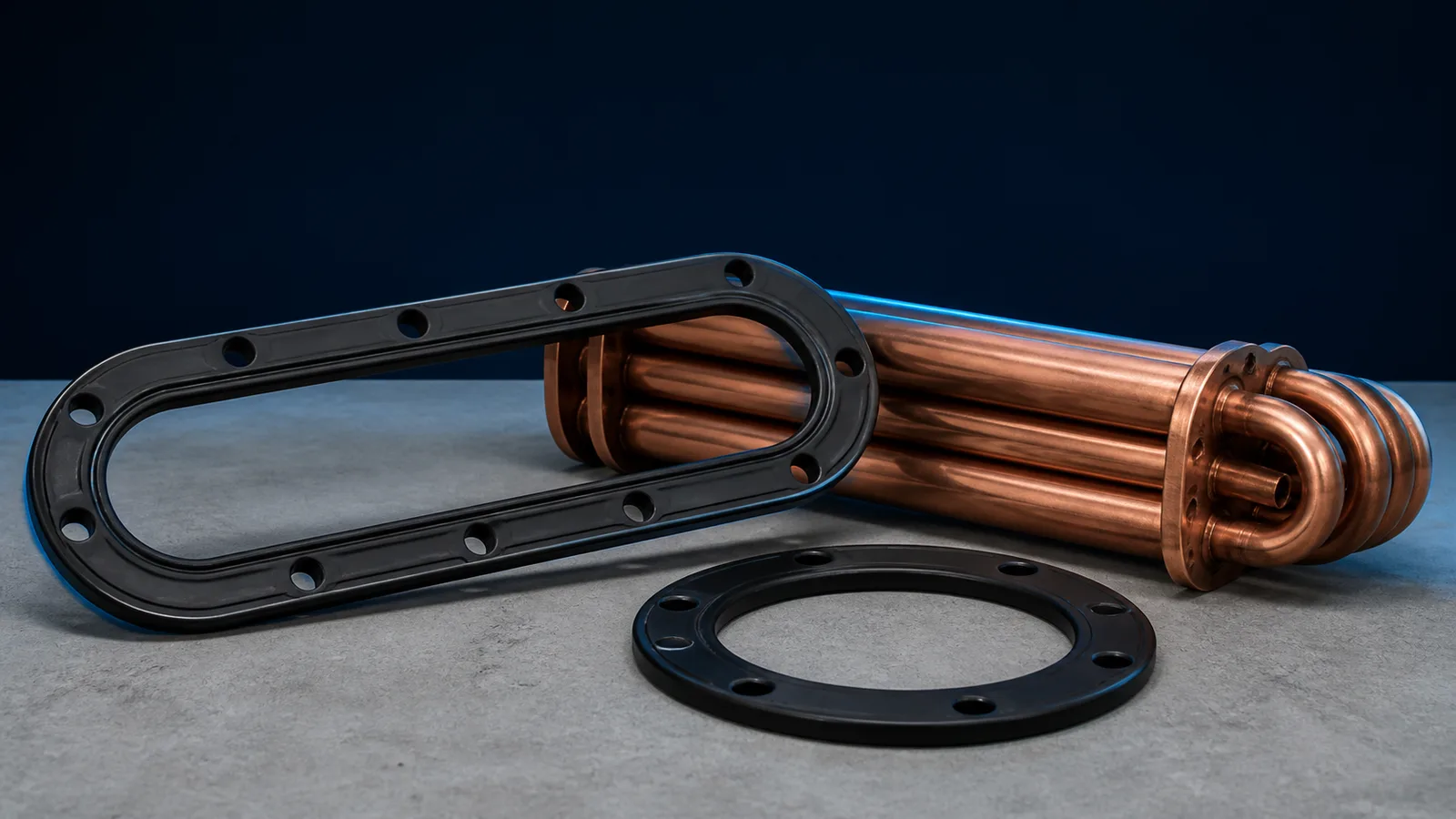
Compare a distributor's pump shelf with their heater shelf and the difference is stark. Pump parts get stocked because they fail predictably and every service van needs them. Heater parts get ordered when something breaks, which means the customer waits. That gap is the opportunity, but only part of it is worth taking.
Why the gap exists
Three reasons, and none of them are that heater parts do not sell.
Heaters are intimidating. Gas trains, ignition control, high-limit switches — parts of a heater sit inside a certification boundary that pumps do not have. Distributors who are comfortable stocking impellers hesitate at heater components, and that hesitation extends to parts that have nothing to do with combustion.
The SKU count is high and the demand per SKU is low. A single heater line spans several BTU ratings, and headers, gaskets and bundles differ across them. That is a lot of shelf for slow movers.
Cross-reference data is worse than for pumps. Heater components carry manufacturer part numbers that changed across model revisions, and much of the published data conflates model years.
The sub-groups, ranked by whether they are worth carrying
When we broke a competitor's heater-parts range down by what the parts actually are, the sensible-to-carry portion was much smaller than the headline count suggested.
| Sub-group | Worth stocking? | Why |
|---|---|---|
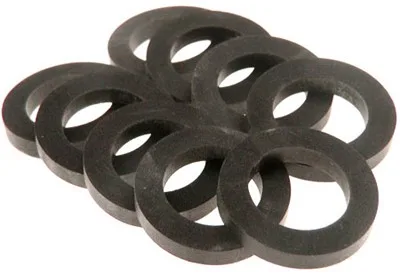
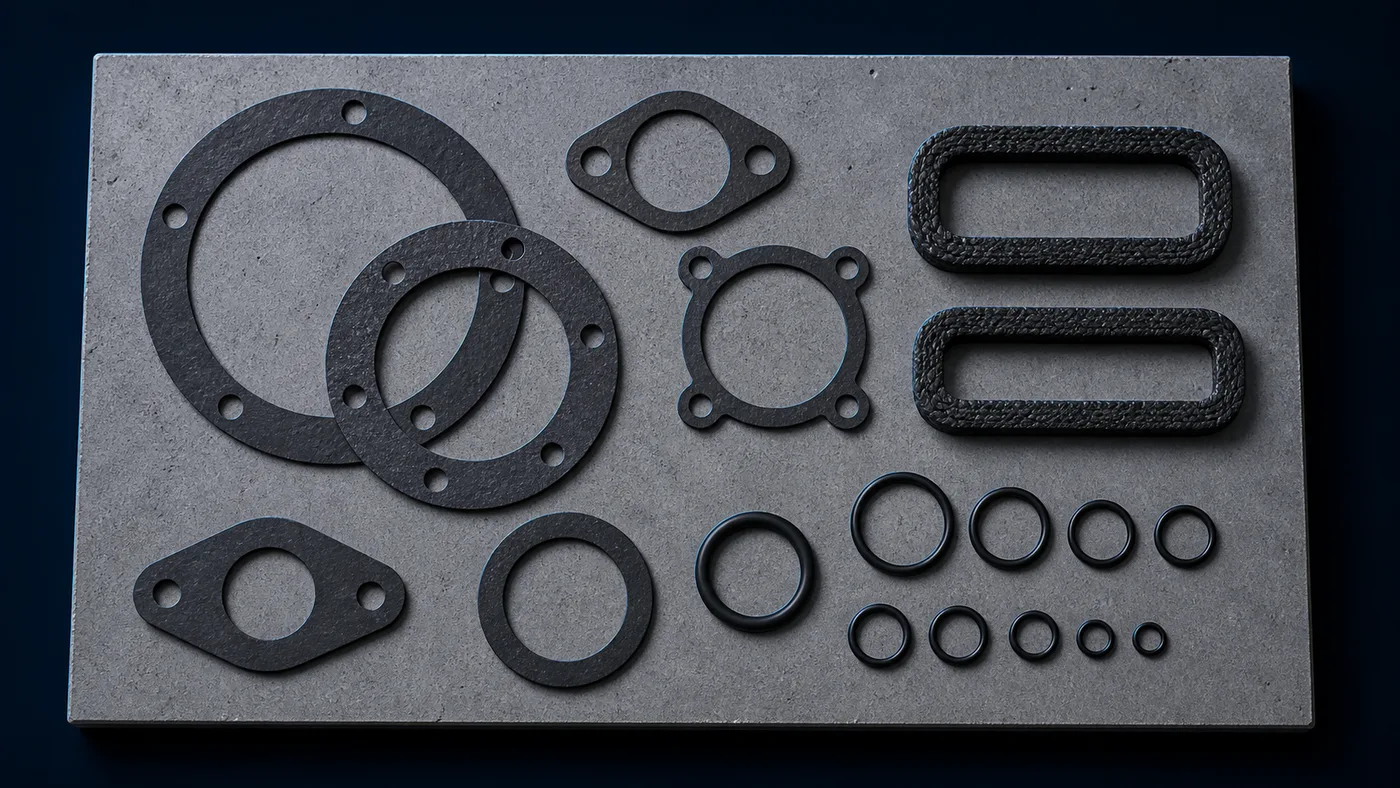
| Seals and gaskets (header gaskets, flange gaskets, o-rings, sleeves) | ✅ Start here | Highest failure rate, lowest certification risk, same tooling logic as pump seals |
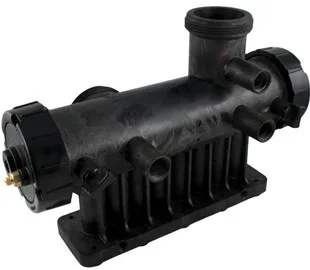
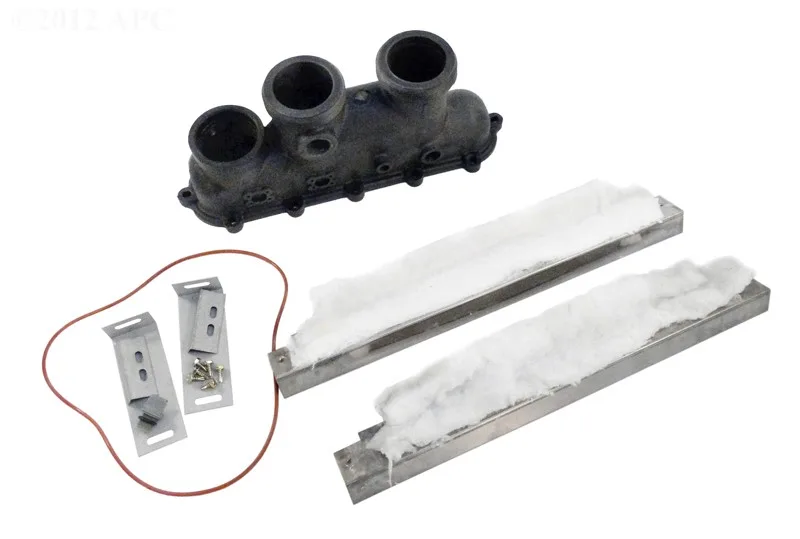
| Headers and heat exchanger hardware | ✅ | High value, clear failure mode, customer knows exactly what they need |
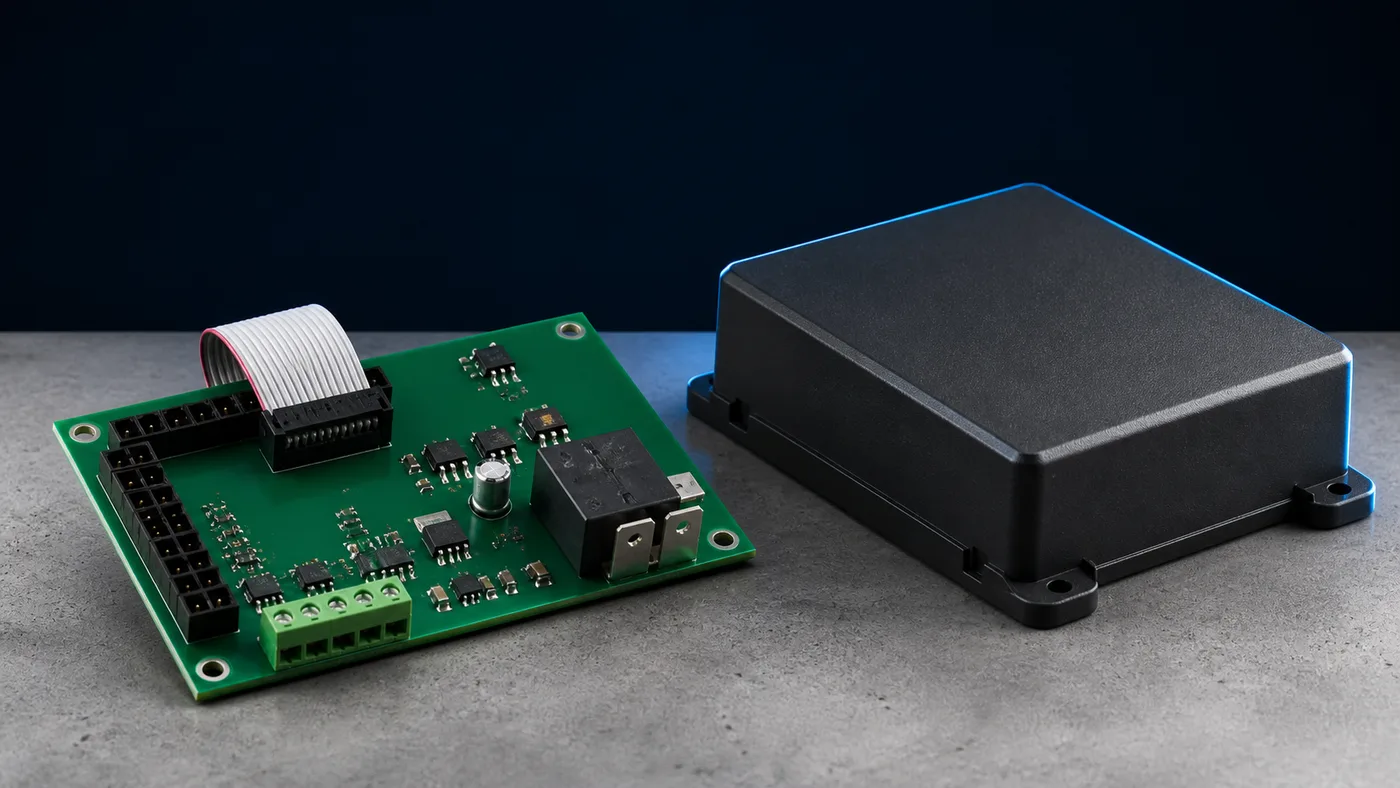
| Electronic controls (sensors, switches, fuses, limits, igniters) | ⚠️ Careful | See below |
| Gas train (orifices, burners, gas valves, manifolds) | ⚠️ Certification risk | Separate conversation with your insurer and your lawyer |
| Ordinary hardware (bolts, washers, clips, brackets) | ❌ | These are standard fasteners. Do not treat them as pool parts |
Why gaskets are the right entry point
Header and flange gaskets are bespoke moulded parts. There is no generic equivalent, no electronics distributor selling the same item under a different label, and the geometry is specific to the heater it seals.
That gives them two properties a distributor wants at the same time: a real barrier to entry, and a failure mode so common that demand is steady. They also share process and tooling logic with pump seals and o-rings, which means a supplier already making those does not need a new supply chain to make these.
Concrete examples from our own catalogue: R0327500 is a front or rear header gasket, R0304300 is a header gasket for a Hi-E2 heater, 006706F is an inlet and outlet header with gasket for the R185A/R265A/R335A family, and 006707F is a return header with gaskets for the 206A–406A Versa II and millivolt heaters. Every one of those is a part that fails, is not interchangeable with anything else, and cannot be bought generically.
Why electronic controls are the trap
This is the part that surprised us, because it was where we expected the opportunity to be.
The intuition is: find the original component manufacturer behind the branded part, and you can supply the same item without the brand markup. We tested that on eight electronic components and it held — pressure switches and thermal fuses in heater parts catalogues turn out to be standard industrial components, sometimes with the original manufacturer's part number unchanged. One pressure switch in a heater brand's catalogue is a Tecmark part, number and all. A thermal fuse is a Microtemp component that sells for cents in volume.
And that is exactly why it is not a business. If the part is a standard industrial component, your customer can buy it from the component manufacturer's distributor. You have no cost advantage and no differentiation — you are adding a step, not value.
Two more findings pointed the same way. Aftermarket competitors have already entered the electronic-control space on several of the highest-volume items. And anything inside the safety or combustion path carries certification cost that a moulded gasket does not.
The general rule: the more a part is pure re-badging, the less business there is in it. Value sits where tooling sits.
How to size the opportunity in your own numbers
Do not use a competitor's catalogue count as your gap. Two mistakes to avoid:
Compare against what you can actually source, not against what you have listed. When we first ran this analysis we compared a competitor's heater range against our entire catalogue and concluded the gap was almost zero — because a large part of our catalogue originated from that same competitor's data. Comparing a range against itself produces nonsense. Re-run against only the products you have a real supply chain for.
Filter by price band before you count. A category median gets distorted by whole units. A heater-parts category with a $124 median contains complete heaters at several thousand dollars; the parts business lives well below that.
What to ask a supplier
For gaskets specifically, the questions are narrow: what material, what temperature rating, and how the dimensions were verified against an original. Header gaskets fail from heat cycling, and a rubber that is fine in a pump union will harden and leak in a header within a season.
For anything electronic, ask a different question first: is this a component you make, or a component you buy and re-label? An honest supplier will tell you, and the answer decides whether the item belongs in your range at all.
Sourcing
POOLPOINT moulds seals, gaskets and o-rings for pool equipment, and heater sealing components use the same processes and quality checks as our pump range. If you are building out heater coverage, send the list of numbers your service customers ask for most and we will come back with what we can supply and what we would have to tool. Factory direct, MOQ 50 pcs per part, mixed cartons accepted.