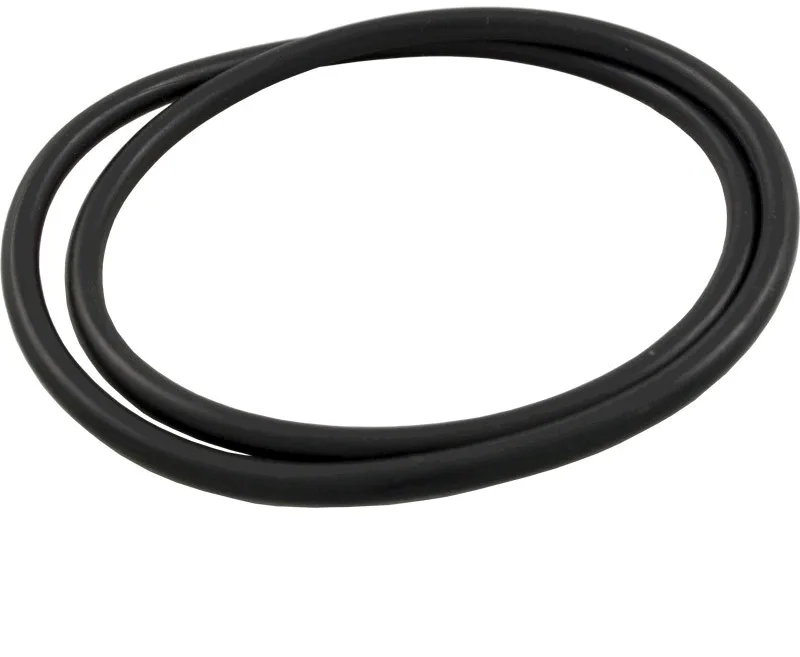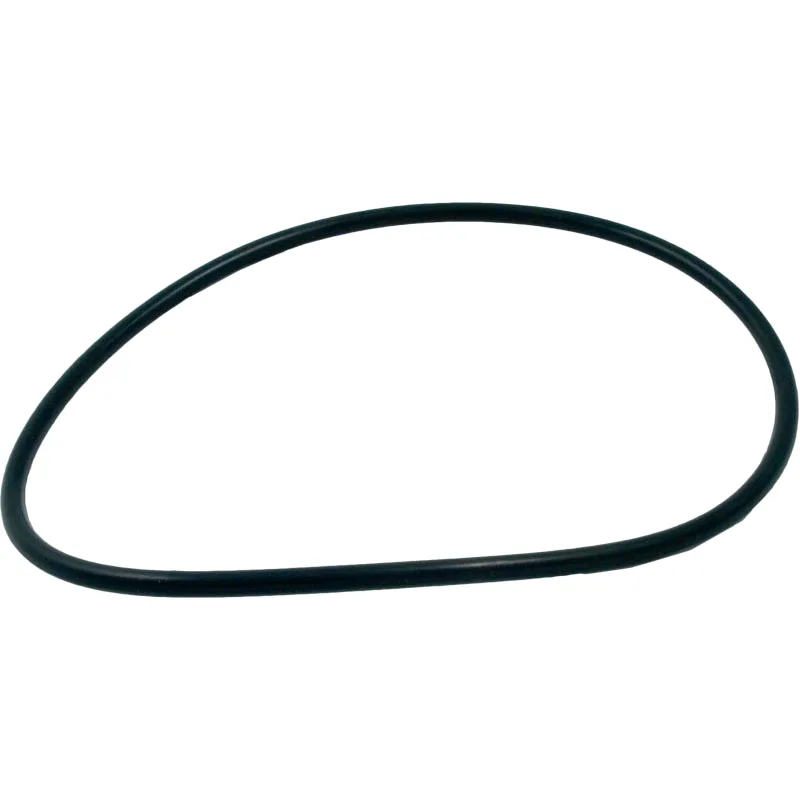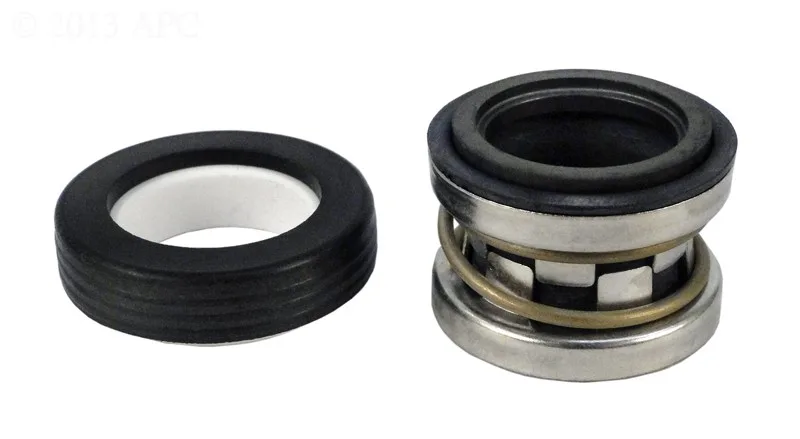

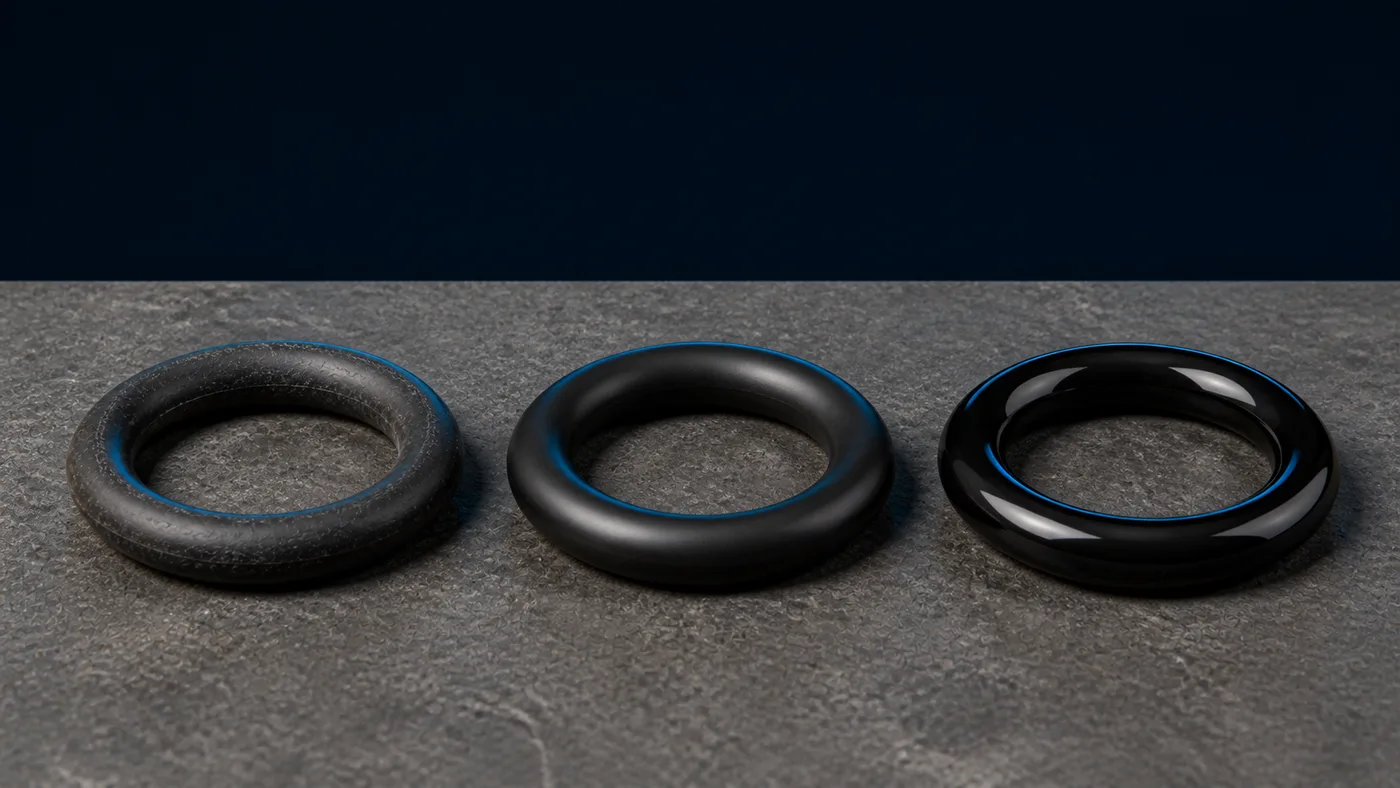
Two o-rings, same size, same colour, same price bracket. One is still sealing in year four; the other hardened and started weeping by the end of its first summer. The difference is a material specification that was never written down, and it is the most common quality variable in aftermarket pool parts.
The elastomers
EPDM. The default for pool sealing. Good resistance to water, chlorinated water, ozone and UV, and it holds elasticity across the temperature range a pool system sees. Its weakness is petroleum oils and greases — which is why petroleum-based lubricants on an EPDM o-ring cause it to swell and fail. Use silicone lubricant.
Nitrile (Buna-N). Excellent with oils and fuels, mediocre with ozone and UV, and it degrades faster in chlorinated water. It is cheaper, and it is the most common substitution when someone is reducing cost on a part specified as EPDM. In a pump union it may last acceptably; near a heater it will not.
Silicone. Very wide temperature range and good chemical stability, but poor tear strength and abrasion resistance. Right for some high-temperature static seals, wrong anywhere it gets dragged over an edge during installation.
Viton (FKM). Excellent chemical and temperature resistance, several times the cost. Justified in specific high-temperature or aggressive-chemical positions; over-specified everywhere else.
The practical summary for pool work:
| Position | Sensible default | Avoid |
|---|---|---|
| Pump lid, union, strainer | EPDM | Nitrile if UV-exposed |
| Filter tank, clamp seals | EPDM | — |
| Heater header and flange gaskets | EPDM rated for the temperature, or silicone | Nitrile |
| Anything contacting petroleum grease | Nitrile | EPDM |
Header gaskets are worth calling out. R0327500 and R0304300 in our range are front/rear and Hi-E2 header gaskets respectively — positions that see heat cycling every time the heater fires. A rubber that is fine in a pump union will harden and leak there within a season.
The thermoplastics
Unfilled polypropylene / ABS. Cheap, easy to mould, adequate for non-structural parts — covers, baskets, some housings. Low stiffness and it creeps under sustained load.
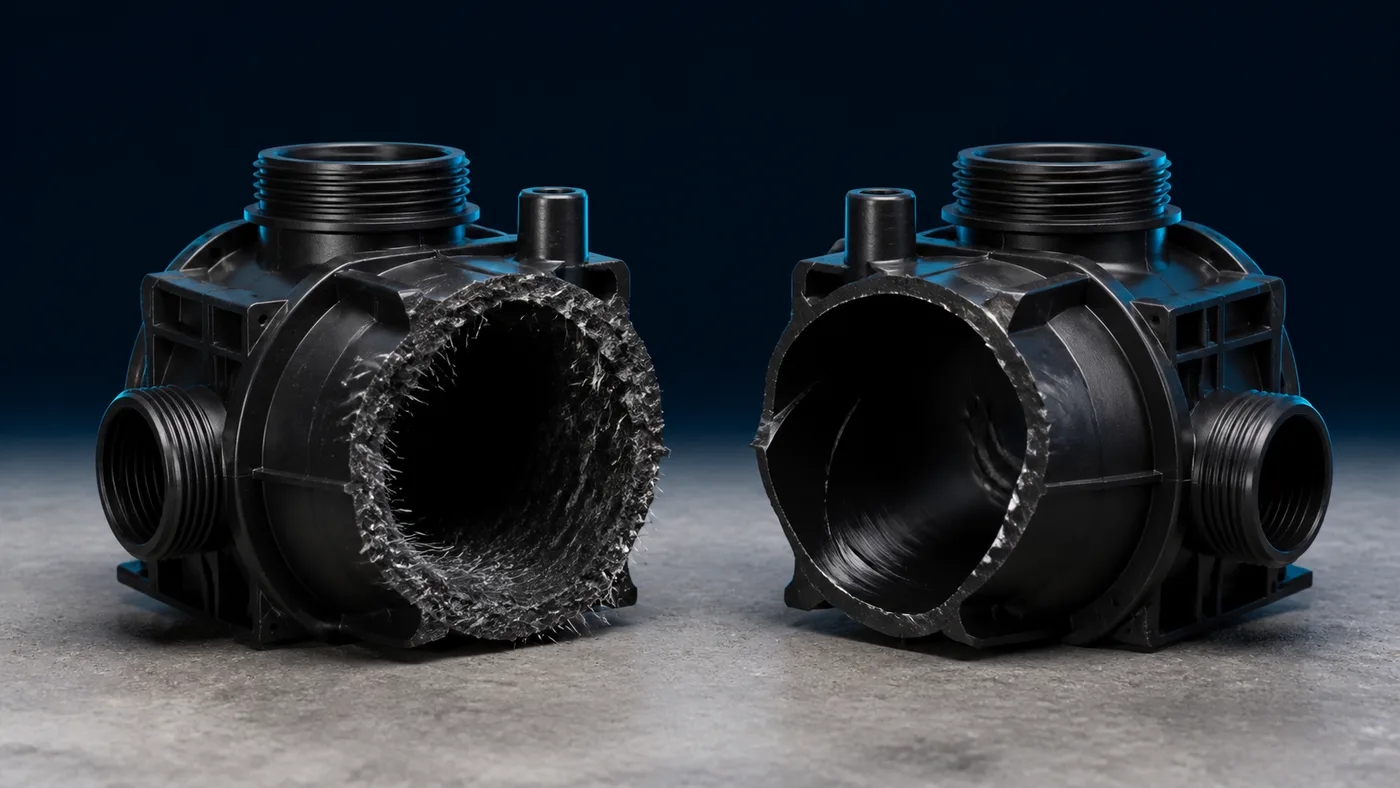
Glass-filled thermoplastic. Adding glass fibre raises stiffness and dimensional stability substantially. This is what structural parts want: impellers, diffusers, seal plates, anything holding a dimension under load or temperature.
The trade: glass filling reduces impact toughness and makes the surface more abrasive. It is the right answer for a diffuser and the wrong one for a lid you drop on concrete.
Reinforced PVC / CPVC. Standard for plumbing fittings. CPVC handles higher temperature, which is why it appears on the hot side of heater plumbing.
Why substitution happens, and how to see it
Material substitution is the standard response to cost pressure over a long supply relationship, because it is invisible in a photograph and does not show up for months.
The mechanics are simple: glass-filled becomes unfilled, or the glass content drops. EPDM becomes a blend. Neither changes the dimensions, so incoming inspection passes.
What to look for on receipt:
- Weight. A filled part is heavier than the same part unfilled. Weighing a piece from each shipment takes seconds and catches gross substitution. Record the baseline on your first good batch.
- Surface and stiffness. Glass-filled parts feel harder and slightly rougher; unfilled ones flex more.
- Colour consistency. A shift in shade between shipments is not proof of anything, but it is a reason to ask.
What to do about it before it happens: name the material on the purchase order, not in an email thread. A specification on the PO is a term of the contract. A material mentioned during negotiation is not.
Temperature is the variable people forget
Most material decisions in pool parts are actually temperature decisions.
A pump runs near ambient water temperature. A heater header sees the full swing every cycle. A salt cell sits somewhere in between. The same elastomer that performs perfectly for years at a pump union can take a permanent compression set in a heater position within one season.
So when specifying, do not ask "what material is this part". Ask "what material is this part, for this position, at this temperature". The second question gets a better answer.
What to write on the purchase order
For each part, three fields:
Material:      EPDM
Rating:        continuous service to the temperature this position sees
Colour:        specified only if it matters (it usually does not)
Add one line to the terms: material substitution requires written approval. That single sentence converts a silent change into a conversation, which is all you need.
What material cannot fix
Material is one of three variables and not always the dominant one. A perfectly specified EPDM o-ring in a groove that is 0.3 mm too shallow will still fail — over-compressed, taking a set, weeping by mid-season. Getting the material right and the dimension wrong produces the same symptom as the reverse.
Specify both. Ask for the material on the quotation and the critical dimensions in the same conversation, because a supplier who can answer one but not the other is only half controlling the part.
Sourcing
POOLPOINT states material per part and will put it on the purchase order. Our sealing range is moulded in EPDM as standard for pool positions, with material selected per position rather than per catalogue. If you are unsure what a position needs, send us the part and where it sits and we will tell you what we would use and why.