

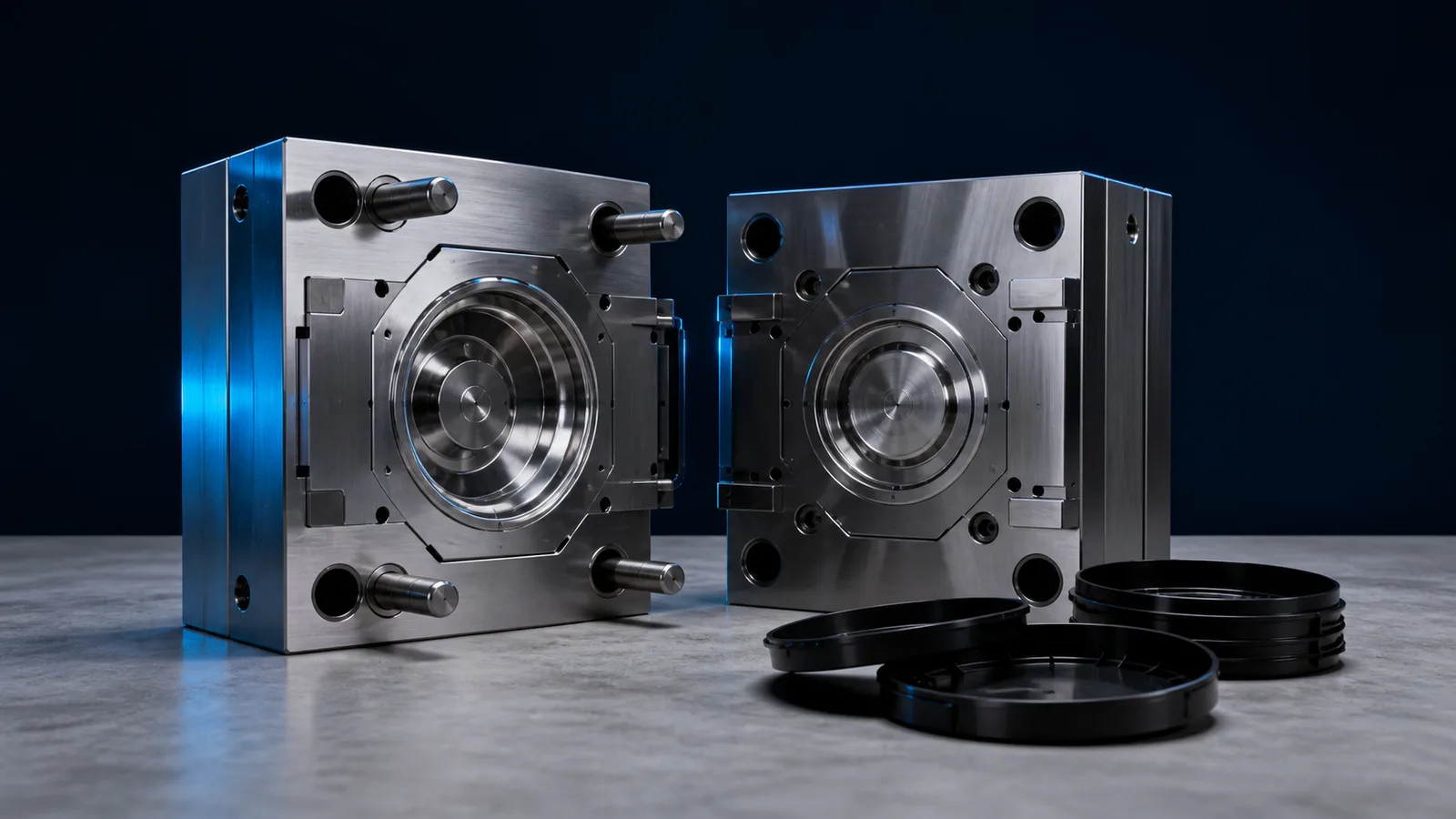
Sourcing aftermarket pool parts from a new factory is mostly a question of what you can verify before money moves. Almost every problem a distributor runs into — wrong fitment, drifting quality, a part that quietly changes material between orders — is visible in the answers a supplier gives during the first two conversations. This is the checklist, in the order we would run it.
1. Are they a factory, or a trading company with a nice website?
Ask what production processes happen under their own roof and which are outsourced. A real moulder will answer immediately and specifically: injection moulding in house, mould making in house, plating outsourced. A trading company answers with adjectives.
The follow-up that settles it: ask for a photo of a specific machine with today's production running on it. Not a brochure shot. Trading companies cannot produce one on request.
2. Can they show you a mould, not just a part?
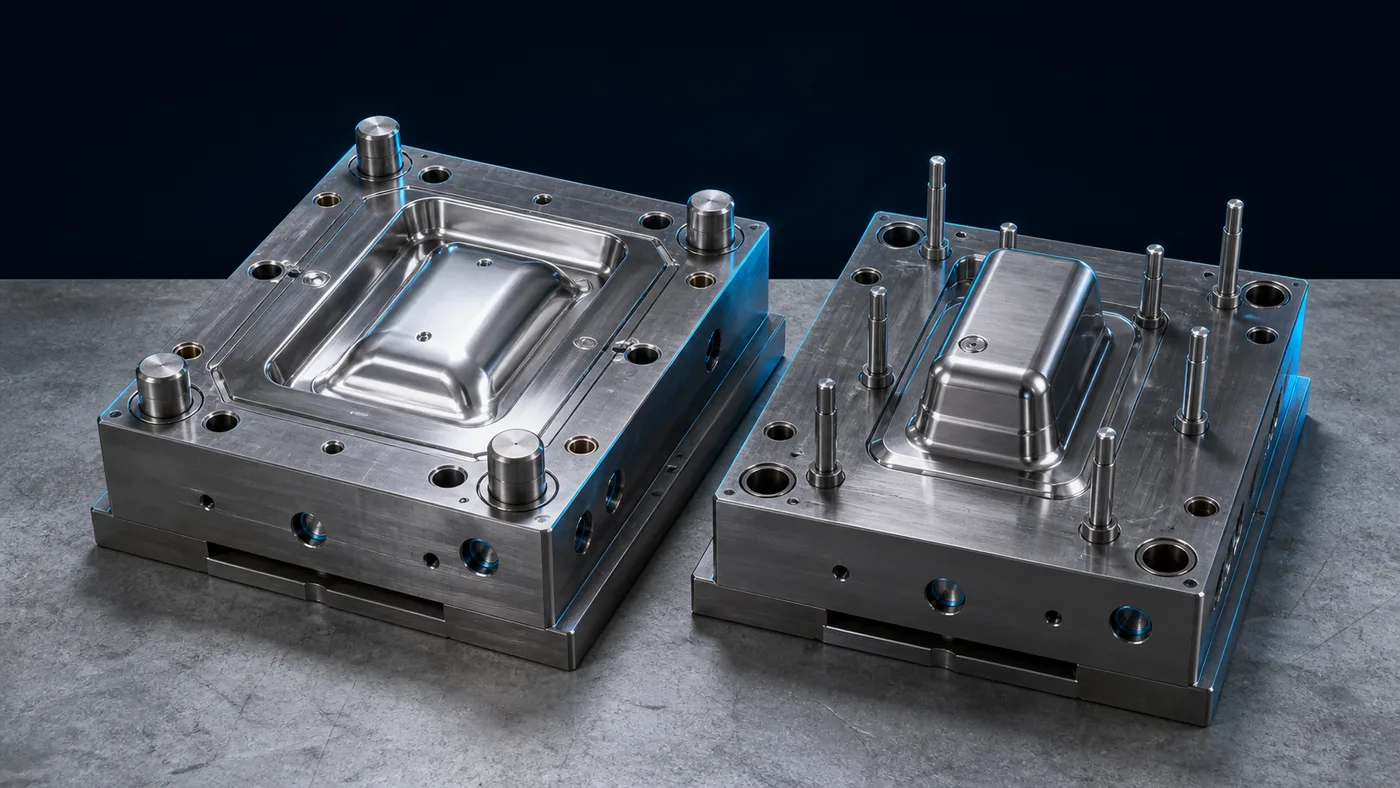
Tooling is the single largest capital item in this business, and it is the thing a reseller does not have. Ask to see the mould for a part you are interested in — the steel itself, on the shelf or in the press.
3. What is the actual MOQ, and is it per SKU or per order?
These are very different numbers. A supplier quoting "MOQ 500" per SKU is asking you to carry a season of stock on a part you have not sold yet. A supplier quoting a low MOQ per SKU with a minimum total order value is asking you to spread risk across a range — which is what a distributor actually wants.
Ask specifically: can cartons be mixed to reach the minimum? If the answer is no, the quoted MOQ is effectively multiplied by however many SKUs you need.
4. Will they sell you a single sample?
A factory that will not supply one piece for fitment verification is telling you something about how confident they are in their own dimensions. Sample lead time is also a useful proxy for how organised they are — a well-run shop turns a stock sample around in under two weeks.
5. How do they verify dimensions against the original?
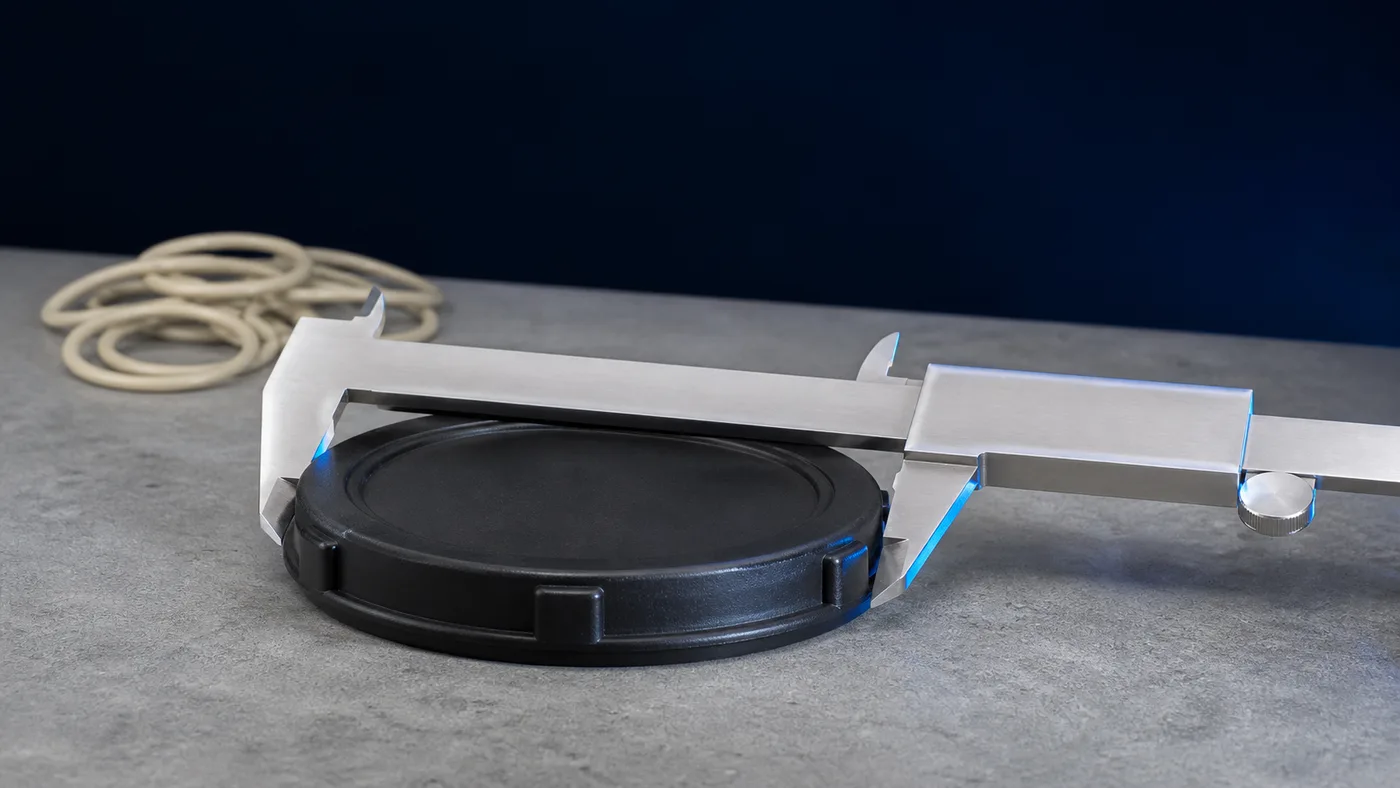
The answer you want is a process, not a promise. Ours is: an OEM sample is measured, first-article inspection is signed off against that sample before the tool is released to production, and critical dimensions are checked in process. Ask what their critical dimensions are for a specific part — if they cannot name them, nobody is measuring them.
6. How is their cross-reference data built?
This is the question almost nobody asks, and it is where the expensive mistakes live. Cross-reference numbers are what your customers order against. If the supplier's cross-reference list was scraped from marketplace listings without verification, it contains errors that will land on you as returns.
Ask how a number gets onto their cross-reference list, and what evidence is required. "At least two independent sources confirm it" is a real answer. "It's from our database" is not.
7. What happens when a part does not fit?
Get the process before you need it: who pays freight, what evidence they need, how long the root-cause response takes. A supplier who has never thought about this will improvise badly under pressure.
8. Can they hold material specification between orders?
Cost pressure over time shows up as material substitution — glass-filled thermoplastic quietly becoming unfilled, EPDM becoming a cheaper rubber that hardens faster in chlorinated water. Ask for the material to be written into the quotation and the purchase order, not just discussed.
9. What is the real lead time, at your order size?
Lead time is a function of order value, because it determines where you sit in the production queue. A supplier who quotes one lead time regardless of order size has not thought about it. Ours moves with order value:
| Order value (USD) | Production lead time | Sample lead time |
|---|---|---|
| ≤ $10,000 | 25–30 days | 7–10 days |
| $10,001 – $30,000 | 20–25 days | 5–7 days |
| $30,001 – $100,000 | 15–20 days | 5–7 days |
| > $100,000 | 10–15 days | 3–5 days |
10. How do they handle brand names and OEM numbers?
This one is about your legal exposure, not theirs. A supplier who prints an equipment manufacturer's logo on packaging, or describes their parts as "genuine", is creating a problem that lands on the importer of record — you.
The correct posture is the boring one: the part is an aftermarket replacement, brand names and OEM numbers identify fitment only, and there is no affiliation. If your supplier will not put that in writing, assume they have not thought about it.
11. Are they set up for private label, or just saying yes?
"We can do OEM packaging" covers everything from a printed box to a full artwork, barcode and instruction-sheet workflow. Ask what they need from you (dieline? vector logo? barcode range?) — a factory that runs private-label programmes will hand you a spec sheet without being asked.
12. Who is your actual contact, and what happens when they leave?
The most common failure in a two-year supplier relationship is not quality — it is that the one salesperson who understood your account moves on and nothing was written down. Ask what is documented on their side: your SKU list, your packaging spec, your tolerances.
What none of this tells you
This checklist screens out bad suppliers. It does not tell you whether a good supplier is the right one for your programme — that depends on whether their catalogue overlaps the parts you actually sell, and on whether they will grow the range with you. That question is better answered by sending a list of 30 numbers you sell today and seeing how many come back with a real cross-reference match rather than a "yes, we can do it".
Sourcing
POOLPOINT manufactures aftermarket replacement parts for pool equipment and ships factory direct from our plant in Zhejiang, China. MOQ is 50 pcs per part with mixed cartons accepted, and single-piece samples are available for fitment verification before a production run. Send us the numbers you stock and we will come back with cross-reference matches and factory pricing within one business day.